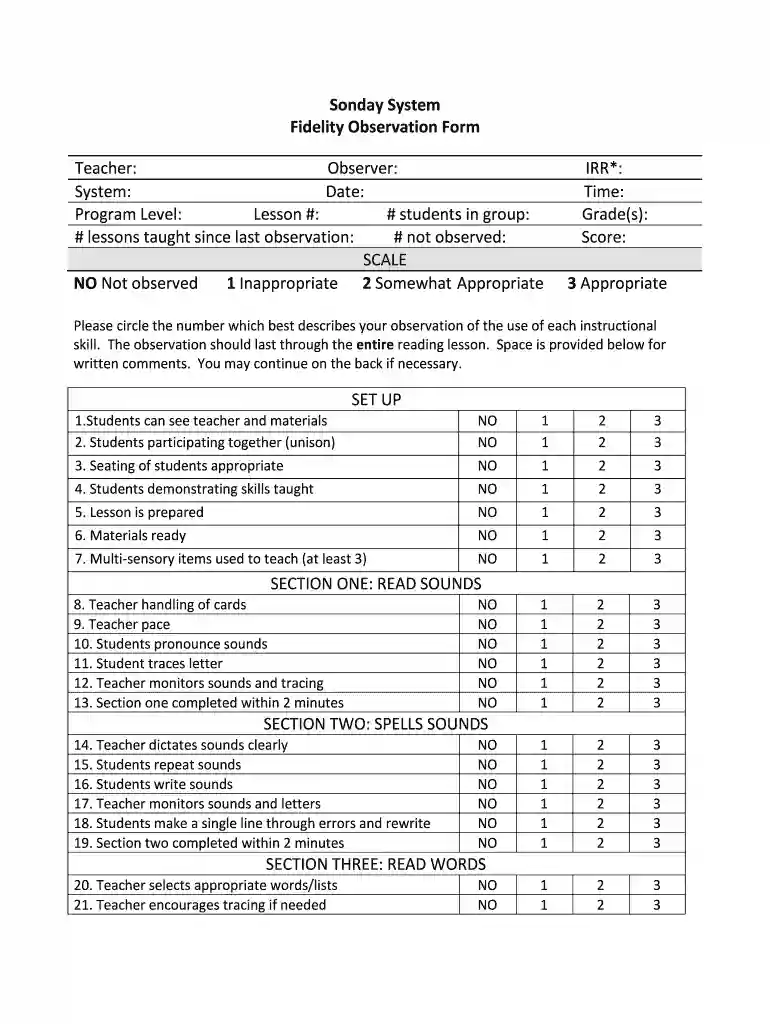
Understanding the Sonday System Fidelity
The Sonday System Fidelity refers to the adherence to prescribed instructional methods and strategies outlined in the Sonday System, a structured reading program designed to facilitate literacy development, particularly for students struggling with reading. Fidelity to the Sonday System means that educators implement the program's techniques, pacing, and lesson components accurately to achieve optimal learning outcomes. This fidelity helps ensure that students receive the full benefit of the program, which includes systematic phonics instruction and multi-sensory learning approaches.
How to Utilize the Sonday System Fidelity Effectively
Employing Sonday System Fidelity involves a multi-faceted approach that focuses on:
- Training and Preparation: Educators must undergo specific training to understand the program's components, which can include workshops and hands-on practice using the materials.
- Lesson Planning: Adhering closely to the Sonday System's lesson plans ensures that all necessary elements, such as activities, assessments, and interventions, are covered adequately.
- Consistent Assessment: Evaluating student progress using the Sonday assessment tools helps in adjusting instruction based on students' needs and maintains fidelity to the Sonday instructional model.
Following these steps will increase the likelihood of successful student outcomes.
Step-by-Step Guide to Completing the Sonday System Fidelity
- Review the Scope and Sequence: Familiarize yourself with the Sonday System 1 Scope and Sequence to understand the structure and flow of the program. Identify key concepts taught at each level.
- Gather Required Materials: Collect all necessary teaching materials, including student workbooks, manipulatives, and any supplementary resources.
- Deliver Instruction: Implement the lesson plans, ensuring that instructional strategies are followed closely. Utilize multi-sensory teaching methods that are integral to the Sonday System.
- Monitor Student Engagement: Pay attention to the students' responses and engagement during lessons. Adjust your teaching strategies based on their participation.
- Conduct Assessments: Regularly assess students using the tools provided within the Sonday System. These assessments will guide you on the fidelity of implementation and student understanding.
This systematic approach to fidelity ensures that the instructional model is being maintained throughout the teaching process.
Key Elements to Ensure Sonday System Fidelity
Maintaining fidelity involves several key elements:
- Adherence to Instructional Techniques: Consistently using the specified teaching approaches outlined in the program.
- Pacing and Timing: Following the pacing guide to ensure that all lessons are delivered within the designated timeframe, allowing enough time for review and reinforcement.
- Data-Driven Adjustments: Utilizing student assessment data to make informed decisions about instruction, ensuring that fidelity to the program is not compromised by deviations.
- Collaborative Teaching: Engaging in peer observations to provide feedback and support among educators implementing the Sonday System.
These elements work together to uphold the integrity of the instructional program, fostering student success.
Importance of Sonday System Fidelity for Educators and Students
Sonday System Fidelity is crucial for both educators and students for several reasons:
- Achieving Learning Outcomes: High fidelity in implementation correlates with improved reading skills among students, enabling them to achieve grade-level competency.
- Structured Support: Fidelity helps teachers deliver structured and coherent instruction that is predictable and repeatable, benefiting students who thrive on routine.
- Data Integrity: Accurate data collection during assessments will lead to better understanding and identification of each student's learning needs.
- Professional Development: Teachers who engage with fidelity practices benefit from ongoing professional growth and collaboration within educational teams.
Understanding these benefits reinforces the importance of adhering to the Sonday System for effective teaching.
Examples of Sonday System Fidelity in Practice
Several practical examples can illustrate Sonday System Fidelity:
- Case Study in a Classroom: A teacher meticulously follows the Sonday lesson plan. She implements a phonetic activity in which students manipulate tiles to match sounds with letters, directly aligning with the program's multi-sensory approach.
- Regular Assessment Implementation: Another educator conducts weekly assessments to gauge student progress, adjusting lesson plans accordingly to ensure all students are meeting the intended benchmarks.
- Collaborative Review Sessions: Educators participate in monthly meetings to discuss fidelity practices, share insights on student responses, and strategize on improving instructional delivery across classrooms.
These examples demonstrate how fidelity can manifest in educational environments, leading to enhanced literacy outcomes.
Legal and Educational Guidelines for Sonday System Fidelity
Adhering to the Sonday System's fidelity aligns with educational best practices and legal guidelines, including:
- State Education Standards: Ensuring instruction meets state-mandated literacy requirements and frameworks.
- Compliance with Federal Guidelines: Following regulations related to special education, such as the Individuals with Disabilities Education Act (IDEA), ensuring all students have access to effective reading programs.
- Documentation Practices: Maintaining accurate records of lesson plans, assessments, and communication with parents regarding student progress as part of compliance efforts within educational institutions.
Focusing on these legal aspects not only reinforces fidelity but also supports ethical teaching practices within the education sector.