




01. Edit your gottman couples intake form online
Type text, add images, blackout confidential details, add comments, highlights and more.

Type text, add images, blackout confidential details, add comments, highlights and more.

Draw your signature, type it, upload its image, or use your mobile device as a signature pad.

Send gottman intake questions via email, link, or fax. You can also download it, export it or print it out.
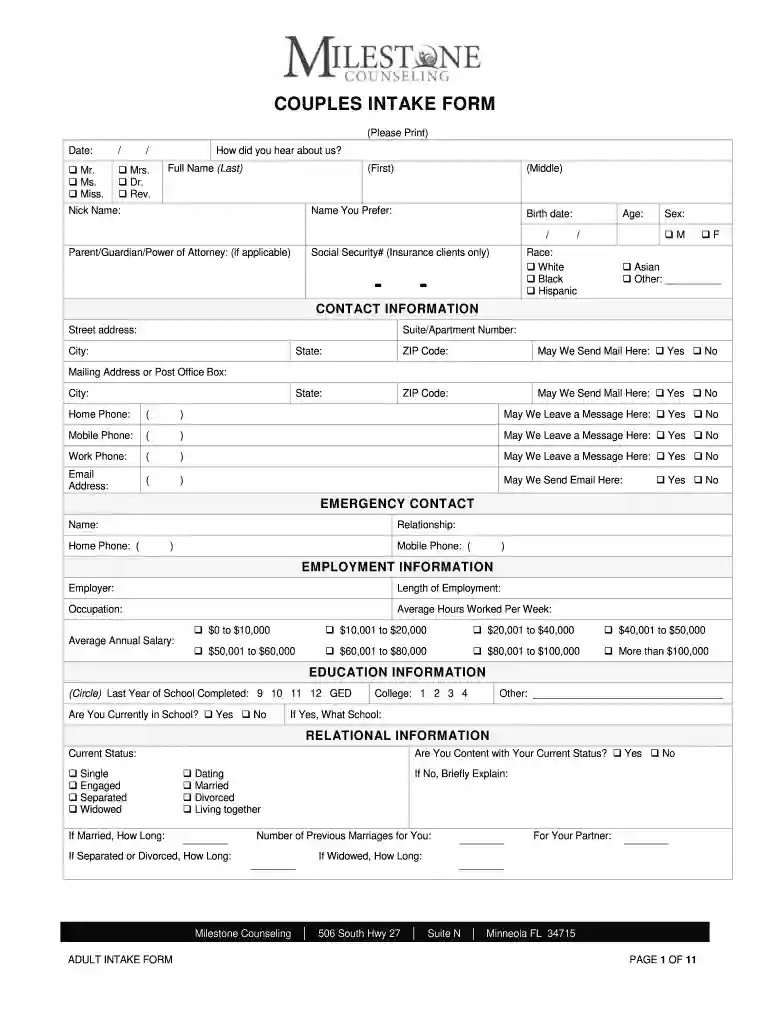
The Couples Intake Form is a crucial document utilized by counseling professionals to gather essential information from couples seeking therapy services. This form typically collects personal details, relationship history, and current issues to establish a comprehensive understanding of the couple’s needs. The information documented in this form is critical for tailoring therapeutic interventions that effectively address the unique dynamics of the couple.
Key elements typically included in the Couples Intake Form include:
This form serves not only as an intake mechanism but also as a foundation for establishing goals and therapeutic exercises that align with the couple's aspirations in therapy.
Effectively using the Couples Intake Form involves several strategic steps to ensure that the information gathered is both comprehensive and relevant to the therapeutic process.
The Couples Intake Form is designed to be a living document, meaning observations and notes during therapy sessions should be incorporated in follow-up sessions to ensure continued relevance.
The Couples Intake Form encompasses a multitude of important sections that facilitate a comprehensive understanding of the couple dynamics and individual contexts.
Comprehensive coverage of these elements allows therapists to shape their interventions effectively, ensuring that treatment is both relevant and personalized.
Completing the Couples Intake Form systematically can enhance the quality of the information gathered and the overall therapeutic process. Here are the steps typically involved:
Following these steps helps create a baseline for the couple's therapy journey, effectively guiding the therapeutic relationship.
The Couples Intake Form can be utilized in various scenarios to facilitate effective counseling outcomes. Here are some practical examples:
These examples illustrate how the Couples Intake Form acts as an essential tool for both relational assessment and ongoing therapeutic intervention.
Being knowledgeable about key terms related to the Couples Intake Form and its use in therapeutic settings can provide clarity for both counselors and clients. Some important terms include:
Understanding these terms can enhance a couple's engagement in the therapeutic process, fostering an environment of trust and collaboration between the therapist and clients.
At DocHub, your data security is our priority. We follow HIPAA, SOC2, GDPR, and other standards, so you can work on your documents with confidence.
The information in this document was developed through a collaboration between the U.S.. EPA (Subsurface Protection and Remediation Division, National RiskRead more
Her role at HSSU as a practicum student involves: Individual Counseling, Couples Counseling, Group Counseling, Family Counseling, Intake and Assessment, Co-Read more
by JN Hogan 2022 Cited by 11 The goal of this paper is to provide concrete suggestions, from pre-treatment screening through treatment, for how to conduct successful couple therapy viaRead more


