Self certification for work uk 2026

Get Form
self certification form Preview on Page 1

Here's how it works

01. Edit your self certification form online
Type text, add images, blackout confidential details, add comments, highlights and more.

02. Sign it in a few clicks
Draw your signature, type it, upload its image, or use your mobile device as a signature pad.

03. Share your form with others
Send self certification form pdf via email, link, or fax. You can also download it, export it or print it out.

Definition and Meaning of Self-Certification for Work in the UK

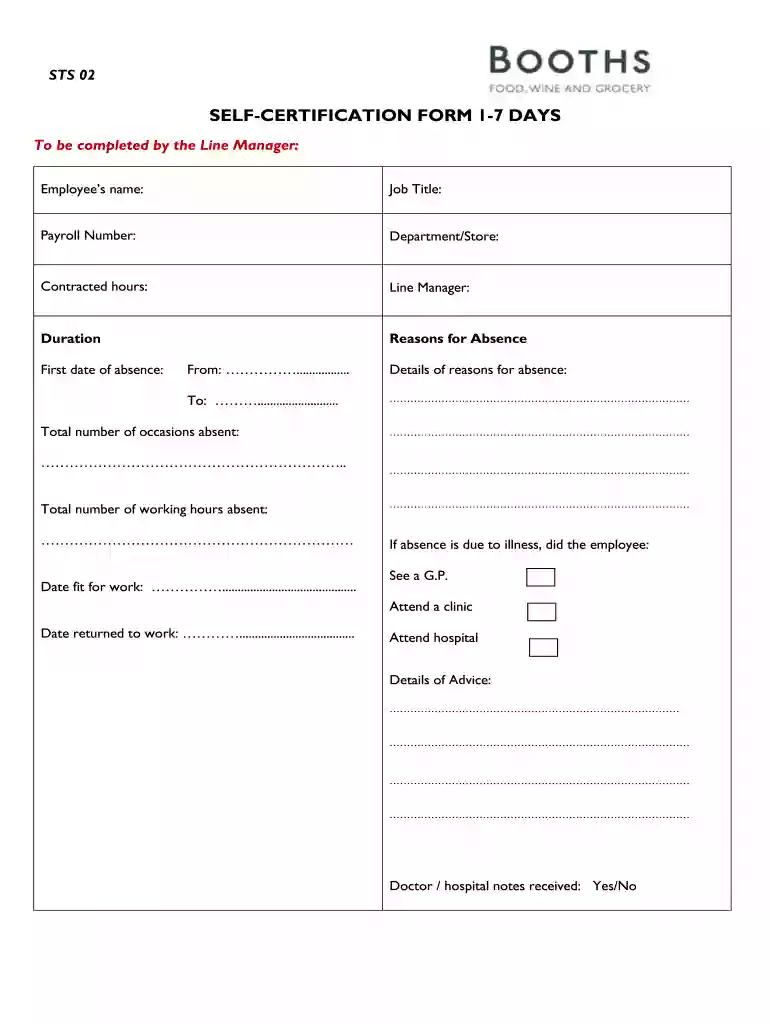
Self-certification for work in the UK is a formal process that allows employees to report their absence due to illness without needing a doctor's note. This process can be pivotal in ensuring that employees are not penalized for taking necessary time off when they are unwell. Self-certification serves as a personal declaration from the employee regarding their sickness or absence, and it typically includes essential information about the employee, the nature of the absence, the duration, and whether professional medical advice was sought. Understanding this concept is vital for both employees and employers to maintain transparency and fairness in workplace policies regarding health-related absences.

Purpose of Self-Certification

  • Employee Assurance: Self-certification empowers employees, allowing them to take necessary time off without the burden of obtaining official documentation for short-term illnesses.
  • Administrative Efficiency: This method reduces the paperwork and administrative burden on healthcare professionals who would otherwise need to issue certificates for every sickness absence.
  • Policy Compliance: Employers can ensure that their sick leave policies comply with legal obligations while still providing a streamlined process for their employees.

Key Elements of the Self-Certification Process

Understanding the key elements involved in the self-certification process is critical to its successful implementation.

  1. Employee Information: The self-certification form must capture crucial details such as the employee's name, position, and employment duration.
  2. Absence Details: Employees must specify the start and end dates of the absence, as well as the nature of the illness or reason for the absence.
  3. Medical Consultation: A section may be included to indicate whether the employee sought medical advice during their absence. This can help employers evaluate the seriousness of the situation while also providing a basis for any necessary follow-up or support.
  4. Employee Signatures: The form typically requires the employee’s signature to confirm the authenticity of the information provided.

These elements ensure that the self-certification form is not just a simple declaration but a comprehensive document that employers can use for record-keeping and for compliance purposes.

Steps to Complete the Self-Certification for Work in the UK

Completing a self-certification form is a straightforward process, but it is essential that employees follow these steps carefully to ensure accuracy and compliance:

  1. Obtain the Self-Certification Form: Employees should request the self-certification form from their workplace or use a reliable template available in various formats, such as PDF or Word.
  2. Fill in Personal Information: Begin by adding your name, job title, and contact details. This information helps link the absence directly to the individual.
  3. Specify Absence Dates: Enter the dates when the absence started and when it ended. It is crucial to be exact, as incorrect dates can lead to misunderstandings.
  4. Detail the Nature of Illness: Describe the illness or reason for absence in a concise manner. While details may enable better understanding, personal privacy should also be maintained.
  5. Indicate Medical Advice: Clearly state whether you sought medical assistance. If so, provide the name of the healthcare provider or state 'N/A' if no medical help was sought.
  6. Sign the Form: Finally, the employee must sign the form to confirm the veracity of the information provided.

By adhering to these steps, employees can ensure that their self-certification forms are completed correctly, reducing the risk of disputes with employers over absences.

Legal Use of the Self-Certification for Work in the UK

The legal framework around self-certification varies based on workplace policies and laws. Employers in the UK are obligated to accept self-certification for short-term absences, typically those lasting seven days or less. The legal use of self-certification forms involves several critical aspects:

  • Compliance with Employment Laws: Employers must align their sick leave policies with governmental regulations surrounding employee rights and benefits, ensuring that self-certification is recognized in conjunction with statutory sick pay entitlements.
  • Data Protection Considerations: Personal information gathered through self-certification forms must be stored securely in compliance with data protection laws, ensuring confidentiality and responsible data handling.
  • Employer Discretion: While self-certification is generally accepted, employers have the right to request additional documentation for suspicious or repeated absences, thereby balancing business interests and employee rights.

Understanding the legal use helps both parties navigate the delicate balance between employee accountability and employer expectations.

Examples of Using the Self-Certification for Work in the UK

Practical examples can help illustrate how the self-certification form is utilized in various situations:

  • Short-Term Illness: An employee develops a common cold and is unable to work for three days. They fill out the self-certification form stating their illness and the specific dates of absence. Since it is less than seven days, the employer accepts the form without additional documentation.
  • Medical Appointment: An employee requires time for a medical procedure that requires recovery but does not necessitate ongoing medical visits. They can use the self-certification process to outline their absence accurately.
  • Repetitive Cases: If an employee frequently submits self-certification forms for similar illnesses, the employer may initiate a discussion regarding potential underlying health issues to offer support or adjustments, illustrating the proactive use of these forms.

These examples provide real-world context for understanding the relevance and application of self-certification in the workplace.

Who Typically Uses the Self-Certification for Work in the UK

Self-certification forms are primarily used by employees within various sectors across the UK. Common users include:

  • Office Workers: Many corporate employees in office settings utilize self-certification for reporting short-term illnesses, contributing to a smoother operational flow.
  • Healthcare Sectors: Despite being health professionals, employees often fall sick and require to self-certify their absences under company protocols.
  • Education Professionals: Teachers and educational support staff make use of self-certification for short-term sick leave, thereby reducing the need for excessive documentation.

Understanding who uses self-certification forms helps businesses design effective policies supporting a broad range of employees while tackling absence issues efficiently.


decoration image ratings of Dochub
be ready to get more

Complete this form in 5 minutes or less

Get form

Security and compliance

At DocHub, your data security is our priority. We follow HIPAA, SOC2, GDPR, and other standards, so you can work on your documents with confidence.

Learn more
ccpa2
pci-dss
gdpr-compliance
hipaa
soc-compliance
be ready to get more

Complete this form in 5 minutes or less

Get form