Visual Communication and Sign Language Checklist - VL2 - vl2 gallaudet 2026

Get Form
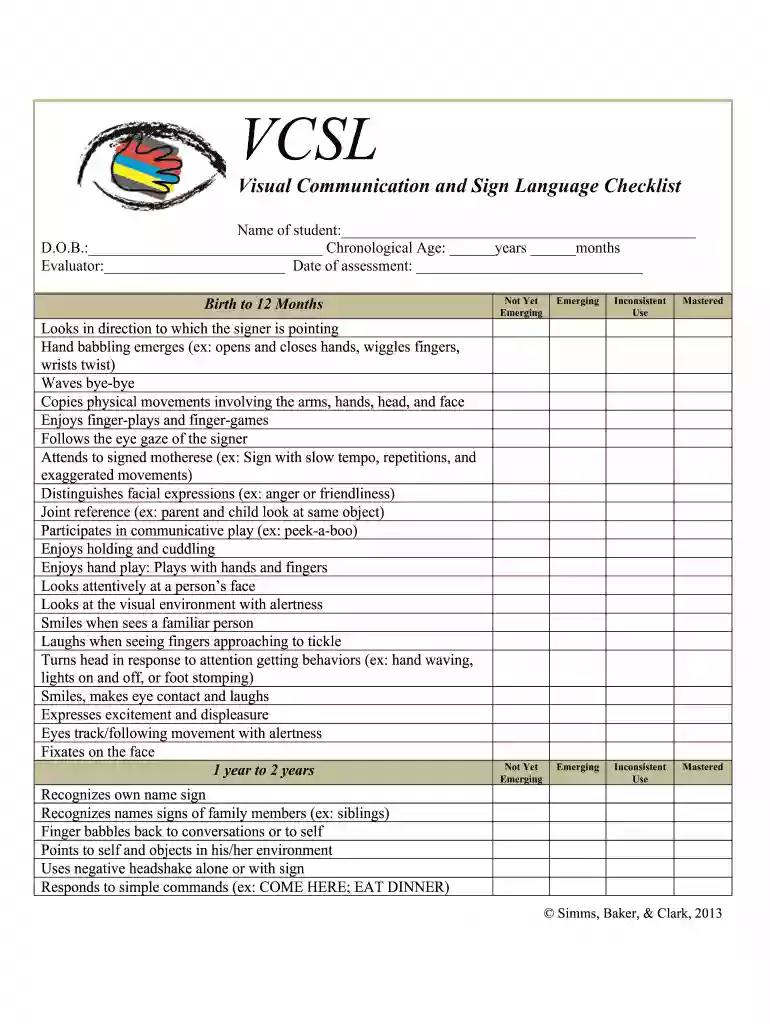
visual communication and sign language checklist Preview on Page 1

Here's how it works

01. Edit your visual communication and sign language checklist online
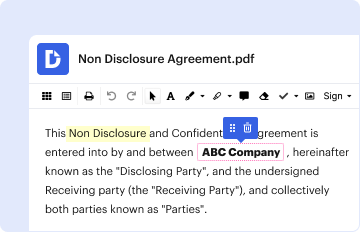
Type text, add images, blackout confidential details, add comments, highlights and more.

02. Sign it in a few clicks
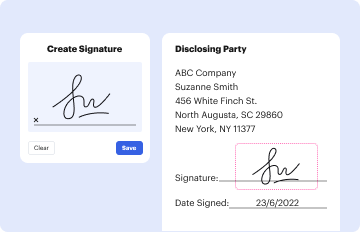
Draw your signature, type it, upload its image, or use your mobile device as a signature pad.
03. Share your form with others
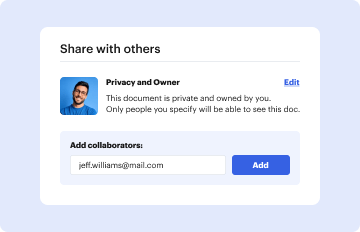
Send vcsl checklist via email, link, or fax. You can also download it, export it or print it out.

Definition and Purpose of the Visual Communication and Sign Language Checklist

The Visual Communication and Sign Language Checklist is a structured tool designed to assess and monitor the communication skills of children, particularly focusing on those from birth to two years old. This checklist evaluates a child's development in visual communication, sign language recognition, and social interaction skills. It categorizes various developmental milestones according to specific age ranges, providing a framework for caregivers, educators, and speech-language professionals to track progress and identify areas where further support may be needed.

Key components include:

  • Developmental Milestones: The checklist focuses on critical milestones, such as the ability to recognize and produce signs, the use of visual cues, and appropriate responses during social interactions.
  • Age Ranges: It segments developmental stages into various ranges, allowing evaluators to assess a child's progress relative to peers.
  • Usage: The checklist serves not only as a tool for assessment but also helps inform educational strategies and individual learning plans.

How to Use the Visual Communication and Sign Language Checklist

Using the Visual Communication and Sign Language Checklist involves several primary steps. Caregivers and professionals should familiarize themselves with the document before application to ensure effective and accurate assessments.

  1. Obtain the Checklist: Access the checklist in PDF format for easy printing and distribution.
  2. Review Developmental Milestones: Familiarize yourself with the specific skills and milestones applicable to the child’s age range.
  3. Observation and Documentation: Observe the child in various settings—like home and social gatherings. Document instances of visual communication and sign language usage.
  4. Assessment: Check off the skills as they are observed. Be thorough and consider both frequency and context of use.
  5. Follow-Up: Use the results to guide future educational interventions or speech-language therapies, tailoring approaches based on strengths and areas for growth.

Steps to Complete the Visual Communication and Sign Language Checklist

Completing the Visual Communication and Sign Language Checklist requires careful attention and methodical observation. The following steps outline the process:

  1. Gather Materials: Ensure you have the checklist printed and any additional resources handy, such as notepads for notes.
  2. Set an Observation Schedule: Decide on age-appropriate times to evaluate the child’s communication skills in various settings over a determined period.
  3. Conduct Observations: Watch for the specific milestones listed on the checklist, noting both successful instances and those requiring additional focus.
  4. Record Findings: Document performance in a clear and structured format as per the checklist.
  5. Analyze Results: Post-evaluation, analyze the recorded data to identify patterns, strengths, and areas needing further development.

Why Use the Visual Communication and Sign Language Checklist?

The Visual Communication and Sign Language Checklist provides several advantages that contribute to a child's communicative development:

  • Early Intervention: Identifying delays early allows for timely interventions, which are crucial for effective language development.
  • Structured Framework: It offers a clear structure for assessing communication skills, helping caregivers and professionals track progress methodically.
  • Enhances Learning: The checklist can inform personalized educational approaches, making it instrumental for educators and speech-language pathologists in planning interventions.
  • Supports Better Outcomes: By tracking developmental milestones, users can better understand the child’s communication needs, leading to improved linguistic and social outcomes.

Key Elements of the Visual Communication and Sign Language Checklist

Understanding the key elements of the Visual Communication and Sign Language Checklist is critical to its effective application:

  • Milestone Categories: The checklist is divided into age-specific categories ranging from birth to 24 months, ensuring relevant assessment benchmarks for each stage.
  • Focus Areas: It addresses visual communication skills, including the use of signs, gestures, and an understanding of visual cues.
  • Evaluation Metrics: Clear metrics guide evaluators on what constitutes effective interaction and communication skills, ensuring consistency in assessment.

Important Terms Related to the Visual Communication and Sign Language Checklist

Familiarizing yourself with essential terminology is beneficial for understanding and utilizing the Visual Communication and Sign Language Checklist effectively:

  • Visual Communication: Refers to the conveyance of information through visual means, including gestures, facial expressions, and use of signs.
  • Sign Language Recognition: Involves the ability of a child to understand and interpret signs and gestures made by others.
  • Developmental Milestones: These are specific skills or behaviors that are generally expected at certain age ranges, which help assess a child’s growth and development capabilities.

Legal Use of the Visual Communication and Sign Language Checklist

Utilizing the Visual Communication and Sign Language Checklist occurs within specific legal parameters to ensure compliance with developmental standards:

  • Confidentiality: Maintain confidentiality of the child’s personal data and evaluation results, in line with applicable laws and regulations.
  • Professional Standards: Ensure that any assessment or intervention based on the checklist adheres to established professional guidelines for child development and communication.
  • Documentation: Keep proper records of assessments and interventions, as required by law, to support any educational or developmental services provided to the child.

Examples of Using the Visual Communication and Sign Language Checklist

Real-world applications of the Visual Communication and Sign Language Checklist can greatly enhance its utility:

  • Home Use: Parents may use the checklist to monitor their child’s development at home, facilitating discussions with pediatricians or speech-language pathologists.
  • Educational Settings: Teachers can implement the checklist in classrooms to tailor instructional supports for children who are deaf or hard of hearing.
  • Telehealth Services: In telehealth environments, professionals can use the checklist during virtual consultations to effectively assess children from a distance.

By engaging with the Visual Communication and Sign Language Checklist thoughtfully and systematically, caregivers and educators can ensure a supportive environment that nurtures essential communication skills.

be ready to get more

Complete this form in 5 minutes or less

Get form

Got questions?

We have answers to the most popular questions from our customers. If you can't find an answer to your question, please contact us.
Contact us

Sure, a typed name is accepted as a legitimate electronic signature when you create it on your paperwork utilizing a compliant solution like DocHub. Simply import your vcsl checklist pdf to our editor, click Sign in the top tool pane → Create your signature → Type your name in the proper tab, and select how it will look on your document.

If you edit your vcsl with DocHub, you simply will not need to look for other software or services to sign it. An electronic signature is part of DocHub’s comprehensive editing toolset, which enables you to apply changes in your form without jumping between platforms. Simply complete your form, double-check the correctness of the data and place your electronic signature at the end to make it submission-ready within a few minutes.

History of American Sign Language -Gallaudet brought the concept of ASL to the United States. He also brought the motions that are used as signs today.
American Sign Language: Gallaudet The sign for Gallaudet (both the University and the man) is the same as one of the versions of the sign for GLASSES. Use a single motion. Start at the side of the eye with a wide G handshape and pull the hand backward about two inches into a closed G handshape.
Gallaudet University has an acceptance rate of 61%. Half the applicants admitted to Gallaudet University who submitted test scores have an SAT score between 750 and 933 or an ACT score of 14 and 18. However, one quarter of admitted applicants achieved scores above these ranges and one quarter scored below these ranges.

Security and compliance

At DocHub, your data security is our priority. We follow HIPAA, SOC2, GDPR, and other standards, so you can work on your documents with confidence.

Learn more
ccpa2
pci-dss
gdpr-compliance
hipaa
soc-compliance

People also ask

Gallaudet is an equal employment opportunity/affirmative action employer and actively encourages deaf, hard of hearing, members of traditionally underrepresented groups, people with disabilities, women, and veterans to apply for open positions. Job postings are updated daily.
The VCSL Checklist is a standardized comprehensive checklist used to assist in tracking young childrens sign language development from birth to five. The P-Level assessment can be found in the toolkit Starting with Assessment: A Developmental Approach to Deaf Childrens Literacy.
The university was named after Thomas Hopkins Gallaudet, a notable figure in the advancement of deaf education. Washington, D.C. Gallaudet University is officially bilingual, with American Sign Language (ASL) and written English used for instruction and by the college community.
At Gallaudet University, the primary languages used on campus are American Sign Language (ASL) and written English. To support the bilingual mission of the university, all students are expected to develop proficiency in both ASL and written English. However, not all students are fluent in ASL when they come to campus.

visual communication and sign language checklist pdf