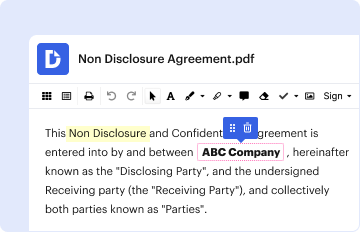
Type text, add images, blackout confidential details, add comments, highlights and more.
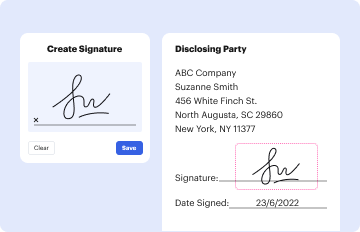
02. Sign it in a few clicks
Draw your signature, type it, upload its image, or use your mobile device as a signature pad.
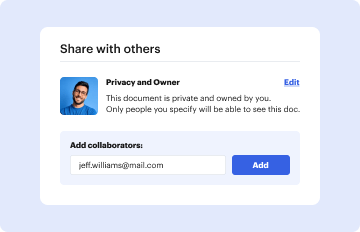
03. Share your form with others
Send it via email, link, or fax. You can also download it, export it or print it out.
How to use or fill out Quit Claim Deed (California) for disclaiming interest in real estate or real property with our platform
Ease of Setup
DocHub User Ratings on G2
Ease of Use
DocHub User Ratings on G2
Click ‘Get Form’ to open the Quit Claim Deed in the editor.
Begin by filling in the 'Recording requested by' section with your name and contact information.
In the 'Mail this deed and tax statements to' section, provide the address where you want the documents sent after recording.
Next, specify the real property details by entering the city and county where the property is located.
Sign and date the document in the designated areas. Ensure that both parties involved in the transaction sign.
A notary public must witness your signatures. Fill out their information and have them sign to validate the document.
Complete any necessary tax exemption details if applicable, including documentary transfer tax information.
Start using our platform today to easily complete your Quit Claim Deed online for free!
Fill out Quit Claim Deed (California). Quit claim deed (sometimes called quick claim deed) for disclaiming interest in real estate or real property online It's free
California Quit Claim Deed form pdfQuitclaim deed CaliforniaRepercussions of a quit claim deedLos Angeles County quit claim DEED formRiverside County quit Claim DeedHow to fill out quit claim deed CaliforniaQuit claim deed form San Bernardino County CaliforniaQuitclaim deed vs grant deed
Security and compliance
At DocHub, your data security is our priority. We follow HIPAA, SOC2, GDPR, and other standards, so you can work on your documents with confidence.
Cited by 42 The rule forbidding an heir to renounce an inheritance developed prior to the. Statute of Wills (1540), making land devisable for the first time, and the ruleRead more
Understanding Real Estate Documents: Quitclaim Deed
Quitclaims to shows a purposeful reason to transfer interest in the property. It differs from a Grant Deed because the quitclaim transfers any interest,Read more
Cookie consent notice
This site uses cookies to enhance site navigation and personalize your experience.
By using this site you agree to our use of cookies as described in our Privacy Notice.
You can modify your selections by visiting our Cookie and Advertising Notice.