






Definition and Purpose of the Studio Incident Report Form
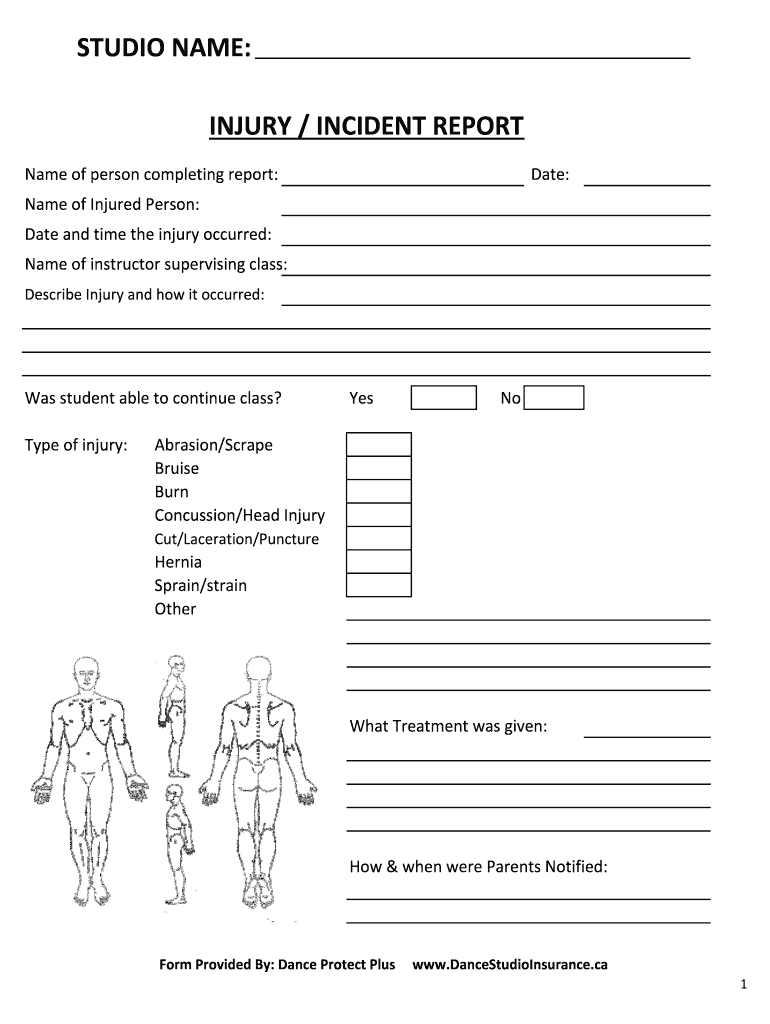
The studio incident report form is a vital document used primarily within dance studios to record incidents of injuries or other events that may occur during classes or rehearsals. This official documentation serves both legal and practical purposes, ensuring that all pertinent details surrounding the incident are captured. The report facilitates communication regarding the nature of the incident, actions taken, and any follow-up required for both the injured participants and the studio management.
Key Components of the Form
- Reporter Information: Captures the name, role, and contact information of the person reporting the incident.
- Injured Party Details: Includes the name, age, and contact information of the individual affected by the incident.
- Incident Description: A section dedicated to a detailed account of what occurred, including the time, location, and circumstances leading to the incident.
- Nature of Injury: Details the type and severity of the injury, which may influence subsequent actions or medical treatment.
- Treatment Provided: Documents any first aid or medical care that was administered immediately following the incident.
- Follow-Up Actions: Includes recommendations or requirements for future monitoring, such as parental notifications and permissions for continued participation in classes.
How to Use the Studio Incident Report Form Effectively
Using the studio incident report form entails a systematic approach to ensure that all information is accurate and comprehensive. This involves the timely completion of the form after an incident occurs.
Steps to Utilize the Form
- Gather pertinent details: Immediately after an incident, collect all relevant information, including the time, location, and involved parties.
- Fill out the form: Using clear and concise language, complete each section of the form thoroughly. This should include the reporter's information, specifics about the injured party, and a detailed account of the event.
- Include witness statements: Where applicable, gather input from peers or studio staff who may have witnessed the incident to provide an objective view.
- Review for accuracy: Before finalizing the form, review all entries to ensure that they reflect the incident accurately and omit any errors.
- Submit to appropriate parties: Once completed, submit the form to studio management, and retain a copy for your own records in case further action is needed.
Important Legal Considerations for the Studio Incident Report Form
The studio incident report form holds legal weight, making it crucial to adhere to specific guidelines and practices when using it.
Legal Implications
- Documentation of Incidents: Properly completed forms can serve as legal evidence in the event of liability claims or disputes arising from the incident.
- Parental Notifications: If minors are involved, notifying parents or guardians about the incident is not just a best practice; it is often a legal requirement.
- Adherence to State Regulations: Different states may have varying requirements regarding the documentation and reporting of incidents, which can affect the content and submission of these forms.
Key Elements to Include in the Studio Incident Report Form
Understanding what to include in the studio incident report form is essential for comprehensive documentation. Each section plays a critical role in providing a clear picture of the incident.
Essential Sections to Cover
- Detailed Incident Description: A clear narrative that describes what happened, where, and when. This should be fact-based and free from personal opinions.
- Injuries Sustained: Specific information regarding the injuries can inform future safety measures and parental notifications.
- Response Actions Taken: What immediate actions were taken to address the situation, including any medical treatment or communication with emergency services.
- Recommendations for Future Prevention: Suggestions based on the incident's circumstances can help mitigate future risks.
Examples of Using the Studio Incident Report Form
Real-world scenarios illustrate the importance and utility of the studio incident report form in various settings.
Scenario Applications
- Injury During Class: A student twists their ankle while performing a dance move. The instructor fills out the incident report, capturing the immediate treatment given and noting any further medical attention that may be required.
- Behavioral Incidents: A dispute arising between two participants during a rehearsal leads to a verbal conflict. A form documenting the incident and follow-up actions may be required to inform parents and management of the situation and the steps taken to resolve it.
Common User Groups of the Studio Incident Report Form
Understanding who typically utilizes the studio incident report form can provide insights into its significance and varying applications.
User Segmentation
- Dance Instructors and Studio Management: Primarily responsible for filling out the form to document any incidents that occur during classes, thus ensuring accountability.
- Parents or Guardians: Often involved in the notification process, as they must be informed about incidents concerning their children.
- Insurance Companies and Legal Advisors: May require access to these reports for claims processing or legal reviews to assess any liability issues related to incidents in the studio.