






Definition and Meaning of the 2 Form
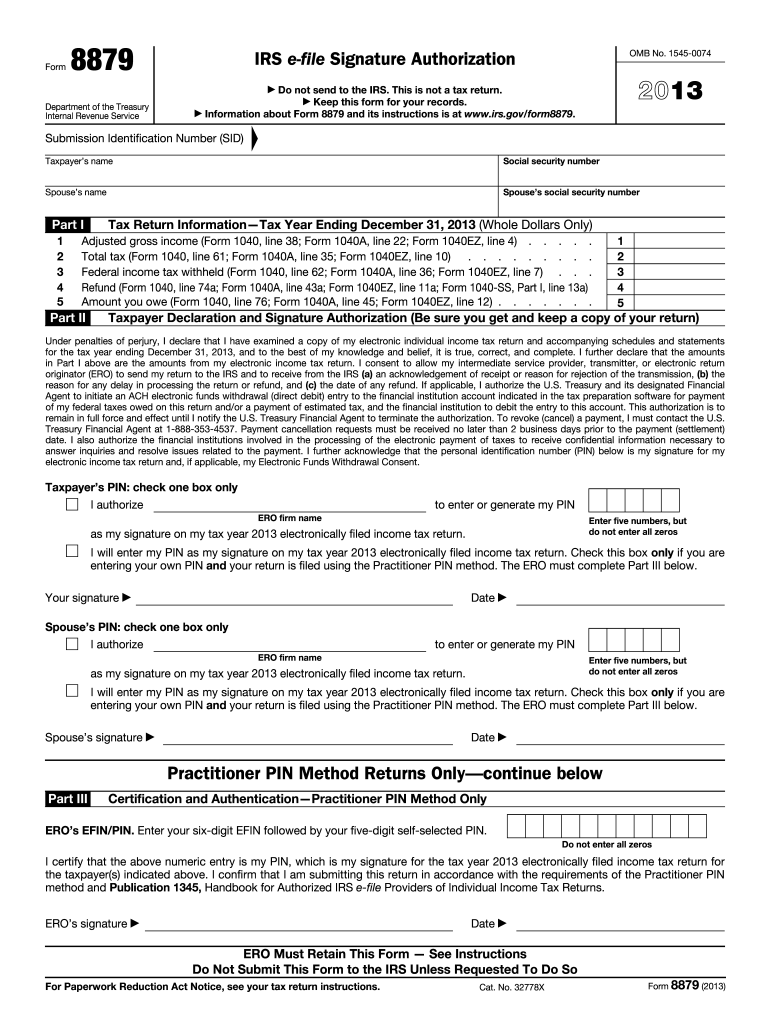
Form 8879 is also known as the IRS e-file Signature Authorization. This form is crucial for taxpayers who file their federal income tax returns electronically. It serves as a declaration that the taxpayer has reviewed the information in their return and authorizes the Electronic Return Originator (ERO) to submit it to the Internal Revenue Service (IRS) on their behalf. The 2013 version of this form aligns with the year's specific tax code updates and requirements, ensuring compliance for taxpayers who filed during that period.
Who Typically Uses the 2 Form
The primary users of the 2 form are individual taxpayers and EROs. Individual taxpayers utilize this form to provide consent for their ERO to electronically file their tax return. EROs, typically tax professionals or firms, require this form to have documented authorization to submit the taxpayer's return to the IRS. Common users include:
- Individual filers: Especially those utilizing tax preparation services.
- Tax professionals: Using the form to streamline electronic submission processes.
- Self-employed individuals: Ensuring their filings are authorized correctly.


Steps to Complete the 2 Form
- Fill in Taxpayer Information: Enter your full name, Social Security Number (SSN), and filing status.
- Review Tax Return Details: Confirm the accuracy of your tax return's final figures, particularly the adjusted gross income and total tax amounts.
- Sign the Authorization: The taxpayer must sign the 8879 form to authorize the ERO to e-file the return on their behalf.
- EROs Complete the Submission: The ERO will finalize the form by adding their information, such as their name and EFIN (Electronic Filing Identification Number).
- Retain the Form: The ERO must keep the signed form for at least three years unless the IRS requests it.
Key Elements of the 2 Form
The 2 form includes several essential sections:
- Taxpayer Information: Identifying data including the taxpayer’s name and SSN.
- Summary of Return: Core figures from the return such as adjusted gross income.
- Signature Authorization: Space for the taxpayer to sign, confirming authorization.
- ERO Declaration: ERO must complete their section, confirming they reviewed the taxpayer's ID.
- Submission Dates: Critical for tracking deadlines for submission.
Legal Use of the 2 Form
The legal framework governing the use of Form 8879 ensures that electronic submissions maintain the same validity as paper filings. The form must be completed accurately to comply with federal requirements, and taxpayers are legally responsible for the information submitted. EROs assume responsibility for e-filing correctly. Unauthorized submission or misuse can lead to substantial penalties.
IRS Guidelines for the 2 Form
Adhering to IRS guidelines is crucial for compliance. These guidelines obligate taxpayers and EROs to ensure the form's accuracy and completeness. Key guidelines include:
- Retention: EROs must keep the signed 8879 form for three years post-filing.
- Verification: Taxpayers must verify all return components before signing.
- Understanding Obligations: Taxpayers should fully understand what signing entails.
Filing Deadlines and Important Dates
For 2013 tax returns, key deadlines included:
- April 15, 2014: Standard deadline for submitting 2013 tax returns.
- October 15, 2014: Extended filing deadline for those who filed for extensions.
- Three-year Window: For tax disputes or errors, records must be retained for this duration post-filing year.
Penalties for Non-Compliance with 2 Form
Failure to utilize Form 8879 correctly or non-compliance can occur in several ways, leading to potential penalties:
- Filing without Authorization: EROs submitting without taxpayer authorization can face fines.
- Incorrect Information: Penalties may apply for taxpayers who provide inaccurate data.
- Insufficient Record-Keeping: EROs must maintain forms for the required period or face review issues.
Taxpayer Scenarios for Using the 2 Form
Different taxpayer scenarios highlight the utility of the 2 form:
- Self-Employed Individuals: Often using complex tax preparation services, requiring clear authorization.
- Retired Individuals: May use EROs for simplification due to less familiarity with electronic filing.
- Students: First-time filers heading into employment can benefit from professional tax assistance paired with Form 8879.

Business Entity Types Benefiting from the 2 Form
Various business entities leverage Form 8879:
- LLCs and Partnerships: Simplified submission through designated members.
- Corporations: ERO utilization for authorized employee filings.
Digital vs. Paper Version of the 2 Form
The digital form offers a streamlined, efficient e-filing alternative, contrasting the laborious traditional paper processes. EROs typically opt for digital filing to enhance productivity and accuracy. However, paper versions remain relevant for those less familiar with digital systems.
By understanding and correctly using the 2 form, taxpayers and EROs can ensure seamless compliance with federal e-filing requirements, reflecting meticulous financial stewardship and legal adherence.