
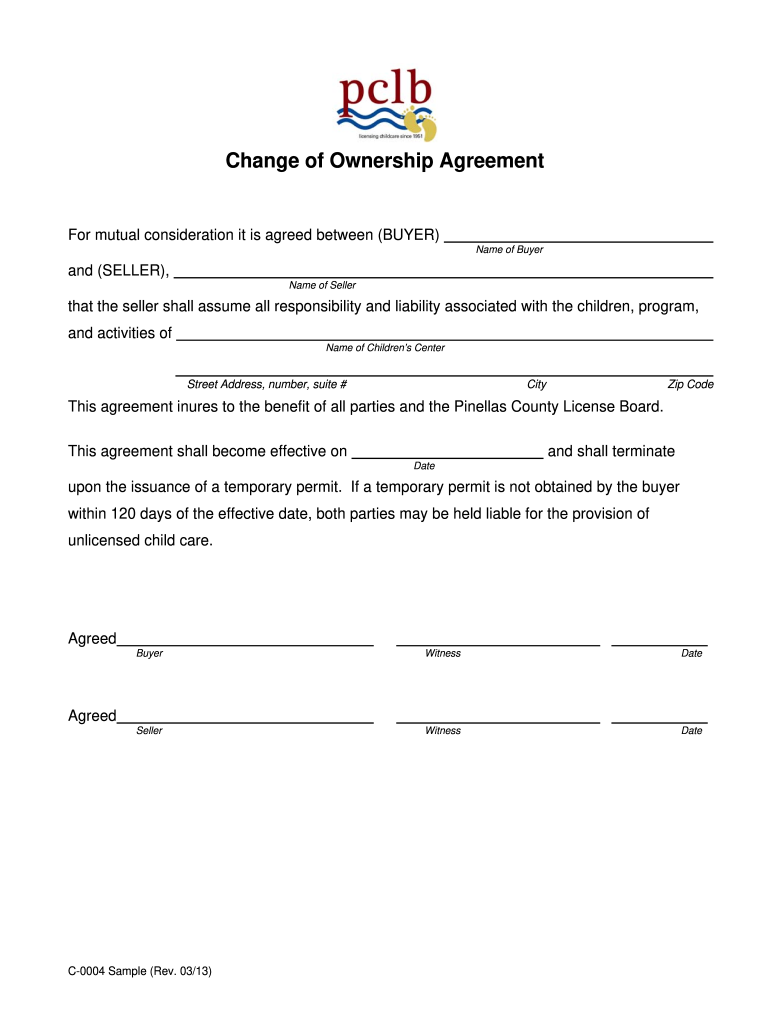







Definition and Meaning of the Change of Ownership Document
A change of ownership document is a legal instrument that formalizes the transfer of ownership from one party to another. This document is typically used in various contexts, including real estate transactions, business acquisitions, and transfers of vehicle titles. The primary purpose is to establish clear evidence of the transfer of rights, responsibilities, and liabilities associated with the asset in question. Understanding the nuances of this document is crucial for the parties involved to avoid potential disputes.
Key definitions associated with a change of ownership document include:
- Transferor: The individual or entity relinquishing ownership.
- Transferee: The individual or entity acquiring ownership.
- Effective Date: The date on which the change of ownership takes effect, often specified in the document.
- Consideration: The value exchanged for the transfer, which may be monetary or non-monetary.
Common situations that necessitate a change of ownership document include the sale of property, inheritance of assets, or the restructuring of businesses. Each context may have its specific requirements and nuances that should be understood for proper execution.
How to Use the Change of Ownership Document
Utilizing a change of ownership document involves several steps to ensure that the transfer is legally binding and recognized by relevant authorities. Here are the key components involved in the process:
-
Drafting the Document:
- The initial step is to prepare the document, which includes key information such as names of the transferor and transferee, the description of the asset, and any conditions surrounding the transfer.
- Templates for the change of ownership document might be sourced online or created with specific legal language to suit the transaction.
-
Reviewing Legal Requirements:
- It is critical to review state and federal laws applicable to the ownership transfer to ensure compliance. This may involve restrictions on specific types of assets or mandates for notarization.
-
Obtaining Necessary Signatures:
- Both parties need to sign the document. In some cases, witnesses or notaries may be required to validate the signatures.
-
Filing with Appropriate Authorities:
- Depending on the asset being transferred, it may be necessary to submit the document to local, state, or federal authorities, such as a Department of Motor Vehicles for vehicle registrations or local property records offices for real estate transactions.
-
Distributing Copies:
- After filing, each party should retain a copy of the document for their records, which may be necessary for future transactions or legal verification.
Steps to Complete the Change of Ownership Document
Completing a change of ownership document requires careful attention to detail to ensure that it is finalized according to all legal guidelines. Below is a practical step-by-step guide:
-
Gather Information: Collect identification details for both the transferor and transferee, including full names, addresses, and identification numbers if applicable (such as Social Security numbers for individuals).
-
Describe the Asset: Clearly outline the asset being transferred, including any necessary identification details (like vehicle identification numbers for cars, or property lot descriptions for real estate).
-
Determine Consideration: Specify what the transferee is providing in exchange for the asset, whether it’s a monetary amount or another type of compensation.
-
Draft the Document: Use a clear format to draft the change of ownership document while including all necessary elements such as effective date, signatures, and witness or notary sections if required.
-
Sign and Notarize: The document should be signed by both parties, and if required by state laws, it should be notarized to affirm its legitimacy.
-
File the Document: Submit the completed document to the appropriate local, state, or federal office depending on the type of asset involved.
-
Retain Copies: Ensure that both parties keep copies of the signed document for future reference.
Important Terms Related to Change of Ownership Document
Understanding key terminology related to the change of ownership document can enhance clarity when preparing and executing this type of agreement. Below are some important definitions:
- Asset: Any item or property being transferred, such as vehicles, real estate, or business ownership.
- Executor: An individual appointed to manage the estate of a deceased person, which may involve changing ownership of assets.
- Title: A document that serves as legal proof of ownership, particularly for vehicles and real estate.
- Liability: The legal obligations that may be assumed by the transferee upon completion of the change of ownership.
Familiarity with these terms and their implications can help streamline the process and reduce the risk of errors or misunderstandings.
Examples of Using the Change of Ownership Document
Real-world applications of the change of ownership document can vary widely based on context. Here are common scenarios where such documents are employed:
-
Real Estate Transactions: When a home is sold from a seller to a buyer, a change of ownership document is executed to legally transfer the title, ensuring the buyer has full ownership rights.
-
Vehicle Ownership Transfers: When a vehicle is sold, the seller completes a change of ownership document, outlining the transfer of the title and any relevant odometer readings to the new owner.
-
Business Mergers and Acquisitions: In a business acquisition, a change of ownership document details the transfer of ownership stakes from the seller company to the buyer, along with considerations such as financial compensation.
-
Estate Transfers: During estate settlement, a change of ownership document may be needed to transfer titles of assets from the deceased to the beneficiaries, reflecting their new ownership status.
These examples illustrate the variety of contexts in which a change of ownership document is essential, showcasing its versatility in legal and financial transactions.




