
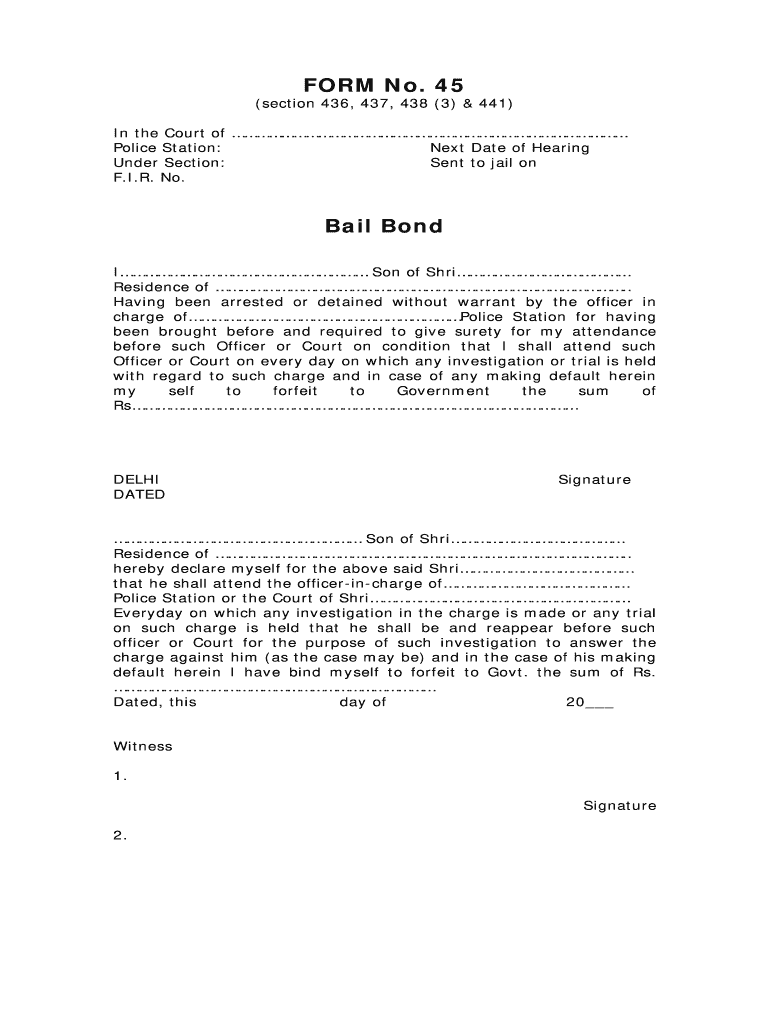







Definition & Meaning of Bail Bond Format
A bail bond format serves as a legal instrument used to ensure that an individual accused of a crime appears in court as required. It acts as a guarantee, typically involving a financial commitment from the accused or a surety, who may be a family member or friend, to cover a specified amount if the individual fails to comply with court mandates. The bond protects the legal system by ensuring the defendant returns for future hearings and fulfills judicial obligations.
Key Components of a Bail Bond Format
- Defendant Information: This includes the full name, address, and personal identification of the accused individual.
- Surety Details: The bond must also provide information about the surety, including their agreement to take responsibility for the defendant's compliance with court appearances.
- Financial Amount: The total amount of money that is pledged as security to the court appears prominently and may vary based on the nature of the crime.
- Terms of Bail: This outlines the conditions under which the bail is granted, such as required court appearances, compliance with laws, or stay-away orders from victims.
- Signatures: Both the defendant and the surety must sign the document to make it legally binding, ensuring commitment to the outlined terms.
Steps to Complete the Bail Bond Format
Completing a bail bond format correctly is crucial to ensure it is legally binding and acceptable in court. Here are the necessary steps:
-
Gather Required Information:
- Collect the personal details of the defendant and surety, including names, addresses, and contact information.
- Determine the required bail amount based on the charges the defendant faces.
-
Fill Out the Form:
- Begin by entering the defendant's full name and other identifying information at the top of the form.
- Input the surety’s details, ensuring the correct relationship to the defendant is noted.
-
Specify the Bail Amount:
- Clearly state the bail amount that has been set by the court.
-
Outline Terms and Conditions:
- Clearly include all obligations that come with the bail, which could include a mandate for court appearances or prohibitions against engaging in specific activities.
-
Review, Sign, and Submit:
- Carefully review the completed bail bond format for any inaccuracies or incomplete sections.
- Obtain signatures from both the defendant and the surety.
- Submit the bond to the relevant court or bonding company for approval.
Legal Use of the Bail Bond Format
Understanding the legal foundation of a bail bond format is essential, as it aligns with court regulations and statutes. It allows individuals who might not have the means to pay cash bail to secure their release from detention while awaiting trial.
Compliance with Legal Standards
- The bail bond must comply with both federal and state legal requirements, ensuring that it is enforceable.
- Include specific wording to reflect adherence to the state's laws governing bail processes, thus protecting both the surety and defendant's rights.
Consequences of Improper Use
- Failure to complete or submit the bail bond format correctly may result in the defendant remaining in custody until a proper bond is filed.
- Legal repercussions could arise if the bond is deemed invalid, potentially impacting the defendant’s case negatively.
Important Terms Related to Bail Bond Format
Understanding key legal terminology associated with bail bonds is crucial for navigating the system effectively. Here are a few important terms:
- Defendant: An individual accused of committing a crime and who is awaiting trial.
- Surety: A person or organization that assumes the obligation to pay the bail amount if the defendant fails to appear in court.
- Bail Amount: The monetary amount set by the court as a condition for the release of the defendant.
- Judicial Oversight: The process by which a judge reviews and approves the bail bond, assessing its validity and the risks involved.
- Forfeiture: The legal action that occurs if a defendant does not appear in court as mandated, leading to the loss of the bail amount pledged.
Examples of Using the Bail Bond Format
Practical examples can provide clarity on the use of a bail bond format in real-world scenarios.
Example 1: Misdemeanor Charge
A defendant arrested for a misdemeanor charge has a bail set at $1,000. A friend agrees to act as a surety and completes a bail bond format, submitting it to the court. Upon successful submission, the defendant is released and must appear in court on a scheduled date.
Example 2: Felony Charge
In a situation where a defendant faces felony charges with a bail amount of $10,000, a family member completes the bail bond. Due to the higher risk involved with felony charges, the court may include additional conditions in the bail format, such as regular check-ins with a probation officer, which must be adhered to for the bond to remain valid.
Example 3: Failure to Appear
If a defendant fails to appear in court after a bail bond has been posted, the surety may lose the total pledged amount. This situation highlights the importance of the bond and the serious commitments taken on by the surety within the bail bond format.
State-Specific Rules for the Bail Bond Format
Each state in the U.S. has unique regulations regarding bail bonds, reflecting variation in legal processes and requirements. Here are some state-specific considerations:
Variability in Bail Amounts
- States may have set guidelines that outline minimum and maximum bail amounts depending on the nature of the charges.
- Some jurisdictions may also allow defendants to seek reduced bail through special applications.
Conditions of Bail
- Certain states may require additional conditions such as electronic monitoring or attendance at rehabilitation programs, which must be documented in the bail bond format.
- Variations in procedures for filing a bail bond may exist; some states have strict deadlines within which bonds must be filed after arrest.
Licensing of Sureties
- In some states, sureties must be licensed and bonded themselves, meaning they must complete specific requirements to legally assume the responsibility of a bail bond.
By understanding these elements and employing an appropriate bail bond format, individuals can navigate the bail process more confidently and effectively.




