




01. Edit your group therapy questionnaire pdf online
Type text, add images, blackout confidential details, add comments, highlights and more.

Type text, add images, blackout confidential details, add comments, highlights and more.

Draw your signature, type it, upload its image, or use your mobile device as a signature pad.

Send group counseling evaluation form via email, link, or fax. You can also download it, export it or print it out.
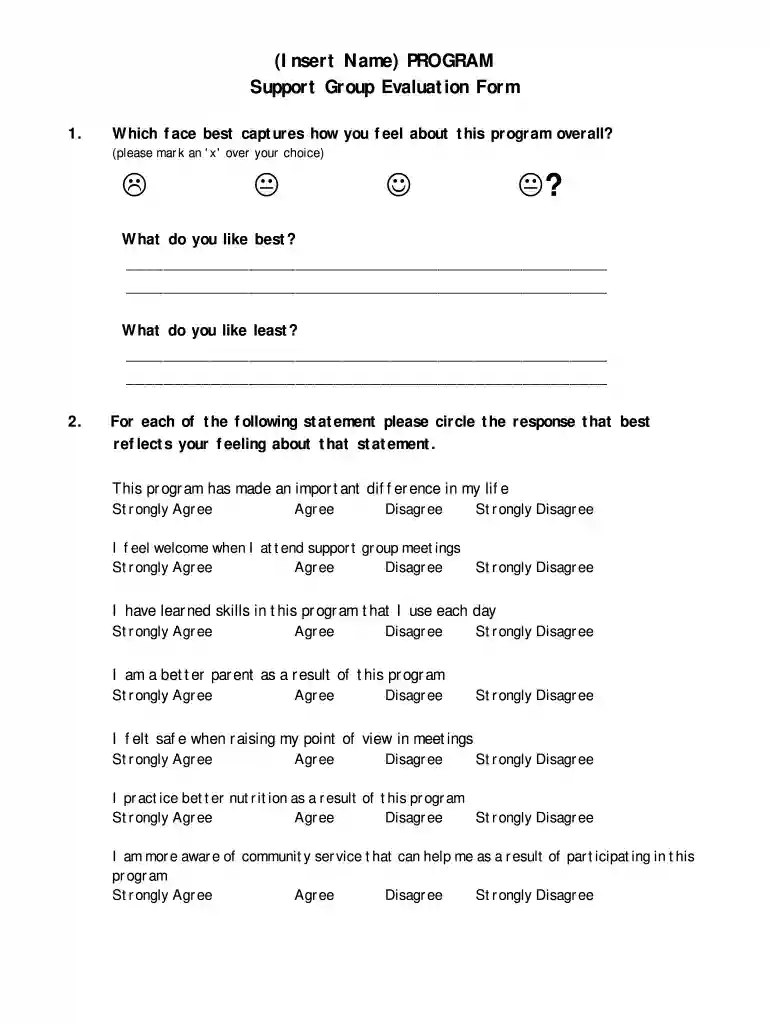
The group counseling evaluation form is a structured document used to assess participants' experiences, perceptions, and satisfaction levels concerning group therapy sessions. This form aims to gather both qualitative and quantitative feedback to improve the effectiveness of the counseling provided. It typically includes a series of questions and statements where participants rate their experiences, express their views, and provide suggestions.
Participants fill out the form following each session or at designated intervals throughout the therapy program. By collecting this feedback, counselors and facilitators can identify patterns in responses, monitor the therapeutic environment, and determine areas that require adjustment or enhancement. This evaluation is essential for continuous improvement and ensures that the needs of all participants are met effectively.
Several critical components are commonly included in a group counseling evaluation form. Each element serves a specific purpose in collecting relevant data from participants.
Demographic Information: This section collects basic details about the participants, such as age, gender, and duration of participation in the program. It helps contextualize the feedback and identify trends across different demographic groups.
Session Feedback: Participants provide ratings for various aspects of the session, including the relevance of topics discussed, the effectiveness of interventions used, and the overall environment, such as feelings of safety and inclusivity.
Open-Ended Questions: This section invites participants to elaborate on their experiences, allowing for richer insights. Questions may include what they found most helpful or challenging and suggestions for improvement.
Skills and Outcomes Assessment: Participants are often asked to evaluate their perceived improvement in specific areas, such as coping skills or emotional regulation, after attending group sessions.
Instructor or Therapist Feedback: Feedback on the facilitator’s approach and effectiveness can provide insights that inform training and development opportunities for staff.
By encompassing these elements, the group counseling evaluation form offers a comprehensive overview of participants' experiences, providing valuable insights that contribute to better therapies and support systems.
Completing the group counseling evaluation form involves several steps, ensuring that participants provide thoughtful and accurate feedback.
Read Instructions: Participants should begin by carefully reading any instructions provided on the form. This ensures a clear understanding of the expectations and process.
Reflect on the Sessions: It is beneficial for participants to take a moment to reflect on their experiences during the group counseling sessions before answering. Considering what they learned and how they felt can enhance the quality of their feedback.
Fill Out Demographic Information: This portion is usually straightforward and requires minimal thought. Accurate demographic details help categorize responses for better analysis.
Provide Ratings and Feedback: For the quantitative sections, participants should rate their experiences honestly and thoughtfully. In open-ended sections, providing specific examples helps counselors understand the context and impact of the sessions.
Review Responses: Before submitting the form, participants should review their answers to ensure everything is filled out thoroughly and accurately.
Submit the Form: After completing the evaluation, participants should submit it as directed, whether online, via email, or in-person, depending on the format given by the counseling service.
By following these steps, participants can maximize the effectiveness of their feedback, contributing to an enhanced counseling experience for themselves and others.
The group counseling evaluation form is utilized by a range of professionals and organizations involved in mental health and therapeutic practices.
Therapists and Counselors: Licensed professionals often use these forms to gather feedback from clients in therapy groups. Insights gained allow them to tailor their approaches based on group dynamics and individual needs.
Group Facilitators: Individuals leading support groups or workshops utilize evaluation forms to assess their effectiveness in fostering a supportive environment for participants.
Mental Health Organizations: Nonprofits and treatment centers may implement these forms as part of their standard evaluation processes, using data to improve program offerings and client satisfaction.
Educational Institutions: Schools providing counseling services may also employ these forms to evaluate group counseling effectiveness and support students' mental health.
These varied users highlight the versatility and importance of the group counseling evaluation form in various contexts, ultimately enhancing the quality of support and therapy available.


The group counseling evaluation form serves multiple fundamental purposes that significantly contribute to the effectiveness of therapeutic practices.
Quality Improvement: Ongoing collection of feedback aids counselors in identifying strengths and weaknesses in their group sessions. This iterative process allows for continuous enhancements in content and delivery methods.
Participant Engagement: By encouraging participants to reflect on their experiences, these forms foster a sense of ownership and engagement in the therapeutic process. Active involvement can lead to deeper insights and greater progress.
Tailored Therapeutic Approaches: The feedback helps counselors tailor their approaches to meet the specific needs of the group, ensuring that the therapy is relevant and beneficial for all participants.
Outcome Measurement: Evaluating the impact of group therapy sessions allows organizations to measure the effectiveness of their interventions over time, informing resource allocation and programming decisions.
Ultimately, regular use of the group counseling evaluation form promotes a responsive therapeutic environment where both facilitators and participants can work collaboratively toward achieving positive mental health outcomes.
Practical applications of the group counseling evaluation form illustrate its role in various therapeutic contexts.
Support Groups: After each session of a support group focused on grief, participants fill out an evaluation form. The facilitator reviews the feedback to identify recurring themes and adjust future sessions accordingly, addressing any expressed needs for specific topics.
Therapeutic Workshops: In a workshop setting that explores coping strategies for anxiety, participants are asked to complete the evaluation form, focusing on their level of comfort and usefulness of the techniques taught. The feedback can lead to the development of more targeted workshops in the future.
Substance Abuse Programs: In a program addressing dual recovery for substance use and mental health challenges, data gathered from evaluations can measure participants’ self-reported changes in attitudes and coping skills over time, demonstrating the program's effectiveness.
These examples show that the group counseling evaluation form can be adapted to a variety of therapeutic contexts while still providing valuable feedback that enhances the process for all involved.
Both digital and paper versions of the group counseling evaluation form offer distinct advantages depending on the setting in which they are used.
Accessibility: Participants can complete the form at their own convenience. This flexibility encourages honest and thoughtful responses without the pressure of submitting immediately post-session.
Data Collection: Digital forms can streamline data collection and analysis. They often include analytical tools that allow counselors to visualize trends and outcomes efficiently.
Environmentally Friendly: Using digital forms reduces paper waste, aligning with sustainable practices that many organizations prioritize.
Personal Touch: In settings where participants may prefer face-to-face interactions, paper forms can foster a more personal connection. Participants may feel more comfortable expressing their thoughts and feelings in a tangible format.
No Technology Barriers: Some individuals may not be comfortable with technology or may lack access to devices. Paper forms can ensure all participants can provide feedback regardless of their technical proficiency.
Immediate Feedback: When forms are distributed immediately after sessions, participants may provide feedback while their experiences are still fresh, resulting in more accurate responses.
In conclusion, both formats have unique benefits, and the choice between digital and paper versions should align with the needs and preferences of the group and facilitators.
Upload your group feedback form to DocHub (after you’ve set up an account for this). If you need to complete fields in it, use appropriate tools from the top pane. For example, add Signature Fields, assign each to specific party, and click on Sign → Request signatures from others. Customize your message for your recipients and click Send Request. You can also send your document by fax or as a Signing link instead of using email (you’ll locate these options by navigating to the Menu → Send)
If you store your paperwork in Google Drive, there is no need to download your group therapy feedback questionnaire on your computer and upload it back to our editor. A much simpler way is to install a browser extension developed by DocHub to streamline this flow. The extension allows editing PDFs right in your web browser. Alternatively, you can integrate your DocHub and Gmail accounts for more efficient modifying.
At DocHub, your data security is our priority. We follow HIPAA, SOC2, GDPR, and other standards, so you can work on your documents with confidence.
Have you filled out one of these forms about your experience with support groups in the past? no yes If yes: About how long ago? months.Read more
Your feedback will help us improve our group counseling services. Fill out the form and return it to your group leader. For #1-9, please circle the numberRead more


