







Definition and Meaning of the MedNet Reimbursement Form
The MedNet reimbursement form is a structured document used primarily by beneficiaries seeking financial reimbursement for medical expenses incurred within specified healthcare parameters. This form is essential for ensuring that individuals can claim appropriate costs from their health insurance or medical plan.
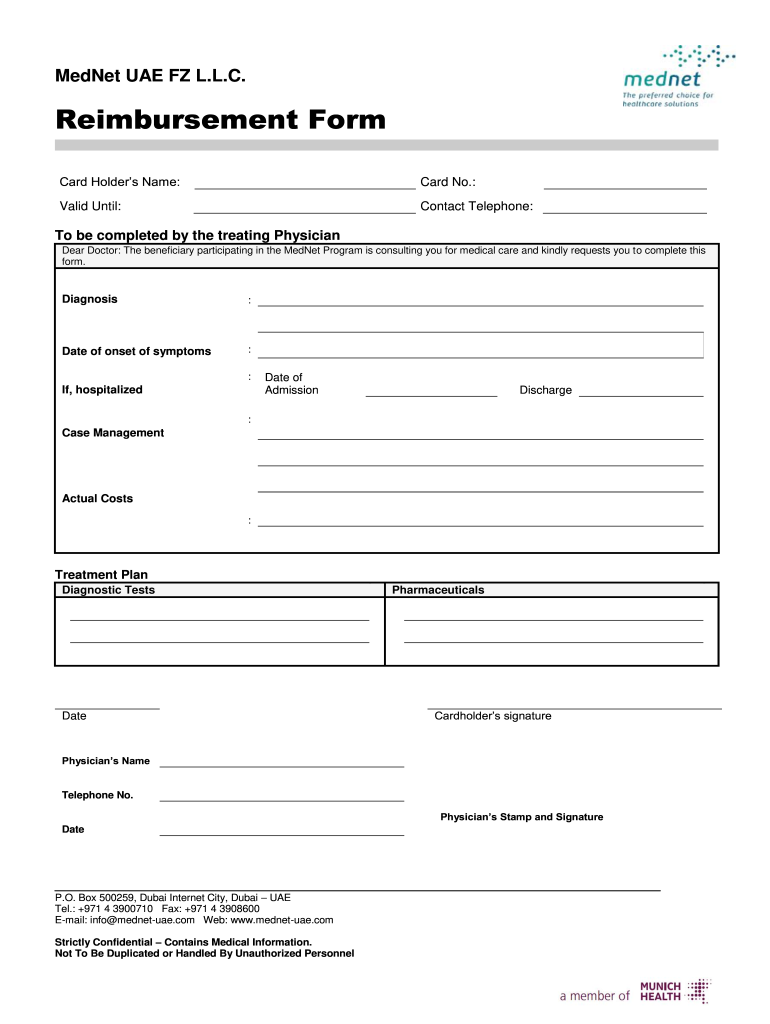
Typically, the MedNet reimbursement form requires the details of the patient, such as their identification, policy numbers, and specific medical services received. Moreover, it necessitates comprehensive input from the treating physician, detailing the diagnosis, treatment plans, and itemized costs associated with the medical care provided.
This form is commonly required for processing claims for various types of medical treatments, including inpatient stays, outpatient services, and specialist examinations. Depending on the policy specifics, individuals may also submit claims for diagnostic services, medications, and certain preventative care expenses.
- Purpose: Facilitate reimbursement for healthcare expenses.
- Usage: Ideal for individuals covered under MedNet insurance plans.
- Key Beneficiaries: Patients seeking recovery of out-of-pocket medical costs.
How to Use the MedNet Reimbursement Form
Using the MedNet reimbursement form involves several systematic steps to ensure successful completion and submission. The form must be filled out accurately to prevent delays in reimbursement processing.
-
Obtain the Form: Download the MedNet reimbursement form PDF from the official MedNet or associated healthcare provider's website. Ensure you have the latest version to adhere to current guidelines.
-
Complete Patient Information: Enter the patient’s full name, contact information, insurance policy number, and any relevant identification numbers associated with the policy.
-
Detail Medical Services: Fill in the sections requiring information about the medical services rendered. Include dates of treatment, names of the facilities or providers, and specific medical diagnoses that correspond with the services provided.
-
Attach Supporting Documents: Include receipts, bills, and medical records that substantiate the claim. Each piece of documentation should clearly denote the services received and the associated costs.
-
Review and Submit: Ensure all fields are completed without errors. Once verified, submit the form according to the options provided (online, mail, or in person). Keep a copy for personal records.
Following these steps facilitates a clearer claim process, thereby increasing the likelihood of timely reimbursements.
Key Elements of the MedNet Reimbursement Form
Understanding the key elements included in the MedNet reimbursement form is vital for accurate completion and filing. Each section of the form serves a specific purpose in conveying required information to insurers.
-
Patient Information: Essential for identifying the claimant and linking the reimbursement request to the appropriate health insurance coverage.
-
Provider Information: Details indicating the healthcare providers or facilities that administered treatment, along with their contact information.
-
Treatment Details: Comprehensive descriptions of the diagnoses, types of treatment, and dates when services were rendered, which are critical for claim verification.
-
Cost Breakdown: An itemized list of all expenses incurred, including service fees, diagnostic tests, and related healthcare costs, accompanied by any necessary documentation such as receipts or detailed invoices.
-
Signature Requirements: Areas for signatures from both the patient and the healthcare provider to validate the information presented and attest to the accuracy of the claims being made.
Each of these elements plays a crucial role in ensuring that the reimbursement claim meets the necessary guidelines established by MedNet and relevant healthcare laws.
Steps to Complete the MedNet Reimbursement Form
Completing the MedNet reimbursement form requires attention to detail and careful adherence to the required sections. The following steps outline the procedure systematically.
-
Gather Necessary Information: Prior to filling out the form, collect all essential documents, including health insurance cards, treatment receipts, and statements from healthcare providers.
-
Fill Out Patient & Policy Details: Begin by completing the patient information section. This includes the patient’s full name, address, and insurance policy number to establish identity.
-
Document the Treatment Rendered: Accurately describe the medical services received. Include precise dates of treatment and the medical professional’s involvement.
-
Attach Required Documentation: Supplement the form with all necessary documents, such as invoices and proofs of payment, ensuring they correlate with the list of services rendered.
-
Check for Accuracy: Review the provided information for any discrepancies or errors. Verify all required fields are filled and signatures are present to avoid claim rejections.
-
Submit the Completed Form: Depending on the preferred method of submission, either submit online via the health provider’s portal, send it through the mail, or deliver it in person to the designated claims address.
By following these steps, individuals can navigate the completion of the MedNet reimbursement form efficiently, increasing the chances of a successful claim processing.
Filing Deadlines and Important Dates for the MedNet Reimbursement Form
Deadlines for filing the MedNet reimbursement form are crucial to ensure individuals do not miss out on their rightful claims. Understanding these timelines assists in planning submissions effectively.
-
Claim Submission Period: Typically, claims must be submitted within a designated timeframe, often within three to six months following the date of service. This period may vary based on individual insurance policies, so it's essential to verify specifics.
-
Documentation Timing: All required documentation should accompany the submission by the established deadline. Late submissions can often lead to claim denials.
-
Notification of Approval or Denial: Once the form is submitted, beneficiaries typically receive a response regarding the status of the claim within four to eight weeks. This timeline is vital for those expecting reimbursements promptly.
-
Re-filing for Denied Claims: In cases of denial, claimants usually have a limited period, often within 30 days, to appeal and provide additional documentation to support their request.
Awareness of these key dates ensures users of the MedNet reimbursement form navigate the claims process proficiently while minimizing delays.




