




01. Edit your 1099 b 2017 online
Type text, add images, blackout confidential details, add comments, highlights and more.

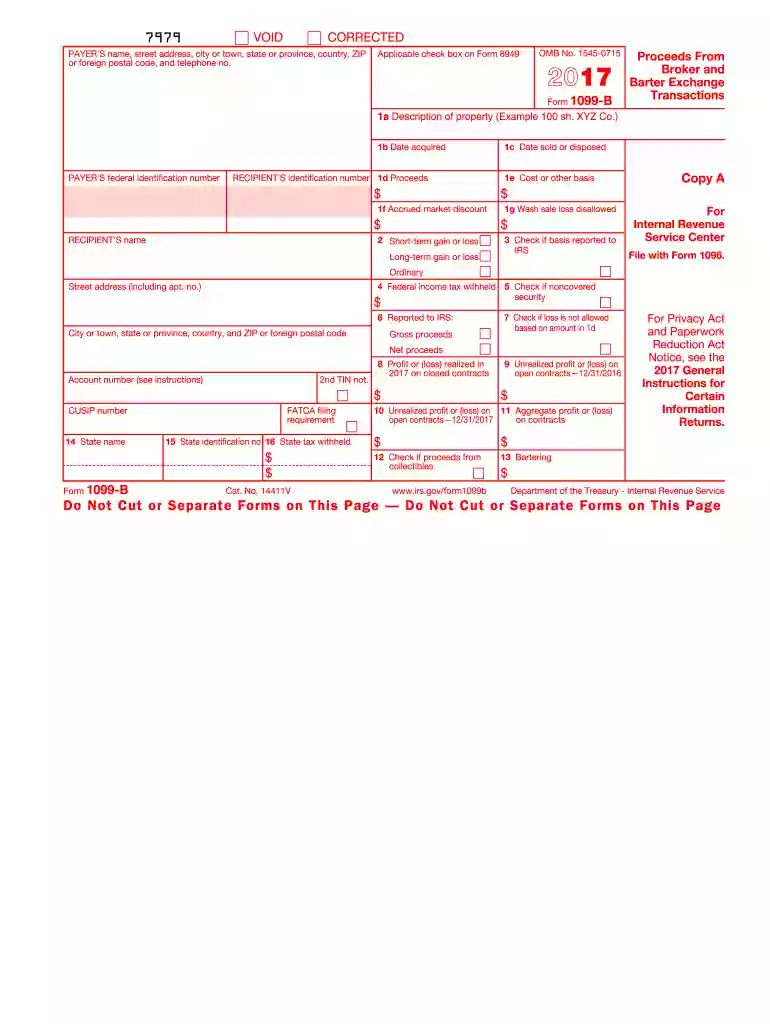
Type text, add images, blackout confidential details, add comments, highlights and more.

Draw your signature, type it, upload its image, or use your mobile device as a signature pad.

Send how do i report a 1099 patr on my taxes via email, link, or fax. You can also download it, export it or print it out.
The 1099-B form, particularly the version issued in 2017, is primarily used for reporting the proceeds from broker and barter exchange transactions to the Internal Revenue Service (IRS). The form helps track gains and losses from stock and other security sales, providing necessary information for both individual taxpayers and business entities. The IRS requires this form to ensure accurate reporting of capital gains and compliance with federal tax laws.
To obtain the 1099-B form for the year 2017, individuals can usually rely on the issuing financial institution or brokerage. These firms provide the form to clients by the IRS-specified deadlines, typically in digital format or through postal service. For those needing additional copies or replacements, contacting the issuing company directly is recommended. Ensuring that contact information with any broker or financial institution is up-to-date helps in receiving the form promptly.
The primary users of the 1099-B form are taxpayers engaged in transactions involving stocks, bonds, or other securities through brokerage firms. This includes individual investors, partnerships, corporations, and any entities participating in barter exchanges. Those actively managing investment portfolios or investing in complex financial instruments can expect to receive and utilize this form during tax preparation.


The IRS has strict guidelines to ensure proper filing and compliance when using the 1099-B form. The guidelines specify the type of transactions reportable, how taxpayers should calculate capital gains, and the importance of including necessary documentation with tax returns. Following these guidelines is crucial to avoid errors and potential audits.
Failure to accurately report transactions or file the 1099-B form with the IRS can lead to significant penalties. These may include fines for late submission or inaccuracies in the reported information. In severe cases, negligence could result in further legal action, emphasizing the importance of thorough and timely compliance.
The significant filing deadline for the 1099-B form is January 31, the date the form should be provided to taxpayers by the issuing broker. Taxpayers generally need to incorporate this reported data into their income tax returns by April 15. Keeping track of these deadlines ensures that reporting obligations are met without incurring penalties.
For specific transactions not covered by the 1099-B, taxpayers may need to consider other forms like the 1099-DIV for dividends or the 1099-INT for interest income. Understanding the diversity and applicability of these forms helps ensure comprehensive tax reporting.
We've got more versions of the 1099 b 2017 form. Select the right 1099 b 2017 version from the list and start editing it straight away!
| Versions | Form popularity | Fillable & printable |
|---|---|---|
| 2025 | 4.4 Satisfied (22 Votes) | |
| 2024 | 4.9 Satisfied (52 Votes) | |
| 2023 | 4 Satisfied (25 Votes) | |
| 2022 | 4.5 Satisfied (41 Votes) | |
| 2021 | 4.8 Satisfied (80 Votes) | |
| 2020 | 4.3 Satisfied (97 Votes) | |
| 2019 | 4.4 Satisfied (362 Votes) | |
| 2018 | 4.1 Satisfied (67 Votes) | |
| 2017 | 4.3 Satisfied (63 Votes) | |
| 2016 | 4.3 Satisfied (55 Votes) | |
| 2015 | 4.4 Satisfied (484 Votes) | |
| 2014 | 4.4 Satisfied (53 Votes) | |
| 2013 | 4.2 Satisfied (58 Votes) | |
| 2012 | 4.2 Satisfied (53 Votes) | |
| 2011 | 4 Satisfied (51 Votes) |
At DocHub, your data security is our priority. We follow HIPAA, SOC2, GDPR, and other standards, so you can work on your documents with confidence.
Jan 23, 2018 Form 1099-R shows your pen- sion or annuity for the year and any income tax withheld. You should receive a Form W-2 if you receive distributions.Read more
Brokers and barter exchanges must report proceeds from (and in some cases, basis for) transactions to you and the IRS on Form 1099-B. Reporting is also requiredRead more


