







Overview of FMLA for Employees
The Family and Medical Leave Act (FMLA) is a critical regulation in the United States that allows eligible employees to take unpaid, job-protected leave for specific family and medical reasons. This section details the rights and responsibilities of employees under FMLA.
Definition and Purpose of FMLA
The FMLA was enacted to support employees in balancing their work and family responsibilities. It mandates that covered employers allow eligible employees to take up to 12 weeks of unpaid leave within a 12-month period for:
- Birth and care of a newborn child.
- Adoption or foster care placement of a child.
- Care for an immediate family member with a serious health condition.
- A personal health condition that makes the employee unable to perform essential job functions.
Eligibility Criteria for FMLA
To qualify for FMLA leave, employees must meet specific eligibility requirements:
- Length of Employment: Employees must have worked for their employer for at least 12 months.
- Hours Worked: Employees must have completed at least 1,250 hours of service during the 12 months preceding the leave.
- Work Site: Employees must work at a location where the employer has at least 50 employees within a 75-mile radius.


Rights and Responsibilities Under FMLA
Employees are entitled to various rights and must comply with specific obligations while taking FMLA leave:
- Job Protection: Employees have the right to be reinstated to their original job or an equivalent position upon return from leave.
- Health Benefits: Employers must maintain health insurance coverage during the FMLA leave as if employees were continuously employed.
- Notification Requirements: Employees are required to inform their employers of the need for FMLA leave, preferably 30 days in advance when foreseeable.
Completing the FMLA for Employee Packet
Understanding the specific forms and processes involved in the FMLA application is essential. This section provides details on required paperwork and the completion process.
Key Forms in FMLA Packet
The FMLA packet typically includes multiple essential forms that need to be completed:
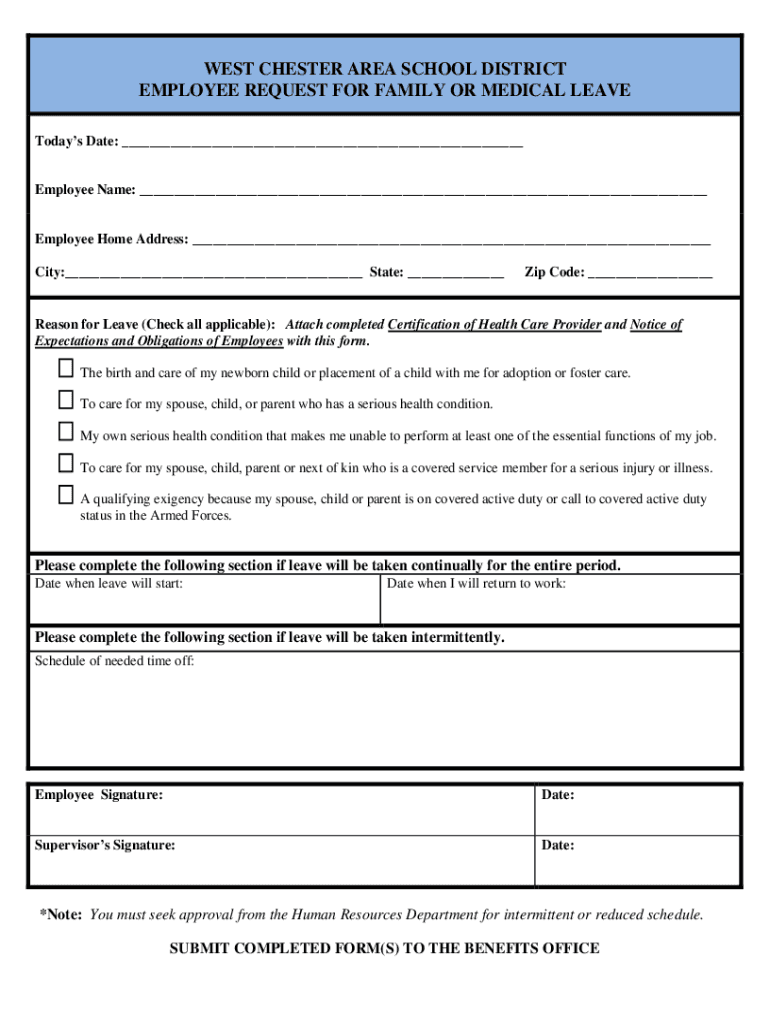
- FMLA Request Form: This form initiates the leave request, specifying the type of leave and the anticipated duration.
- Certification of Health Care Provider Form: Required when the leave is based on a serious health condition, this form must be completed by a healthcare provider to validate the leave.
- Notice of Expectations and Obligations: This document outlines the employee's responsibilities while on leave, including notification obligations and rights.
Steps to Complete the FMLA Packet
- Gather Necessary Information: Collect details about the leave reason and the healthcare provider's information if applicable.
- Complete the FMLA Request Form: Clearly fill out the form, detailing the type of leave being requested.
- Obtain Certification: For medical leave, ensure the healthcare provider completes the certification form accurately.
- Submit the Packet: Deliver the completed FMLA packet to the appropriate human resources personnel in accordance with company policy.
Important Considerations When Filing
- Ensure all forms are filled out completely and accurately to avoid delays.
- Submit requests in a timely manner, especially if the leave is foreseeable.
- Follow up with HR to confirm receipt and ask any questions regarding the status of your request.
Privacy Practices for Protected Health Information
While applying for FMLA, protecting your privacy and sensitive health information is vital. This section outlines expected privacy practices related to health information.
Confidentiality of Health Information
All information related to a medical leave request is confidential and should be handled according to HIPAA regulations. Employees should be aware that:
- Employers may only disclose health information to necessary parties involved in the FMLA process.
- Written consent may be necessary before sharing sensitive health information.
Managing Personal Health Details
Be cautious with communications regarding personal health details:
- Avoid discussing specifics about your condition with colleagues who do not need to know.
- Use official channels for all communications regarding your leave and health information.
Common Scenarios for FMLA Use
Employees may encounter various scenarios when applying for FMLA leaves. This section describes typical situations that qualify for FMLA.
Scenarios That Qualify for FMLA Leave
- Pregnancy and Childbirth: Taking time off for birth and subsequent care of a newborn is a common reason for FMLA leave.
- Serious Medical Conditions: Employees dealing with severe illnesses, surgeries, or rehabilitation may seek FMLA to focus on recovery.
- Caring for Family Members: Employees may take FMLA to care for a spouse, child, or parent with significant health issues.
Real-World Examples
- An employee may take leave after undergoing major surgery that requires an extended recovery period, supported by the healthcare provider's certification.
- A parent might use FMLA leave for bonding with a newborn or for managing care arrangements for an adopted child.
Conclusion
Understanding the implications of FMLA for employees is essential to navigate the process effectively. By comprehending the requirements, the necessary paperwork, and privacy obligations, employees can successfully manage their leave while ensuring compliance with legal standards.
In summary, the Family and Medical Leave Act provides necessary protections for employees balancing personal and professional responsibilities, ensuring they have access to essential time off for medical and family needs while maintaining job security.




