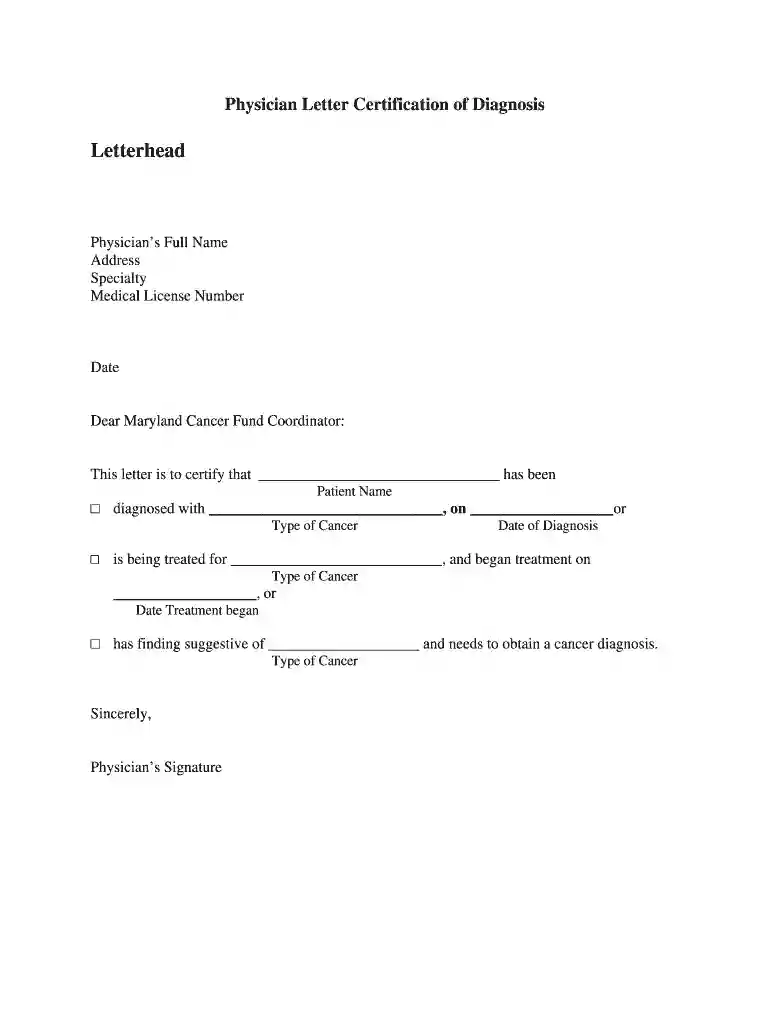
Definition and Meaning of a Letter of Diagnosis from Doctor
A letter of diagnosis from a doctor, also known as a diagnosis letter, is a formal document prepared by a healthcare professional certifying a patient's medical condition. This letter provides essential details about the patient's diagnosis, treatment, and the physician’s observations. Typically, it is used for various purposes, including insurance claims, disability benefits, and legal proceedings. The letter serves as proof of a medical condition, affirming the patient's medical status and the necessary treatment or accommodations required.
Key Components of a Diagnosis Letter
- Patient Information: Includes the patient's full name, date of birth, and contact information.
- Diagnosis Details: Specifies the medical condition diagnosed, including relevant medical codes if applicable.
- Treatment Plan: Outlines any treatment the patient is undergoing or is recommended to undergo, along with timelines.
- Physician's Information: Contains the doctor's name, contact information, and medical license number.
- Signature: Must be signed by the physician to validate the authenticity of the letter.
How to Obtain a Letter of Diagnosis from a Doctor
Obtaining a letter of diagnosis from a doctor involves a straightforward process. Here are the steps typically involved:
- Schedule an Appointment: Arrange a visit to your healthcare provider to discuss your symptoms and medical history.
- Undergo Necessary Evaluations: Your doctor may require diagnostic tests, such as blood work or imaging studies, to determine your condition accurately.
- Request the Letter: After receiving a diagnosis, inform your physician that you need a letter documenting your condition for specific purposes. Ensure that you communicate the intended use, such as for insurance or employment.
- Follow Up: Depending on your doctor's workload, you may need to follow up to ensure that the letter is completed in a timely manner.
Important Considerations for Your Request
- Clearly explain the purpose of the letter, as this can influence the language and detail included.
- If needed, provide any forms or requirements from the receiving party, such as a specific template or format they require.
Steps to Complete the Letter of Diagnosis
A well-structured letter of diagnosis should include the following steps to ensure it meets all legal and practical needs:
- Start with Letterhead: The letter should be printed on the physician's official letterhead, which adds credibility.
- Date the Letter: Always include the date when the letter is issued, which can be important for records.
- Include Patient Information: Clearly state the patient's full name and identifying details at the beginning of the letter.
- Present the Diagnosis: Provide a clear statement of the diagnosis, supported by any relevant clinical findings.
- Outline Treatment Recommendations: Describe any treatment plans, including medications, therapies, or follow-up appointments that are advised.
- Sign and Print Name: The physician should end the letter with their signature, printed name, and contact information to allow for verification.
Legal Use of the Letter of Diagnosis
The letter of diagnosis can have significant implications in various legal contexts, including:
- Insurance Claims: Many insurance companies require a letter from a healthcare provider as proof of a medical condition before approving benefits.
- Disability Applications: Those applying for disability benefits often need this letter to substantiate their claims.
- Court Proceedings: In some instances, diagnosis letters may be used in court to demonstrate a medical condition relevant to a case, such as personal injury lawsuits.
Guidelines for Legal Compliance
- Ensure that the letter is comprehensive and includes all necessary elements to prevent disputes.
- Keep a record of the letter and any correspondence associated with it, as these may be necessary for future reference.
Examples of Using a Letter of Diagnosis from Doctor
Various scenarios illustrate the diverse applications of a letter of diagnosis:
- Health Insurance Claims: A patient diagnosed with a serious condition, such as cancer, may require a letter confirming their diagnosis to justify treatment coverage by their health insurance provider.
- Employment Accommodations: An employee with a chronic condition might need to present this letter to request necessary accommodations under the Americans with Disabilities Act (ADA).
- School or Jury Duty Exemptions: A diagnosis letter might be submitted to a school to secure extensions for absent students or to be excused from jury duty due to medical conditions.
Specific Case Scenarios
- A patient undergoing chemotherapy may submit the diagnosis letter to their employer to negotiate flexible working hours.
- Individuals applying for Social Security disability benefits will often be required to include a doctor's diagnosis letter to substantiate their application.
By understanding these crucial elements associated with a letter of diagnosis from a doctor, you can ensure that you utilize this important document effectively and appropriately.