

Wender utah rating scale calculator 2026

Get Form
wender utah rating scale 61 calculator Preview on Page 1

Here's how it works

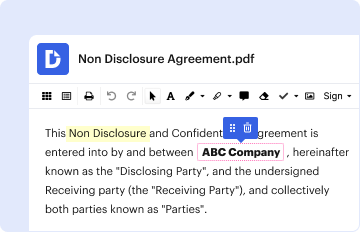
01. Edit your wender utah rating scale 61 calculator online
Type text, add images, blackout confidential details, add comments, highlights and more.
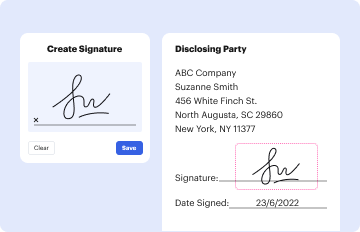
02. Sign it in a few clicks
Draw your signature, type it, upload its image, or use your mobile device as a signature pad.
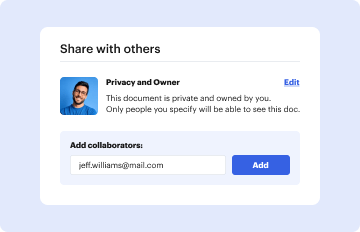
03. Share your form with others
Send wender utah rating scale calculator via email, link, or fax. You can also download it, export it or print it out.

How to use or fill out Wender Utah Rating Scale Calculator

Form edit decoration
9.5
Ease of Setup
DocHub User Ratings on G2
9.0
Ease of Use
DocHub User Ratings on G2
  1. Click ‘Get Form’ to open it in the editor.
  2. Begin by entering your name, gender, and date at the top of the form. This information is essential for identifying the respondent.
  3. For each of the 61 items listed, check the box that best describes your behavior as a child. The options range from 'Not at all or very slightly' to 'Very much'.
  4. Once you have completed all sections, calculate your total score based on the responses provided. This will help in assessing ADHD-related behaviors.
  5. Review your answers and ensure all fields are filled out accurately before saving or sharing your completed form.

Start using our platform today to easily fill out and manage your Wender Utah Rating Scale Calculator for free!

be ready to get more

Complete this form in 5 minutes or less

Get form

Got questions?

We have answers to the most popular questions from our customers. If you can't find an answer to your question, please contact us.
Contact us
There are two established total score cutoffs: (i) a score of 30 that best differentiates between ADHD and non-clinical controls, and (ii) a score of 46 that best differentiates between ADHD and depression/anxiety groups (Reimherr et al., 2022).
The scores on Part B provide additional information about a broader set of ADHD symptom severity and the impact that inattention or hyperactivity has on their life. A descriptor in the high or very high range (27 or above) is clinically docHub: Low: 19 or less.
The Wender Utah Rating Scale (WURS) shortened version includes 25 questions that indicate risk for ADHD. This is based on self-report. Maximum score is 100. A score of /= 46 is considered elevated and possibly predictive of ADHD.
The classification procedure correctly classified 64.5% of patients. Among those who did not have ADHD, only 57.5% were correctly classified compared with 72.1% among those with ADHD. The WURS is sensitive in detecting ADHD, but it misclassifies approximately half of those who do not have ADHD.
In the original validation of the WURS-25, Ward et al. reported a diagnostic accuracy for the instrument (11). With a cut-off score of 36 both sensitivity and specificity were 96%, whereas for a cut-off score of 46 sensitivity was 86% and specificity 99%.

Security and compliance

At DocHub, your data security is our priority. We follow HIPAA, SOC2, GDPR, and other standards, so you can work on your documents with confidence.

Learn more
be ready to get more

Complete this form in 5 minutes or less

Get form

People also ask

Rating scales will ask you to score behaviors, typically on a point scale of 0-3 or 4. Usually, 0 means never, and 3 or 4 means very often, and the higher the score, the more severe the symptom. Each test has a different way of adding up the scores to determine the likelihood of ADHD.

wender utah rating scale 61 scoring