
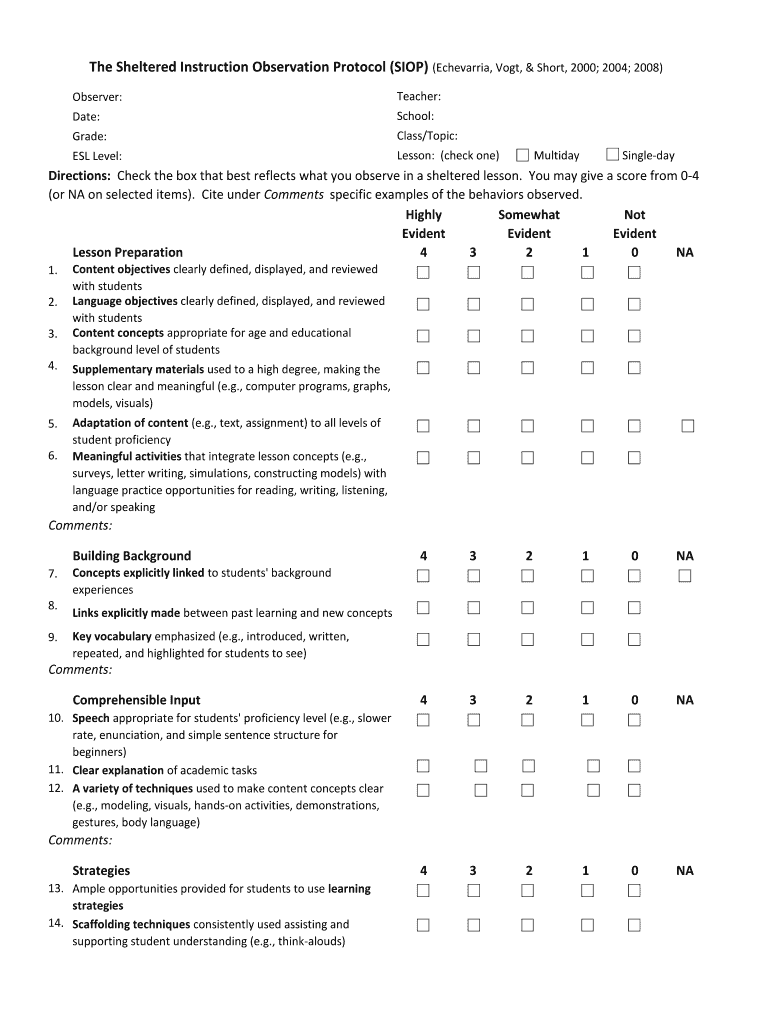







Definition & Meaning of the Observation Protocol SIOP
The Sheltered Instruction Observation Protocol (SIOP) is a research-based framework developed to improve instruction for English language learners (ELLs) and to enhance the teaching of content and language simultaneously. The protocol serves as an observational tool that allows educators to assess instructional practices within classrooms, ensuring that lessons are effectively tailored to meet the unique needs of ELLs. The SIOP model emphasizes eight key components:
- Lesson Preparation: Ensuring that lessons are planned to accommodate language objectives alongside content objectives.
- Building Background: Connecting new concepts to students' existing knowledge and experiences.
- Comprehensible Input: Presenting information in a way that is understandable to ELLs by using clear speech and visual aids.
- Interaction: Encouraging student participation through collaborative activities and discussions.
- Practice and Application: Providing students with opportunities to practice new skills and apply their learning in relevant contexts.
- Lesson Delivery: Effectively delivering the lesson while maintaining engagement and comprehension.
- Review and Assessment: Continually assessing student understanding and reinforcing learning through reviews.
This definition highlights the SIOP's emphasis on integrating content and language instruction to support ELLs' academic success.
How to Use the Observation Protocol SIOP
Implementing the observation protocol requires a systematic approach. Educators or observers can follow specific steps to utilize the SIOP effectively:
-
Familiarize with the Components: Begin by understanding the eight components of the SIOP framework. Review materials and resources related to each component to ensure clarity on expectations.
-
Observe Live Instruction: Attend classroom sessions where SIOP teaching methods are employed. Take comprehensive notes on how each component is integrated into the lesson.
-
Use a SIOP Observation Checklist: Utilize a structured checklist during observations. This checklist typically includes indicators related to each of the eight components to help assess effectiveness and adherence to the protocol.
-
Gather Feedback: After conducting observations, discuss findings with teachers. Provide constructive feedback rooted in SIOP principles to encourage improvements in instructional practices.
-
Reflect and Adjust: Educators should reflect on their practices and make adjustments based on the observations and feedback received.
Using the observation protocol in this structured way ensures that teachers can continuously improve their practices to support ELLs effectively.
Key Elements of the Observation Protocol SIOP
Understanding the key elements of the observation protocol SIOP is critical for effective implementation. These elements encapsulate the essence of the SIOP framework:
-
Interconnected Components: Each of the eight components is designed to work together, ensuring comprehensive instruction that addresses both language and content. For example, building background knowledge seamlessly connects to comprehension during lesson delivery.
-
Assessment Integration: Ongoing assessment is woven into the instructional process, promoting higher levels of student engagement and understanding. Observers should focus on how assessment is used to guide instruction.
-
Flexibility in Strategies: The SIOP offers flexibility in how educators can demonstrate components through various teaching strategies. Observers should note the diverse methods employed to support language development and content mastery.
-
Professional Development: By utilizing the observation protocol, educators engage in reflective practice, opening opportunities for professional growth and collaboration among colleagues.
Being aware of these key elements helps educators align their instructional approaches more closely with the principles of SIOP, strengthening their effectiveness in meeting the needs of ELLs.
Examples of Using the Observation Protocol SIOP
Providing examples of how the SIOP protocol may be implemented enhances comprehension of its practical application. Here are some scenarios:
-
In a Science Class: A teacher introduces a lesson on ecosystems. To build background, the teacher relates the new content to students' experience with local environments. During the lesson, the teacher uses visuals and interactive models to ensure comprehensible input, while students work in pairs to discuss characteristics of ecosystems, promoting interaction.
-
In a History Class: A high school teacher prepares a lesson on the American Revolution. The educator provides a graphic organizer to help students visualize the causes of the revolution, thereby facilitating practice and application of content. Students then collaborate in groups, using the organizer to present their findings to the class, reinforcing both content understanding and language skills.
-
In a Math Class: A teacher instructs on fractions using hands-on materials. Lesson delivery includes clear modeling of fraction concepts with visual aids, while students engage in live demonstrations of fractions through group activities, allowing for meaningful interaction and application of newly acquired skills.
These examples illustrate how the SIOP observation protocol can manifest in varied instructional contexts, enhancing comprehension and engagement among ELLs.
Important Terms Related to Observation Protocol SIOP
Familiarity with terminology related to the observation protocol SIOP aids educators in understanding and applying the framework effectively. Key terms include:
-
Academic Language: The language necessary for students to engage with curriculum content at a proficient level, encompassing vocabulary and discourse styles unique to specific subjects.
-
Scaffolding: The process of providing temporary support to students as they learn new concepts, gradually removing that support as students become more proficient.
-
Differentiation: Strategies used to tailor instruction to meet diverse needs among students, particularly focusing on language acquisition for ELLs.
-
Content Objectives: Goals that specify what students should learn or be able to do in relation to the subject matter.
-
Language Objectives: Goals that outline the language skills students should develop while engaging with content.
Understanding these terms aids in better implementation of the observation protocol and emphasizes the dual focus on content and language within the SIOP framework.




