






Definition and Purpose of the 2016 Schedule E Form
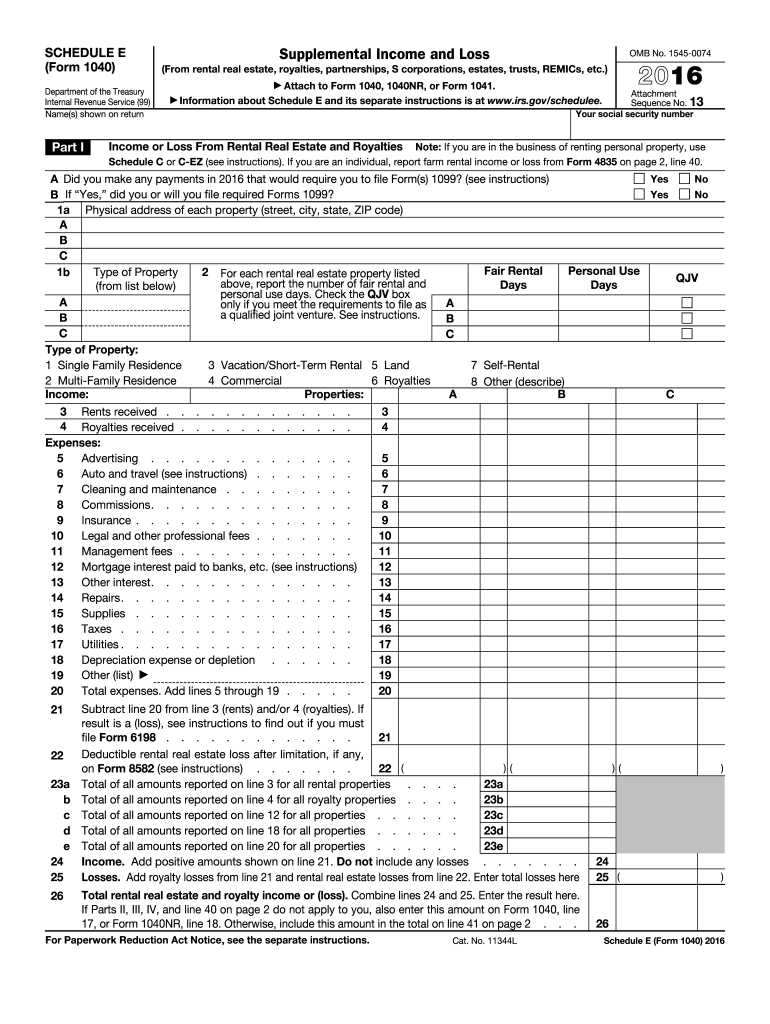
Schedule E (Form 1040) is utilized by individuals in the United States to report supplemental income and losses that do not fit into other standard categories such as wages or dividends. This form primarily captures income from rental real estate, royalties, partnerships, and S corporations. The 2016 Schedule E is vital for accurately declaring and calculating these types of income and expenses, ensuring that they're correctly reflected in a taxpayer’s overall annual tax return. It serves a dual purpose of documenting income as well as expenses, which are often essential for calculating total income or loss. Understanding its structure and requirements can significantly impact how taxpayers report their financial activities related to supplemental income.
Real Estate and Rental Income Reporting
- Real Estate Income: This section of Schedule E requires taxpayers to list all pertinent details about rental properties they own. This includes the address of each property, the type of property, and the number of days it was rented at fair rental price.
- Expense Documentation: Owners can list expenses associated with managing rental properties, such as repairs, mortgage interest, and property taxes. This is crucial for determining net rental income.
Royalties and Other Income
- Royalties: If you receive income through royalties, such as from intellectual property or mineral rights, these earnings must be stated. The form requires details about the source and nature of these royalties.
- Other Income: This encompasses any income that doesn't fall under salaries or wages but still contributes to overall supplemental income.
Obtaining the 2016 Schedule E Form
To access the 2016 Schedule E form, taxpayers can download it directly from the IRS website. Alternatively, it is available via tax software systems like TurboTax and H&R Block, or through a tax professional. While digital versions offer ease of access, it's essential to ensure you're reviewing or downloading the exact year you need, as tax forms can have critical updates annually. For those preferring hard copies, forms can be requested via mail from the IRS.
Completing the 2016 Schedule E Form: A Step-by-Step Guide
- Gather Necessary Information: Before you begin, collect details such as property addresses, forms K-1 from partnerships and S corporations, and records of any royalties received.
- Enter Personal Information: Input your Social Security Number and other identifying details on the form.
- Report Each Source of Supplemental Income: Using Part I for rental real estate and royalties, list every source individually.
- Detail Expenses: Accurately fill in expenses associated with each property or income source, using separate lines for categories like advertising, insurance, and repairs.
- Calculate Totals: Sum all income sources and expenses to determine your total net income or loss.
- Summary of Income/Loss: Complete Part V to summarize income or loss from other activities such as partnerships.
Example Scenario
Consider a taxpayer who owns a rental property and receives oil royalties. They would fill out Part I for their rental property income and deductible expenses like maintenance or local property taxes. The royalties section would then capture income from their oil rights.
Why Use the 2016 Schedule E Form
Utilizing the 2016 Schedule E is indispensable for individuals who derive substantial income from non-traditional sources. It ensures that taxpayers correctly apply deductions related to property expenses, leading to accurate net income reporting. Accurate reporting is paramount, as it aligns with legal obligations and maximizes potential tax benefits.
Legal Implications
Filing an accurate Schedule E helps avoid scrutiny from the IRS, as discrepancies might prompt audits. Conversely, disclosing accurate information can leverage applicable deductions, minimizing taxable income legally.
Typical Users of the 2016 Schedule E Form
The form is predominantly used by:
- Landlords: Those owning one or multiple rental properties.
- Royalties Recipients: Individuals earning from intellectual or natural resource royalties.
- Partners in Business: Individuals involved in partnerships or S corporations.
Business Entities
Businesses structured as LLCs, Corporations, or Partnerships can have individual partners who must report their income using Schedule E when their business involves property rental or similar income sources.
IRS Guidelines for 2016 Schedule E
The IRS provides detailed instructions specific to filling out Schedule E for 2016. Taxpayers are encouraged to consult this official guidance to ensure compliance with tax laws. This includes clear instructions on how income should be attributed and reported according to various income sources.
Important Dates
It's crucial to file the Schedule E along with Form 1040 by the tax filing deadline, typically April 15th. Failing to file on time can result in penalties.
Software Compatibility for Filing
Filing the 2016 Schedule E can be streamlined using software such as TurboTax and QuickBooks, which support data input for this form and submit it with the complete Form 1040 package. These platforms often incorporate error-checking tools, assisting with precise income and expense reporting.
Advantages of Digital Filing
While traditional paper filing is still an option, using tax software reduces the risk of human error and expedites the filing process, allowing for quick amendments if necessary.
By understanding the nuances and requirements of the 2016 Schedule E Form, taxpayers can efficiently report their supplemental income, optimize deductible expenses, and remain in compliance with IRS mandates.