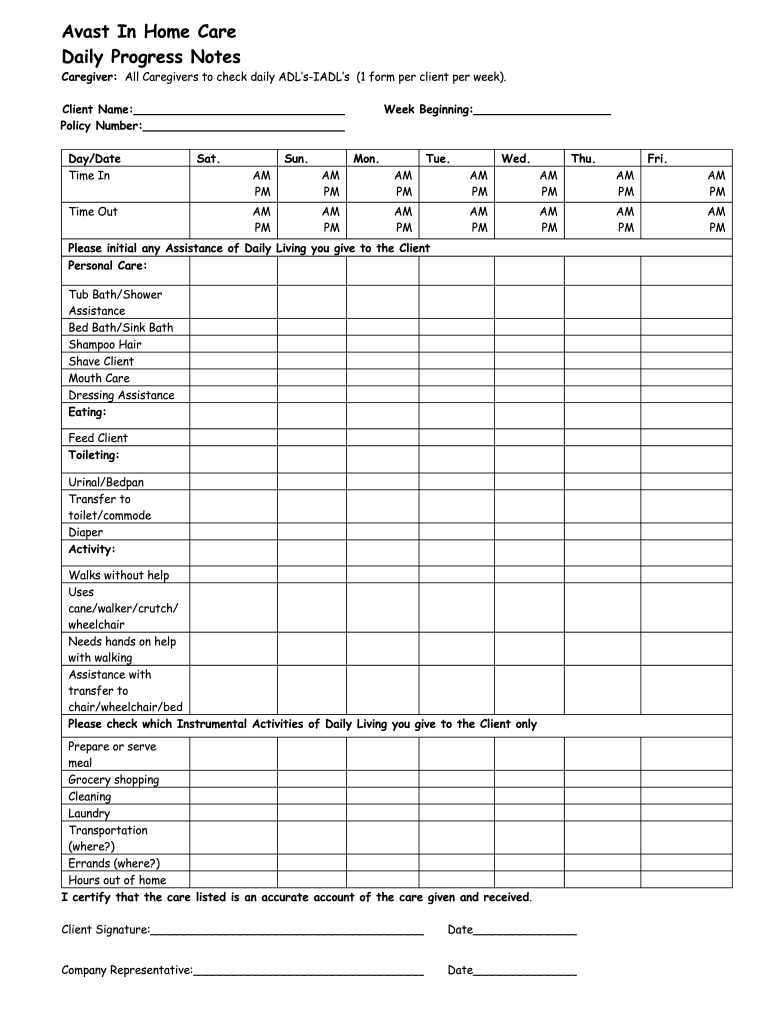







Understanding Sample Caregiver Progress Notes
Sample caregiver progress notes are essential tools for documenting daily caregiver activities. They help track the assistance provided to clients, particularly concerning Activities of Daily Living (ADLs) and Instrumental Activities of Daily Living (IADLs). By maintaining accurate records, caregivers ensure continuity of care and effective communication among the care team.
Key Components of Caregiver Progress Notes
Caregiver progress notes typically include several crucial components that serve different purposes and audiences. Understanding these elements is vital for effective documentation.
-
Client Information: This section captures the client's basic details, such as name, age, and health status. Accurate client information aids in personalized care and provides context for future caregivers.
-
Daily Time Logs: Caregivers record the time spent on various activities, ensuring accountability and facilitating billing for services rendered. This information is crucial for overseeing caregivers' productivity and confirming compliance with care plans.
-
Types of Care Provided: Documenting the specific types of assistance offered, including help with personal hygiene, meal preparation, or medication reminders, provides insights into the client's progress and challenges.
-
Activities and Engagement: Noting the activities and social engagement levels can highlight the client's emotional wellbeing. Activities such as reading, going for walks, or attending events contribute to a holistic understanding of the client's quality of life.
Format and Structure of Progress Notes
Progress notes should maintain a consistent format to facilitate review and analysis. Caregivers can adopt a structured approach for ease of use and clarity.
-
Template Usage: Employing a daily caregiver notes template can standardize documentation. This template should include designated sections for each key component outlined above.
-
Descriptive Language: Caregivers should strive to use clear, descriptive language when documenting care actions. For example, instead of stating, “assisted with bathing,” a more detailed note could say, “provided assistance with bathing, ensuring the client was safe and comfortable throughout the process.”
Legally Binding Aspects of Caregiver Notes
While caregivers focus on providing essential care, it is also critical to understand the legal implications of their documentation. Progress notes can serve as vital records in legal proceedings or medical reviews.
-
Compliance with Regulations: Caregivers should be aware of state regulations governing medical documentation. This includes understanding what information is mandatory to include and how to maintain confidentiality.
-
Audit Trail: Properly maintained caregiver progress notes offer an audit trail, which can be critical in disputing or validating care claims. Ensuring all entries are factual and objective helps protect against liabilities.
How to Write Effective Caregiver Notes
Writing good care notes requires focus on specificity, clarity, and objectivity. The following steps can enhance the quality of documentation:
-
Be Objective: Caregivers should document what they see or hear without injecting personal opinions. This approach helps maintain professionalism and reduces bias.
-
Use Clear Language: Avoid jargon or overly complex terms. A straightforward description of events ensures that anyone reviewing the document can understand the care provided.
-
Regular Updates: Update notes regularly, ideally every shift or day, to ensure that documentation reflects the most current information.
Examples of Caregiver Progress Notes
Providing examples can illustrate effective documentation. Below are samples reflecting different scenarios:
-
Example 1: "Assisted Mrs. Johnson with transferring from bed to wheelchair at 9:00 AM. Ensured safety by using gait belt. Mrs. Johnson showed minor discomfort, reported back pain, notified the supervising nurse."
-
Example 2: "Prepared and served lunch at 12:00 PM. Assisted Mr. Smith with cutting his food and encouraged him to eat independently. He consumed about 75% of the meal. Discussed weekend activities, and Mr. Smith expressed interest in attending the garden club."
By adhering to these guidelines and examples, caregivers can produce comprehensive progress notes that not only meet professional standards but also enhance the quality of care.