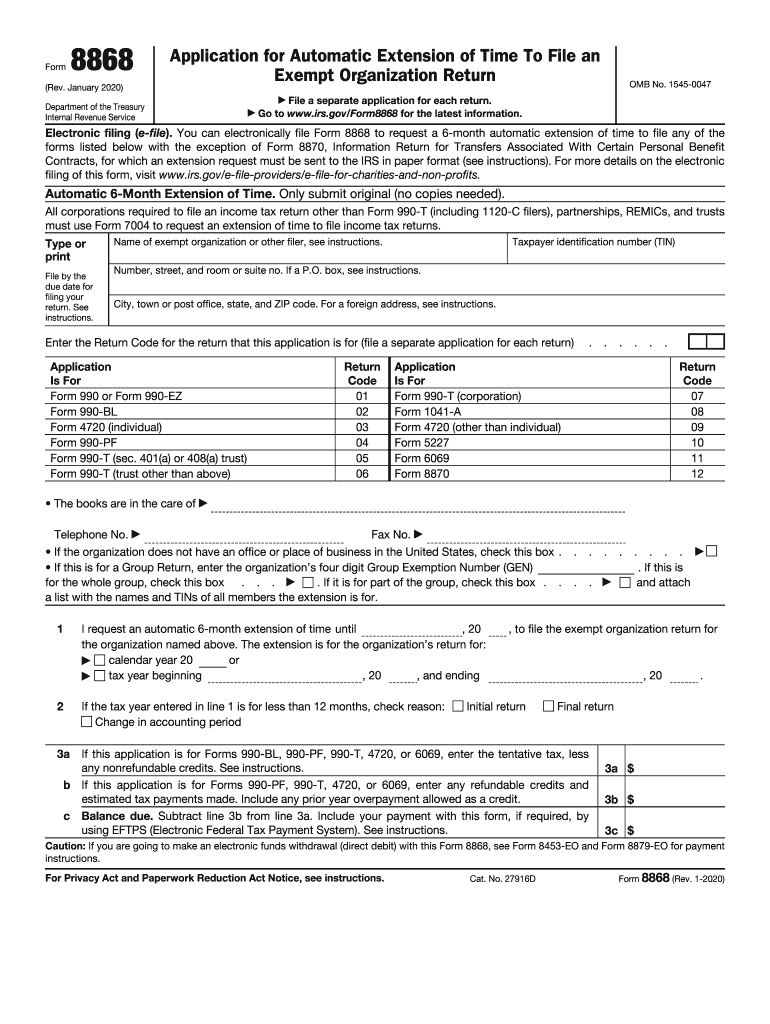







Definition and Purpose of Form 8868
Form 8868, titled "Application for Automatic Extension of Time To File an Exempt Organization Return," is a document used by organizations to request an automatic six-month extension for filing their tax returns. This form is specifically suited for exempt organizations, including charities and religious institutions, that require additional time to complete their tax documentation accurately. The key functionality of Form 8868 is to provide temporary relief by extending the filing deadline, allowing organizations the necessary time to gather complete financial details without incurring the penalties associated with late filing.
How to Obtain Form 8868
Exempt organizations can obtain Form 8868 through several convenient methods. The Internal Revenue Service (IRS) website provides a downloadable PDF version that organizations can print and fill out manually. Additionally, the IRS authorized e-file providers offer an electronic version, streamlining the application process directly through their platforms. Many tax software programs, such as TurboTax and QuickBooks, also integrate with the IRS to facilitate the electronic filing of Form 8868, enhancing accessibility and ease of use.
Steps to Complete Form 8868
Completing Form 8868 involves several detailed steps to ensure accuracy and compliance. Organizations should begin by gathering all relevant financial documents and reviewing their previous year's tax return to confirm their exempt status.
- Header Information: Enter the organization's name, address, and Employer Identification Number (EIN).
- Type of Return: Specify the return for which the extension is sought (e.g., Form 990, 990-EZ, or 990-PF).
- Automatic Extension Request: Verify that the automatic extension is applicable and indicate the expected completion date of the return.
- Signature: The form must be signed by an authorized individual, such as a director or officer of the organization.
Filing Deadlines and Important Dates
Organizations must be mindful of the filing deadlines associated with Form 8868 to ensure timely submission. The form must be filed by the original due date of the exempt organization's tax return. For instance, if the original return is due on May 15, the form should be submitted by that date to secure the extension. It is essential to note that while the extension allows additional time to file, it does not delay any tax payments owed, which must still be fulfilled by the original deadline to avoid penalties and interest.
Who Typically Uses Form 8868
Form 8868 is predominantly used by exempt organizations across various sectors. These include charitable entities, religious institutions, social welfare organizations, and other similar nonprofit groups that fall under sections 501(c) or 527 of the Internal Revenue Code. Such organizations often handle complex financial transactions and benefit from the additional time to ensure accurate reporting. By securing an extension, these organizations can prevent filing incomplete or incorrect returns, thereby maintaining compliance with IRS regulations.
IRS Guidelines for Filing Form 8868
The IRS provides specific guidelines that exempt organizations must adhere to when filing Form 8868. The form should be completed accurately, with all necessary sections filled out to the best of the organization's ability. Errors or omissions may result in the denial of the extension request. The IRS also requires that the form be filed separately for each tax return for which an extension is sought, ensuring that each document is processed independently. Professional tax advisors can offer further guidance to organizations unfamiliar with the process, helping navigate any potential issues.
Examples of Using Form 8868
To illustrate the practical use of Form 8868, consider a charitable foundation engaged in multiple philanthropic initiatives nationwide. As the fiscal year ends, the foundation's accounting team requires extra time to curate detailed reports across various projects. By filing Form 8868, they secure a six-month extension, allowing thorough compilation of data without the risk of incurring late fees or penalties. Similarly, a religious organization hosting numerous community activities can utilize Form 8868 to ensure financial accuracy in reporting while adhering to IRS guidelines.
Penalties for Non-Compliance
Failing to file Form 8868 or neglecting to submit it by the original due date of the tax return can lead to significant penalties. The IRS imposes fines and interest on any taxes owed if payments are not made by the standard deadline. Delays in filing without obtaining an extension could also trigger penalties based on the unpaid tax amount. It is crucial for organizations to remain vigilant about deadlines and utilize Form 8868 effectively to avoid these negative financial repercussions.