






Definition and Purpose of the Self-Employment Ledger
The self-employment ledger is a financial record-keeping tool specifically designed for individuals who earn income through self-employment activities. It serves to systematically track and document income and expenses related to self-employed work for taxation and financial management purposes. Proper use of this ledger ensures compliance with IRS guidelines and provides a foundation for accurate tax filings.
Key Features of a Self-Employment Ledger
- Income Tracking: The ledger includes sections to record different streams of income generated from self-employment.
- Expense Documentation: It allows self-employed individuals to log all business-related expenses, including equipment, supplies, and services, which can be deducted from taxable income.
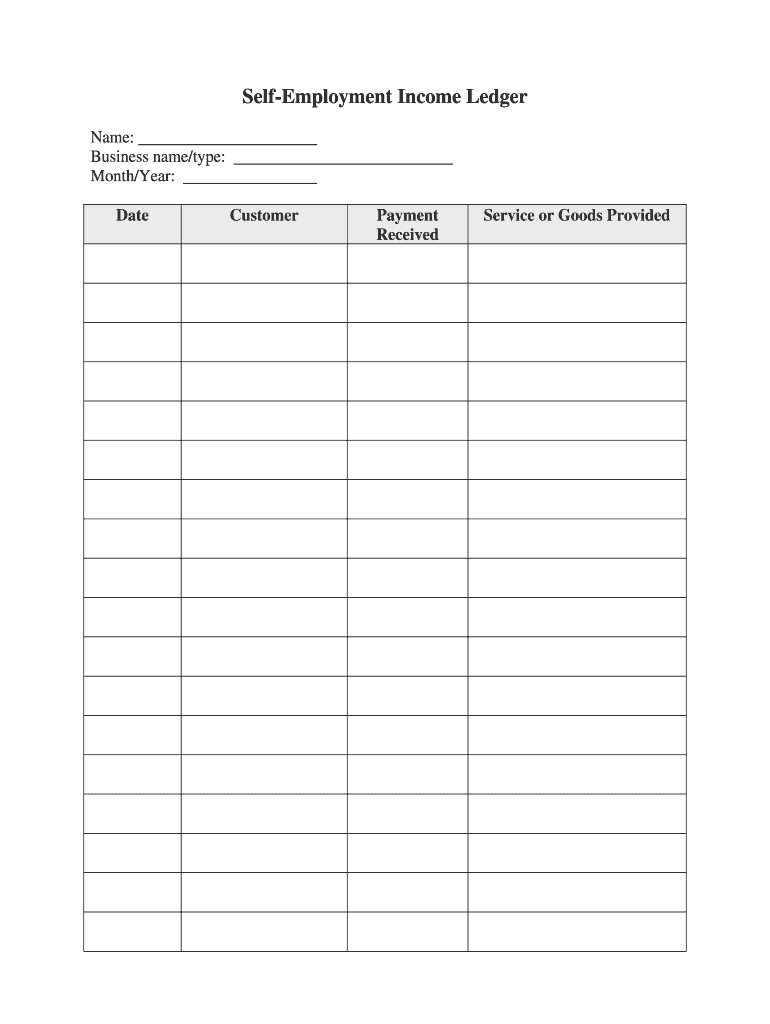
- Date and Transaction Details: Each entry provides space for the date of transaction, a description of goods or services provided, customer information, and payment received.
- Monthly and Yearly Overview: Users can organize entries by month or year, aiding in easier financial analysis at a glance.
Benefits of Maintaining a Self-Employment Ledger
Utilizing a self-employment ledger can greatly enhance financial clarity for self-employed individuals. It helps identify profitable areas of the business, manage expenses, and prepare for tax obligations. Additionally, a well-maintained ledger can be invaluable during audits or when applying for loans, as it provides proof of income.
How to Use the Self-Employment Ledger Effectively
Using a self-employment ledger requires consistency and accuracy. Here are the recommended steps for effective use:
-
Choose a Format: Decide whether to use a physical ledger or an electronic self-employment ledger template. Many free printable options are available online.
-
Record Transactions: Consistently log transactions as they occur. Include the date, description, customer details, amount received, and expenses incurred.
-
Categorize Entries: Organize the ledger into income and expenses. This categorization helps make tax calculations straightforward.
-
Review Regularly: Frequently review your entries to ensure they are accurate and up-to-date, which is crucial for tax season.
-
Back-Up Records: If using a digital format, ensure that you back up your data regularly to avoid loss in case of technical issues.
Example Scenario
Consider a freelance graphic designer. They may record payments received from various clients under income and expenses related to software subscriptions and design materials. This structured record allows them to see monthly earnings and assess profitability.
Steps to Complete the Self-Employment Ledger
Completing a self-employment ledger involves several critical steps to ensure comprehensive documentation:
-
Personal Information: At the top of the ledger, include your name, business name, and contact details for easy reference.
-
Monthly Breakdown: For each month, begin with a summary section where you list total income and total expenses.
-
Detailed Entries: Below the summary, create detailed entries for each transaction. Ensure clarity by providing:
- Date of Transaction: When the service was rendered or product sold.
- Description: A brief summary of goods or services.
- Customer Information: Name and contact for accounting purposes.
- Payment Amount: The total amount received.
- Expenses: Record any expenses linked to the transaction.
-
Reconciliation: At the end of each month or year, reconcile entries to match your bank statements and ensure accuracy.
-
Retention for Tax Purposes: Keep copies of your ledger documents for at least three years, as required by IRS regulations, in case of audits.
Importance of the Self-Employment Ledger
Having a self-employment ledger is vital for several reasons:
- Tax Readiness: It simplifies the preparation of tax returns by keeping all the necessary figures in one place.
- Financial Analysis: The ledger enables users to analyze trends, such as peak earning periods and high expenses.
- Budget Management: By tracking income and expenses, individuals can better manage their personal and business budgets.
Real-World Usage
A self-employed consultant might utilize the ledger to review their finances before deciding to invest in further training or services, thereby making informed decisions beneficial to their business growth.
Who Uses the Self-Employment Ledger?
A variety of professionals and business owners can utilize a self-employment ledger, including:
- Freelancers and Contractors: Individuals offering services across various sectors.
- Small Business Owners: Those running businesses that may not have formal accounting departments.
- Gig Economy Workers: People engaged in part-time work through digital platforms (e.g., rideshare drivers, delivery personnel).
Adjusting to Different Business Needs
Each user may customize the ledger's categories and detail levels according to the specific requirements of their business, ensuring it serves as a valuable tool across different industries.
Important Terms Related to the Self-Employment Ledger
Understanding key terms can enhance the effectiveness of using a self-employment ledger:
- Gross Income: Total income earned before any deductions.
- Net Income: Income remaining after all eligible expenses have been deducted.
- Deductions: Specific business-related expenses that can lower taxable income.
Clarifying IRS Terminology
Being familiar with IRS terminology related to self-employment income helps ensure compliance and maximizes financial benefits during tax preparation, reinforcing the importance of maintaining an accurate and detailed self-employment ledger.