






Definition and Meaning of the IRS Fraud Form
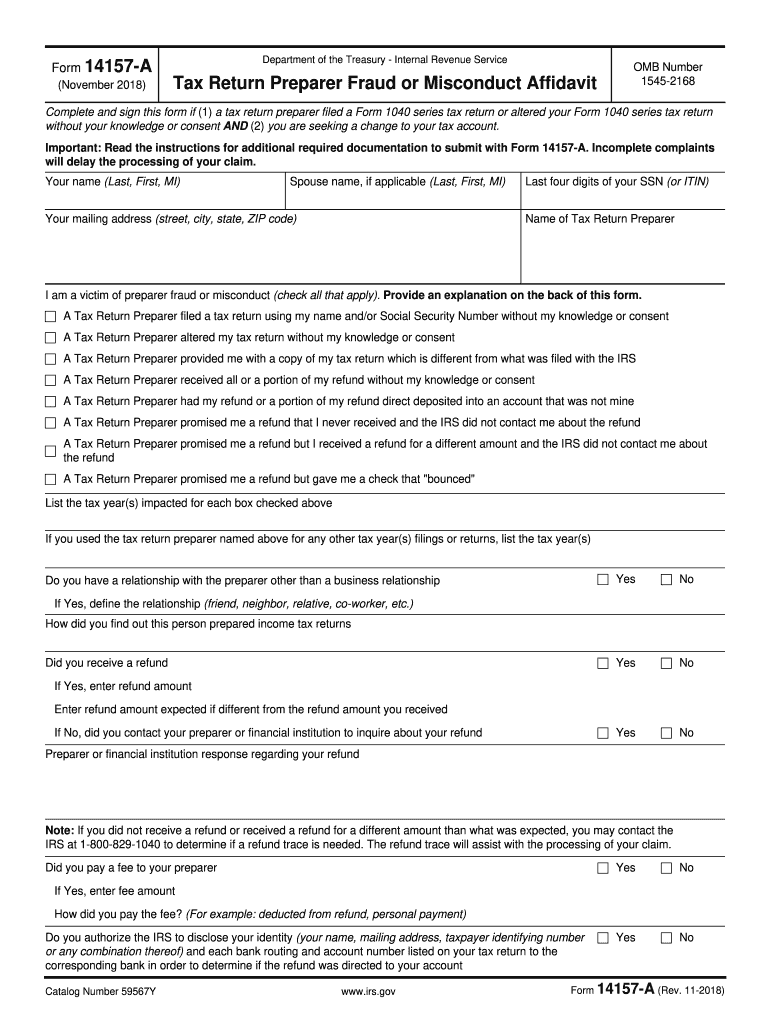
The IRS Fraud Form, officially known as Form 14157-A, is a critical tool for taxpayers to report fraudulent activities committed by tax preparers. These activities might include unauthorized filing or alteration of tax returns. The form requires detailed information about the alleged misconduct, including personal information of the taxpayer and documentation supporting the claim. This form aids in addressing discrepancies in tax accounts and ensures adherence to IRS regulations by challenging unethical practices.
How to Use the IRS Fraud Form
Using the IRS Fraud Form involves a multi-step process designed to offer clarity and gather necessary evidence. First, gather all relevant documents, such as the fraudulent tax return, correspondence with the preparer, and any communications regarding tax filings. Detailed descriptions of the alleged fraud should be included, specifying dates and actions taken by the preparer. This comprehensive documentation supports the claim and assists the IRS in its investigation. The completed form, along with all supporting materials, should be submitted to the IRS for review.
How to Obtain the IRS Fraud Form
Taxpayers can access the IRS Fraud Form online through the official IRS website. It can be downloaded as a PDF, which is suitable for either digital or print completion. Additionally, physical copies can be obtained by calling the IRS and requesting a mailed form. Ensuring that the form is the latest version from the IRS site is crucial, as this guarantees that all necessary information fields are included and up-to-date.
Steps to Complete the IRS Fraud Form
- Gather Information: Collect documentation that supports the fraudulent claim, including copies of any disputed tax returns and communications with the tax preparer.
- Fill Out Personal Information: Enter your full name, contact details, and Social Security Number. This information authenticates your identity and associates your claim with specific tax filings.
- Describe the Fraud: Clearly outline the fraudulent activity, making note of specific actions by the tax preparer and how they affected your tax return.
- Provide Evidence: Attach all relevant documentation that supports your claim. This could include falsified tax returns and misleading correspondence.
- Review and Submit: Carefully review the completed form for accuracy. Submit the form along with any attachments to the designated IRS address as specified in the instructions.
Why You Should Use the IRS Fraud Form
Filing Form 14157-A serves multiple purposes. Primarily, it protects taxpayers from financial loss and legal repercussions due to fraudulent tax submissions. By officially reporting misconduct, taxpayers can rectify incorrect tax filings and maintain compliance with IRS regulations. Additionally, it holds unethical tax preparers accountable, contributing to the integrity of tax preparer practices and protecting other taxpayers from similar misconduct.
Key Elements of the IRS Fraud Form
- Taxpayer Information: This section includes personal data required to associate the claim with a specific taxpayer.
- Details of the Alleged Fraud: Providing a thorough account of the misconduct, this section is vital for the IRS investigation process.
- Documentation: Submission of supporting documents is necessary to substantiate claims made within the form.
- Acknowledge Statement: Confirm that all information provided is accurate to the best of your knowledge, as the IRS uses this to validate the authenticity of the complaint.
IRS Guidelines on Fraudulent Activity Reporting
The IRS outlines specific guidelines for reporting fraudulent activities to protect taxpayers and ensure accurate tax recording. These guidelines highlight the type of misconduct eligible for reporting, emphasizing the significance of submitting comprehensive evidence alongside the form. Adhering to these guidelines allows for a smoother process in correcting erroneous tax submissions and facilitates swift IRS investigation.
Penalties for Non-Compliance
Failure to report fraudulent activities can result in significant penalties for the taxpayer if the IRS identifies discrepancies independently. Taxpayers may face fines, interest on underpaid taxes, or even criminal charges if deemed complicit in tax fraud. Timely submission of the IRS Fraud Form helps mitigate these risks by promptly alerting authorities to unauthorized tax preparer actions, thus protecting taxpayers from unintended legal and financial consequences.
Examples of Using the IRS Fraud Form
Consider a situation where a taxpayer discovers discrepancies in their filed tax return that were unknown to them. Another example involves realizing that additional income was reported inaccurately, inflating taxes owed. Utilizing Form 14157-A allows such taxpayers to present their case to the IRS with supporting evidence, facilitating correction of their tax record and potentially recovering any excess paid taxes due to these errors.
These examples illustrate the importance of the IRS Fraud Form in maintaining tax integrity and providing a means for taxpayers to rectify issues without personal repercussion.