






Definition and Purpose of Form 1120-H
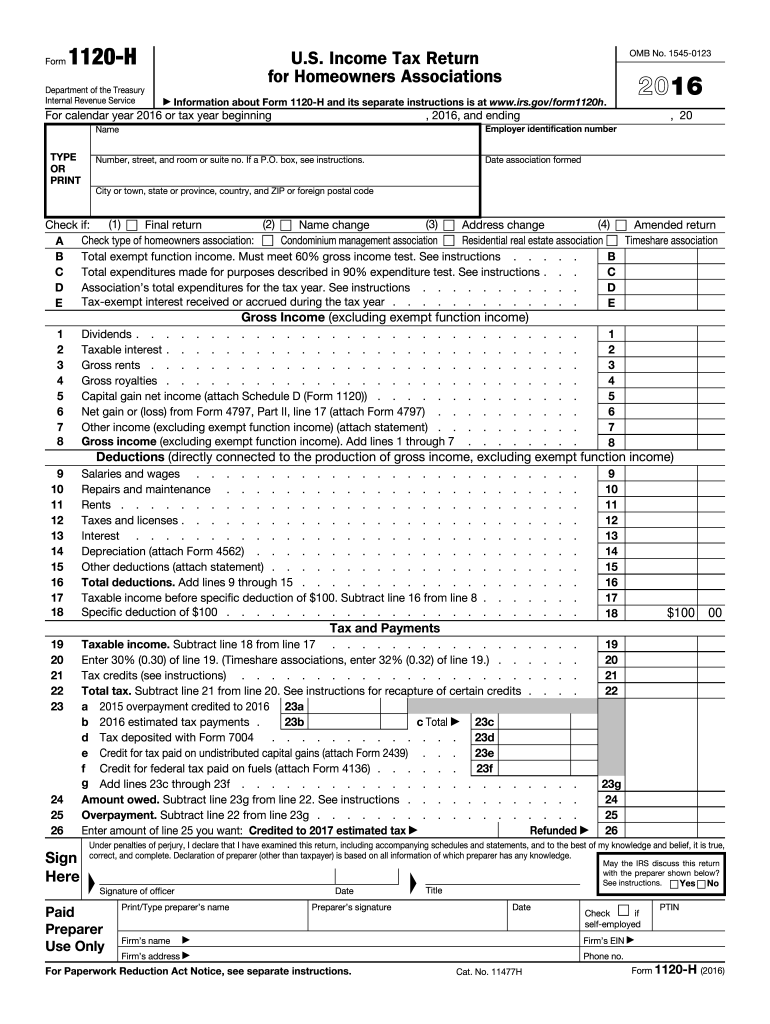
Form 1120-H is designated for U.S. homeowners associations (HOAs) to file their income tax returns. It applies specifically to associations managing real estate such as condominiums and residential communities. The primary purpose of this form is to report income, detail expenses, compute deductions, and calculate any taxes owed by the association. By utilizing this form, HOAs can often benefit from certain tax exemptions applicable only to their income types, distinguishing them from typical corporate tax filings.
How to Use the 2016 IRS Form 1120-H
To effectively use the 2016 IRS Form 1120-H, associations must gather pertinent financial records. These include documentation of income generated, such as member dues and other miscellaneous revenues, and expenditures related to maintenance and service provision. It is imperative to accurately report all financial figures as this form serves the dual purpose of declaration and computation of taxable income. By adhering to these requirements, associations can access potential tax efficiencies unique to homeowners organizations and avoid errors that might lead to penalties.
Steps to Complete the 2016 IRS Form 1120-H
-
Gather Necessary Documents:
- Compile financial statements for the fiscal year.
- Ensure access to records detailing member dues, assessments, and other revenues.
-
Complete Part I (Revenue and Expenses):
- Enter total exempt function income, such as membership dues.
- Record direct expenses related to maintenance and other common expenses.
-
Fill Out Part II (Taxable Income):
- Report taxable interest and dividends.
- Incorporate any unrelated business taxable income.
-
Calculate Tax and Payment (Parts III & IV):
- Determine taxable income using rates specified for HOAs.
- Specify prepayments or carryforward credits if applicable.
-
Review and Submit:
- Double-check all information for accuracy.
- Sign and date the form before submission.
Key Elements of the 2016 IRS Form 1120-H
- Exempt Function Income: Income directly tied to the HOA's operational purposes, like member fees or maintenance fund collections.
- Taxable Income: Income from non-member sources or investments not directly related to association functions.
- Deductions: Allowable write-offs for expenses directly influencing maintenance and service provision, essential for reducing the taxable base.
- Tax Rate: A specific rate applicable to HOAs, distinct from regular corporate tax rates, ensuring fair taxation related to their nonprofit nature.
IRS Guidelines for Filing
The IRS stipulates that Form 1120-H must be filed by the 15th day of the fourth month following the end of the taxable year. For most, this means an April deadline. IRS guidelines emphasize accurate reporting and adherence to timeline requirements to avoid penalties. Associations should consult with a tax professional to ensure compliance and understand any unique rulings relevant to their financial situation.
Filing Deadlines and Important Dates
For the tax year 2016, Form 1120-H was due on April 18, 2017, coinciding with Tax Day for individuals and most entities. Late filings may attract interest and penalties, calculated from the original deadline date. To accommodate potential delays, organizations should aim to finalize filings well in advance and consider extensions through proper channels if necessary.
Eligibility and Typical Users
Eligibility for Form 1120-H filing extends to homeowners associations classified primarily as condo management groups and residential real estate cooperatives. These entities are typically nonprofit organizations maintaining common areas without operating for profit, and they must derive significant income from member dues to qualify for this form’s specific advantages.
Penalties for Non-Compliance
Non-compliance, including failure to file or late submission of Form 1120-H, can result in penalties. Common issues leading to penalties involve underreporting income, incorrectly claiming deductions, or missing deadlines. To mitigate risks, associations should meticulously review financial documentation and possibly consult tax advisors skilled in HOA filings.
Required Documentation
Associations filing Form 1120-H should prepare the following documentation:
- Membership fee receipts
- Maintenance and operation expenses records
- Investment income statements
- Previous tax filing records (if applicable)
These records are vital for accurate completion and substantiation of claims made on the form.
Form Submission Methods
Form 1120-H can be submitted either electronically or by mailing the physical form to the IRS. Electronic filing is encouraged for timely processing and confirmation receipt. If mailing, ensure use of certified mail to trace and verify delivery to prevent processing delays or disputes regarding submission compliance.
Examples of Using the 2016 IRS Form 1120-H
Consider a condominium association with an annual member dues collection of $150,000 and investment income amounting to $5,000. Using Form 1120-H, they report their exempt income and adjust for regular maintenance expenses while determining payable taxes on their investment income, yielding potential tax efficiencies due to the structured exemptions available only through this filing method.