




01. Edit your ohio residential property disclosure form 2023 online
Type text, add images, blackout confidential details, add comments, highlights and more.

Type text, add images, blackout confidential details, add comments, highlights and more.

Draw your signature, type it, upload its image, or use your mobile device as a signature pad.

Send agency disclosure statement ohio via email, link, or fax. You can also download it, export it or print it out.
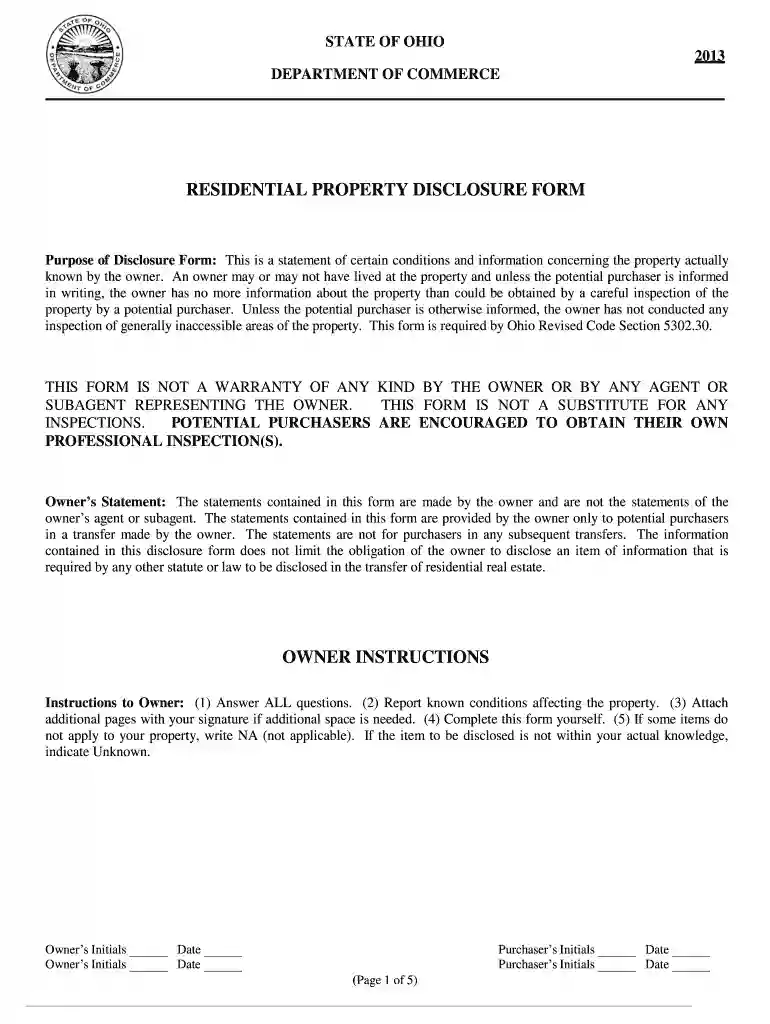
The Ohio Property Disclosure Form serves as a crucial document in real estate transactions across the state. It is designed to communicate known issues about a property from the seller to potential buyers. By law, the form is required to inform purchasers about various conditions and relevant information concerning the property. The seller fills out the form based on their actual knowledge and does not guarantee the property's condition. Different sections cover water supply, sewer systems, structural components, hazardous materials, and other pertinent issues.
Filling Out the Form: The seller is responsible for completing the form, addressing all relevant sections with honesty and transparency. Every aspect of the property that could potentially influence the buyer's decision should be disclosed.
Reviewing the Form: Upon receiving the filled form, the potential buyer should meticulously review the disclosed information. This helps in assessing whether the property's condition aligns with their expectations and if further inspections are necessary.
Negotiations: The information provided can be a starting point for negotiations. If issues are disclosed, buyers may request repairs or adjustments to the purchase price.
Gather Information: Sellers must collect all pertinent details regarding the property's current state. This involves checking systems, structures, and other components for defects or issues.
Fill Out All Sections: Each section must be addressed. If there are no known issues for a particular category, that must be stated clearly.
Sign and Date: After completing the disclosures, the seller signs and dates the form, affirming that all known information has been disclosed truthfully.
Provide to Buyer: The completed form must be given to the buyer before the purchase agreement is finalized, allowing them ample time to review.
Water and Sewer Systems: Disclosures regarding water sources, sewer types, and any known issues with these systems are critical.
Structural Components: Information about the foundation, roof, and any structural modifications should be included.
Hazardous Materials: Any known hazards such as asbestos, lead, or radon need to be disclosed.
Other Relevant Issues: This includes environmental factors and any legal issues affecting the property.
The form is legally required in Ohio to ensure all parties are informed about the property's current state. It serves both as protection for sellers, showing they have disclosed known issues, and for buyers, to make informed decisions. Non-compliance can lead to penalties or legal disputes if undisclosed issues are discovered post-purchase.
In Ohio, the property disclosure law mandates that sellers provide this form as part of real estate transactions involving residential properties. Certain exemptions exist, such as transfers related to court orders, which may not require this disclosure.
Primarily, the form is used by residential property owners intending to sell their property. It is relevant for realtors who assist them and the potential buyers who evaluate the information during the buying process.


Consider a seller who recently discovered a minor leak in the attic. This must be disclosed in the form under the section for structural issues. Another example is noting known sewer backups, which could alert the buyer to potential plumbing problems that need addressing before they become major issues.
Actual Knowledge: Information the seller truly knows about, versus assumptions or guesses.
Material Defect: A problem that could adversely affect the property's value or pose a risk to health and safety.
Good Faith: The honest intention to disclose everything known without deceit.
Completing the form correctly shields sellers from future legal retaliation and provides buyers with necessary transparency. For buyers, it is an opportunity to gauge whether the property's condition is worth the investment and negotiate terms if needed.
We've got more versions of the ohio residential property disclosure form 2023 form. Select the right ohio residential property disclosure form 2023 version from the list and start editing it straight away!
At DocHub, your data security is our priority. We follow HIPAA, SOC2, GDPR, and other standards, so you can work on your documents with confidence.


May 14, 2015 Capital spending and track and equipment statistics can be found within the Railway Property section of Part I of this report on Form 10-K.Read more
The attached residential property disclosure form is prescribed by the director of commerce to permit transferors of residential real estate to discloseRead more


