




01. Edit your church audit report sample online
Type text, add images, blackout confidential details, add comments, highlights and more.

Type text, add images, blackout confidential details, add comments, highlights and more.

Draw your signature, type it, upload its image, or use your mobile device as a signature pad.

Send church audit report pdf via email, link, or fax. You can also download it, export it or print it out.
Audit forms serve as essential tools for churches to conduct internal reviews, ensuring transparency and compliance with financial regulations. The importance of these forms cannot be overstated, as they help to maintain the integrity of church operations and safeguard donor trust. Below are various types of audit forms examples tailored for church use, along with detailed explanations and practical examples.
Church audit forms can vary depending on the specific financial activities and organizational needs. The following are typical examples:
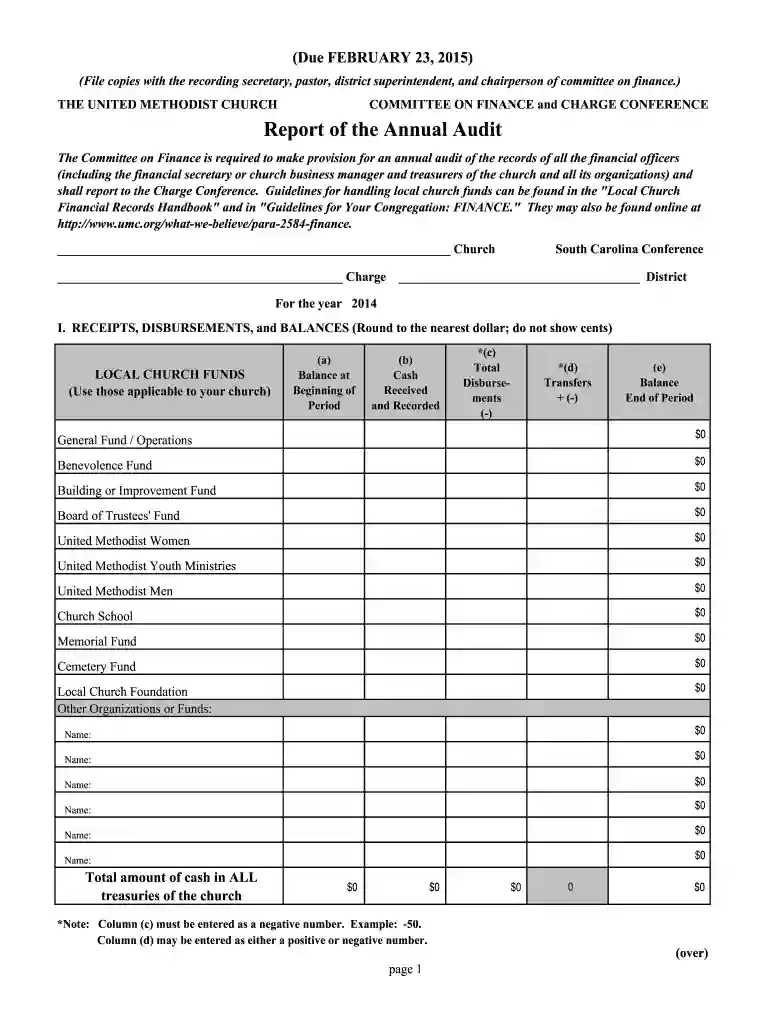
Church Audit Report Sample: This is a comprehensive report that summarizes the audit findings, including financial statements, discrepancies, and auditor recommendations. It typically follows a standardized format to ensure clarity and consistency.
Church Financial Audit Checklist: A systematic tool used during the audit process, this checklist helps auditors ensure that all key financial areas are reviewed. It often includes items like bank reconciliations, expense reports, and donation tracking.
Audit Forms Examples Specific to Ministries: Many churches have various ministries or programs that require their audit forms, such as youth programs or outreach efforts. These forms help track specific funds and expenditures associated with each ministry, emphasizing accountability.
A well-structured church audit form should contain several critical sections that professionals can use to document their findings:
Receipts and Disbursements
Detail all funds received and spent during the audit period.
Bank Reconciliations
Ensure that the church’s financial records match their bank statements.
Fund Balances
Document the status of various funds for effective financial oversight.
Auditor Verification
Sections for auditors to confirm data accuracy.
Recommendations
A space to provide suggestions for future improvements or areas of concern.
Completing a church audit form involves a systematic approach to ensure accuracy and thoroughness:
Gather Financial Records
Collect all relevant documentation related to income and expenses for the audit period.
Use the Checklist
Follow the church financial audit checklist to ensure that all necessary items are reviewed and documented.
Fill Out the Form
Enter information into the designated sections, ensuring clarity and accuracy in all entries.
Review with Auditors
Once completed, engage in a review session with auditors to clarify any ambiguities and verify computations.
Finalize the Report
After auditor comments and adjustments, finalize the audit form for submission to church leadership or relevant committees.
Several legal guidelines must be observed in the preparation and submission of church audit forms:
IRS Compliance: Churches must adhere to IRS guidelines concerning financial reporting and transparency, especially if they receive tax-deductible contributions.
State Regulations: Compliance with state-specific rules for audits, including filing deadlines and required documentation, is paramount to avoiding penalties.
Utilizing audit forms provides significant advantages to church organizations, including:
Enhanced Transparency: Audit forms promote a culture of openness, encouraging donor confidence and community trust.
Improved Financial Oversight: Regular audits lead to better financial management practices and identification of any discrepancies.
Informed Decision-Making: Having clear financial records allows church leadership to make informed decisions regarding budgeting, funding, and resource allocation.
Many churches are turning to digital platforms to streamline their audit processes:
Fillable PDF Forms: These allow for easy data entry, saving time and reducing the chances of errors.
Online Collaboration Tools: Platforms like DocHub enhance the ability to collaborate on audit forms, enabling multiple users to engage in real-time document editing and signing.
Audit forms examples for a church play a vital role in maintaining financial integrity and transparency. By utilizing comprehensive forms and checklists, churches can ensure proper documentation, adherence to regulations, and an effective audit process. Emphasizing the importance of these tools aids in building trust within the community and securing the long-term health of the organization.
We've got more versions of the church audit report sample form. Select the right church audit report sample version from the list and start editing it straight away!
At DocHub, your data security is our priority. We follow HIPAA, SOC2, GDPR, and other standards, so you can work on your documents with confidence.
Plan of A ction: Zion Traveler w ill consider its options at the close of each fiscal year to determ ine if an audit is required or som e oth er form of repoRead more
Apr 1, 2019 A church, convention of churches, or association of churches described in. A school described in. (Attach Schedule E (Form 990 or 990-EZ).) ARead more
The auditor may use Form L, O, and P and to select the appropriate sample and document the testing. Page 18. Step 8(D): Testing : Tithes and Offerings. TheRead more


