
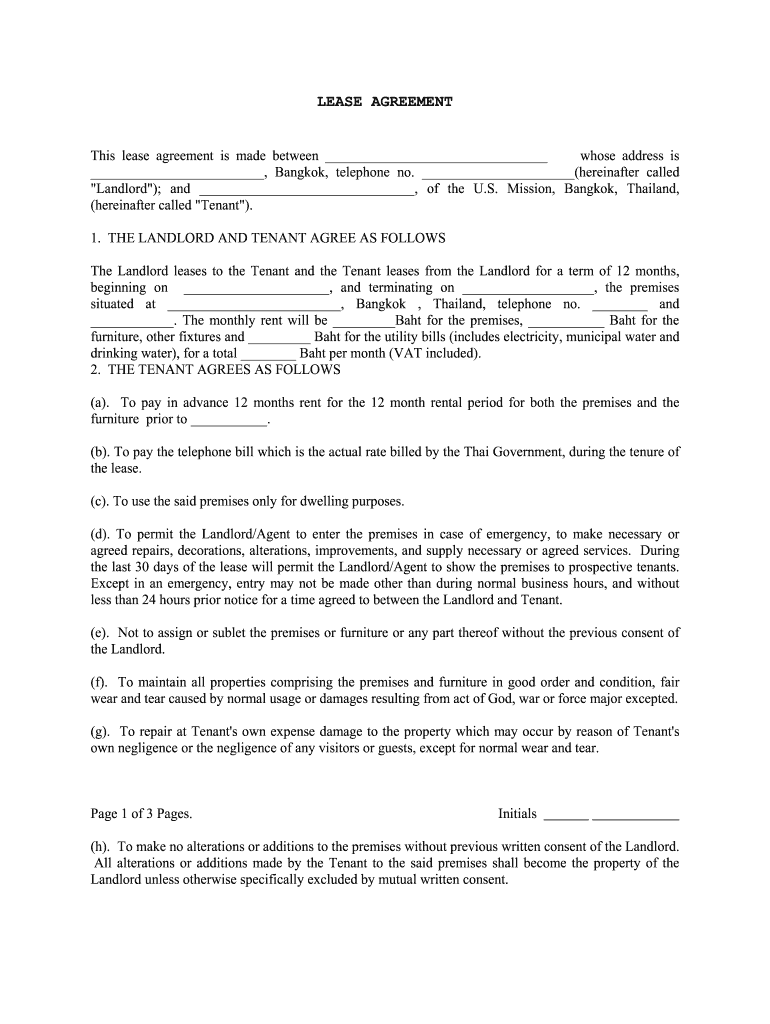







Overview of Rental Agreements in Thailand
A rental agreement in Thailand, also known as a lease agreement, is a legal contract between a landlord and a tenant that outlines the terms regarding the rental of property. This document serves as a foundational tool for defining the responsibilities of each party, the duration of the lease, payment details, and other essential conditions governing the rental relationship.
Commonly involved properties include apartments, condos, and houses, with the rental agreements varying in format and specifics based on property type and location. For example, a condo rental contract in Thailand may include additional regulations reflective of condominium management rules.
Key Elements of a Rental Agreement
A comprehensive rental agreement consists of various vital components that ensure clarity and protection for both parties:
- Parties Involved: Clearly identify the landlord and tenant, including contact information and identification details.
- Property Description: Provide a detailed description of the rental property, including address and any specific amenities or features.
- Lease Term: Specify the duration of the lease, such as a fixed-term lease lasting twelve months or a month-to-month rental agreement.
- Rent Payment Terms: Outline the rental amount, payment frequency (monthly, quarterly), acceptable payment methods, and consequences for late payments.
- Security Deposit: Mention the security deposit amount, the conditions for its return, and permissible deductions for damages or unpaid rent.
- Maintenance Responsibilities: Define which party is responsible for maintenance and repairs. Often, the landlord is responsible for major repairs, while the tenant may handle minor maintenance.
- Termination Clauses: Include the conditions under which either party can terminate the agreement, whether through breaches of the lease or mutual consent.
- Use of Property: Specify permissible uses of the property, ensuring that tenants do not engage in illegal activities or violate building rules.
- Governing Law: State that the rental agreement is governed by Thai law, highlighting any local statutes that apply.
Rental Agreement Template Options
Several standardized templates are available for those seeking to create a rental agreement in Thailand. These templates can vary depending on the type of property involved. Common types include:
- House Rental Agreement Format: Typically includes sections related to caretaking responsibilities and neighborhood rules.
- Condo Rental Contract: Includes stipulations regarding shared facilities (e.g., pools, gyms) and noise regulations specific to condominium living.
- Rental Agreement Template (PDF and Word formats): Accessible formats allow users to fill in their information comfortably.
Using a recognized rental agreement template can streamline the process and help prevent omissions that could lead to misunderstandings or legal disputes.
Process of Creating a Rental Agreement
Creating a rental agreement involves several methodical steps to ensure it meets legal requirements and protects both parties:
- Drafting the Agreement: Use a rental agreement template as a foundation, filling in specific details pertinent to the rental situation.
- Reviewing by Both Parties: Each party should read the agreement thoroughly, ensuring all terms are clear and mutually agreeable.
- Legal Review (Optional): For high-value properties or complex arrangements, consider having the agreement reviewed by a legal professional knowledgeable in Thai rental laws.
- Signing the Document: Both parties should sign the agreement in the presence of witnesses to enhance its legal standing.
- Distributing Copies: Provide signed copies to all involved parties for their records.
Importance of a Legally Binding Agreement
A well-drafted rental agreement is crucial for protecting the interests of both landlords and tenants. It helps avoid disputes by clearly outlining expectations and responsibilities, such as:
- The tenant's duty to pay rent and maintain the property.
- The landlord's obligation to provide a safe and habitable living environment.
- Rights concerning the return of the security deposit at lease termination.
Legal provisions can also address scenarios such as tenant eviction processes or modifications to rental terms, making it an essential document in managing rental relationships effectively.
Recommendations for Tenants
When entering a rental arrangement in Thailand, tenants should consider the following tips:
- Conduct a Property Inspection: Before signing the agreement, inspect the property for pre-existing damage and ensure it matches the description.
- Understand All Terms: Clarify any jargon or terms included in the lease to avoid future disputes regarding interpretations.
- Document Communication: Keep records of all communications with the landlord concerning the rental agreement to provide context if disputes arise.
This comprehensive understanding of the rental agreements in Thailand equips both landlords and tenants to navigate the leasing landscape effectively, ensuring compliance and clarity throughout the rental process.




