






Definition & Purpose of Form 1125-A
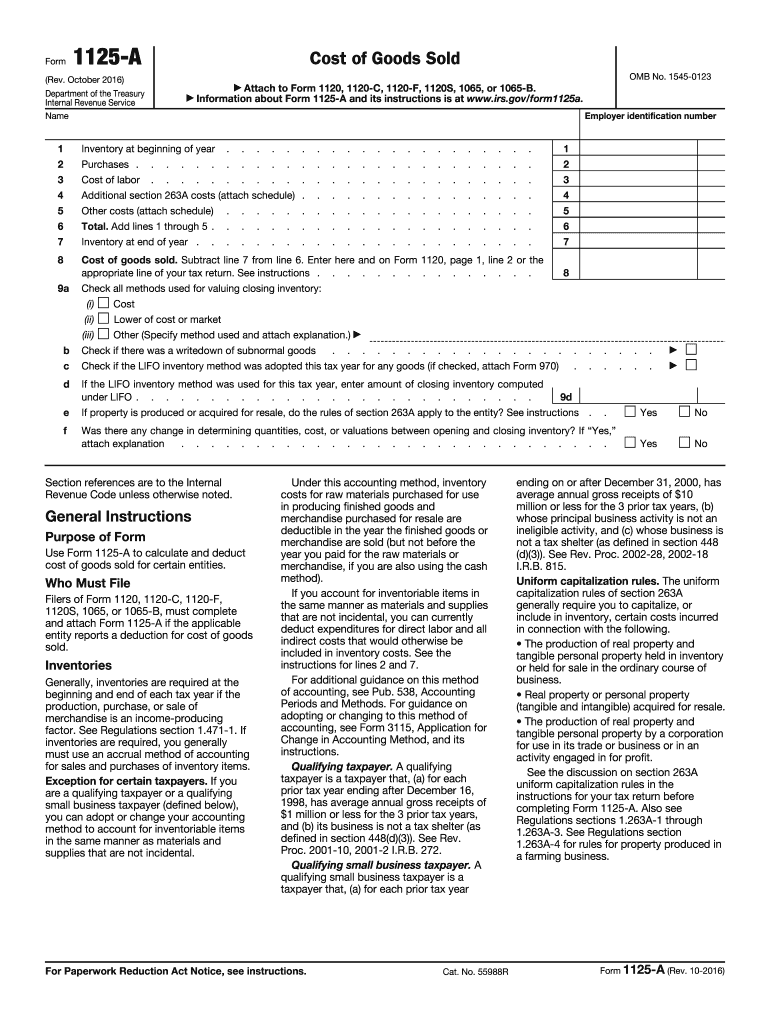
Form 1125-A is used by businesses in the United States to calculate and report the Cost of Goods Sold (COGS) for tax purposes. This form plays a crucial role in determining the gross profit of a business by accounting for the cost of inventory that has been sold during the tax year. The form is typically used by businesses that produce or sell goods, such as manufacturers, retailers, and wholesalers. Precisely reporting COGS is essential for accurate tax reporting and compliance with Internal Revenue Service (IRS) regulations.
How to Obtain Form 1125-A
Form 1125-A can be obtained directly from the IRS website, where it is available for download as a PDF. This ensures the form is always up-to-date and includes the latest filing instructions and requirements. Alternatively, taxpayers with access to tax software may find it automatically integrated within the application, where they can digitally complete and submit the form. Tax professionals can also provide the form as part of their services. Access to these diverse channels ensures that businesses of all sizes can obtain the form conveniently.
Steps to Complete Form 1125-A
- Prepare Business Records: Gather all relevant financial records, including inventory at the beginning and end of the year, purchases, and any other direct costs.
- Calculate Beginning Inventory: Enter the inventory value at the start of the year, which should match the ending inventory of the previous tax year.
- Include Purchases and Costs: Detail any purchases and direct costs incurred throughout the year that contribute to your inventory.
- Account for Ending Inventory: Record the value of inventory at the end of the tax year.
- Calculate COGS: Use the provided formula in Part I of the form to calculate the total cost of goods sold.
- Review and File: Double-check all entries for accuracy and attach the completed Form 1125-A to your business tax return (e.g., Form 1120, 1120-S, or 1120-F).
Important Terms Related to Form 1125-A
- Inventory: Goods available for sale, including raw materials, work-in-progress, and finished items. Proper inventory valuation is crucial for calculating COGS.
- Cost of Goods Sold (COGS): The direct costs associated with producing or purchasing goods sold by a business during the tax year.
- Direct Costs: Expenses directly tied to the production of goods, such as raw materials, labor, and manufacturing supplies.
Who Typically Uses Form 1125-A
Form 1125-A is primarily used by corporations, partnerships, and other business entities involved in manufacturing, retail, or wholesale operations. Any business that must report COGS on their income tax return will find this form necessary. Sole proprietors and small businesses may also require the form if their operations include the buying and selling of physical products with significant inventory.
Key Elements of Form 1125-A
- Beginning & Ending Inventory: Accurate inventory valuation is critical as it directly impacts the calculation of COGS.
- Purchases & Adjustments: Details the cost of goods purchased or produced and adjusts for inventory changes during the year.
- Labor Costs: Includes wages paid to employees directly involved in creating the goods.
- Other Costs: May include manufacturing supplies, shipping, and overhead costs, which are necessary to bring the product to market.
IRS Guidelines and Compliance
The IRS provides specific instructions on completing Form 1125-A to ensure compliance with tax laws. Businesses must follow these guidelines carefully to avoid errors that could result in penalties. Essential considerations include correctly valuing inventory using acceptable methods such as the First In, First Out (FIFO) or Last In, First Out (LIFO) inventory accounting methods. Adhering to IRS guidelines helps ensure that businesses report accurate financial details, thus maintaining good standing with tax authorities.
Filing Deadlines and Important Dates
Form 1125-A is due with your annual tax return, typically by March 15 for corporations or April 15 for individuals and sole proprietors, unless an extension is filed. Missing these deadlines can result in penalties and interest charges. Businesses should ensure they complete and file all necessary forms promptly to avoid any complications. Keeping track of important tax deadlines helps ensure compliance and financial stability for the business.
Business Entity Types Requiring Form 1125-A
- C Corporations: Required to file Form 1125-A as part of their tax documentation.
- S Corporations: Use this form to report COGS as part of their tax filings to shareholders.
- Partnerships: Must complete the form if they have inventory-based businesses involved in selling or manufacturing goods.
These businesses must accurately prepare and file this form, as it plays a vital role in reporting the financial operations of the company to the IRS.
Software Compatibility
Modern tax software solutions, such as TurboTax or QuickBooks, support Form 1125-A, easing its preparation and submission. Compatibility with these software tools ensures businesses can automate calculations, reduce manual entry errors, and maintain accurate financial records. Tax software's integration capabilities with accounting platforms enhance the efficiency and accuracy of tax filings, allowing businesses to focus more on core activities.
By expanding on topics like necessary terms, who uses the form, and filing guidelines, this content provides the depth required for thorough understanding while adhering to the format and guidelines provided.