




01. Edit your defendant answer form texas online
Type text, add images, blackout confidential details, add comments, highlights and more.

Type text, add images, blackout confidential details, add comments, highlights and more.

Draw your signature, type it, upload its image, or use your mobile device as a signature pad.

Send original answer form texas via email, link, or fax. You can also download it, export it or print it out.
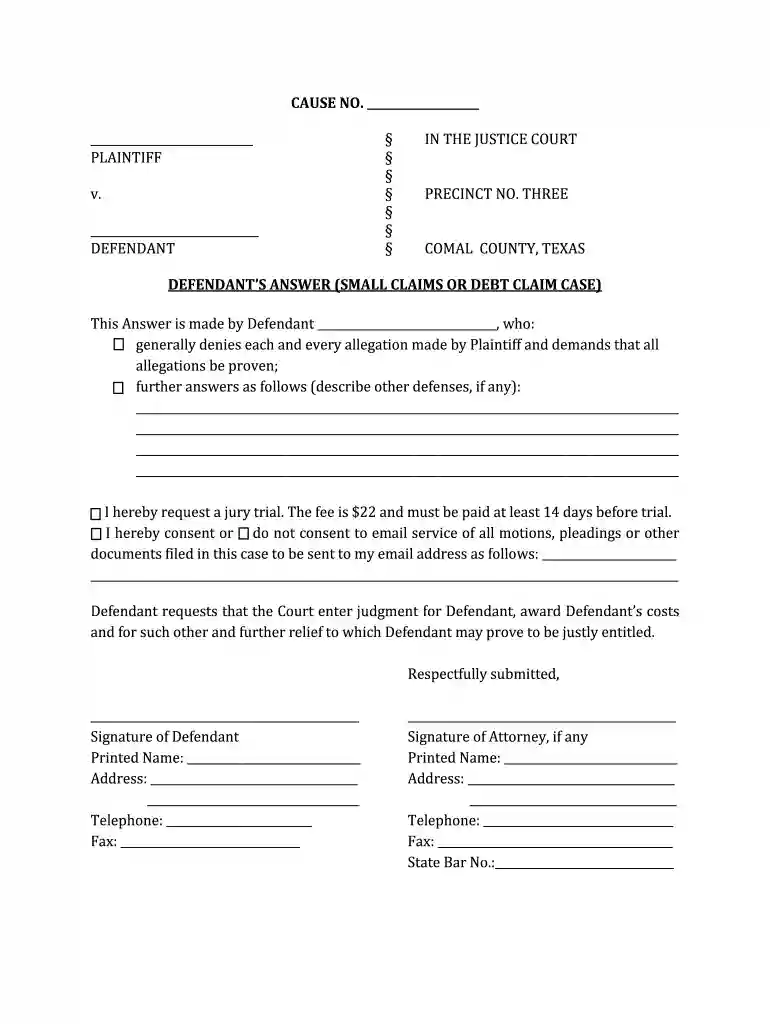
The Defendant Answer Form in Texas is a legal document used by individuals or entities (the defendants) to respond to a lawsuit filed against them. This form allows the defendant to either admit or deny the allegations made in the plaintiff's complaint and to outline any defenses they may have. It serves as an essential component in the litigation process, giving the defendant a formal platform to present their side of the case.
In Texas, this form is particularly relevant in civil cases, including small claims and debt collection disputes. The document may include sections for general denial, affirmative defenses, requests for a jury trial, and contact information for both the defendant and their attorney. Completing the Defendant Answer Form accurately is crucial, as it can significantly impact the outcomes of the proceedings.
Using the Defendant Answer Form effectively requires understanding its purpose and structure. Here are the key steps to follow:
Obtain the Form: The form can be acquired online through legal resource websites or directly from a court office where the lawsuit is filed. It's important to use the most current version of the form.
Read the Complaint: Before filling out the answer, thoroughly read the complaint to understand the allegations. This information will guide how you respond.
Complete the Form: Fill out the form by providing accurate information, including:
Sign the Document: Ensure you sign and date the form, as failing to do so may lead to it being rejected.
Submit the Form: File the completed form with the appropriate court and keep a copy for your records.
Each of these steps is integral to ensure the answer is valid and can be considered by the court.
Completing the Defendant Answer Form follows a structured process. Here are the detailed steps:
Gather Necessary Information: Before beginning, collect all relevant documents related to the case, including the complaint, any prior correspondence, and contact details for your legal representation.
Identify Allegations: Analyze each allegation made in the complaint. This will help determine whether you will admit or deny them.
Fill in Your Information: Start with basic details:
Choose Your Response:
Add Additional Requests: If applicable, request a jury trial or any other specific relief you're seeking.
Review the Form: Thoroughly check for accuracy and completeness. Errors could delay proceedings or negatively impact your case.
Sign and Date: Your signature at the bottom of the form signifies your commitment to the statements made.
Make Copies: Before submitting, make several copies, including one for your own records and copies to send to the plaintiff if required.
File with the Court: Submit the completed form to the court either in person, by mail, or electronically, depending on local rules.
Following these steps can help ensure that your response to the lawsuit is handled professionally and properly.
Understanding key legal terms associated with the Defendant Answer Form can enhance comprehension of the process. Some important terms include:
Familiarity with these terms fosters a clearer understanding of the legal process and can assist in drafting a more effective answer.
The Defendant Answer Form is recognized as a pivotal legal instrument in Texas civil courts. Its primary function is to facilitate the defendant's response to a lawsuit, ensuring procedural fairness in the judicial process. Here are key aspects of its legal significance:
Compliance with Court Rules: Filing the answer is a requirement under Texas Rules of Civil Procedure, which mandates defendants to respond to complaints within a specific timeframe. Failing to do so may result in a default judgment against the defendant.
Preserving Rights: By submitting an answer, the defendant preserves their legal right to contest the allegations and present their case. Ignoring the complaint or not filing an answer forfeits the opportunity to defend oneself legally.
Framework for Legal Arguments: The form helps frame the legal arguments and defenses that the defendant may raise during hearings or trials, establishing a roadmap for the case ahead.
Understanding the legal use of the Defendant Answer Form is crucial for those involved in litigation, as it impacts how cases evolve within the judicial system.
When using the Defendant Answer Form in Texas, familiarity with state-specific rules is essential. Some critical rules include:
Filing Timeline: Defendants generally have 20 days from the date of service to file their answer in Texas. This timeline is crucial to avoid default.
Format Requirements: The answer must adhere to specific formatting guidelines set by the Texas court system. This includes layout, type size, and margin specifications.
Types of Answers: The court accepts various forms of responses, including a general denial or a specific denial for each allegation. It's essential to choose the appropriate form based on the circumstances of the case.
Serving the Plaintiff: After filing the answer with the court, the defendant must typically serve a copy to the plaintiff, either by mail or in person, following the court's established procedures.
Understanding and adhering to these state-specific rules can prevent procedural errors and ensure a more efficient resolution of the case.
At DocHub, your data security is our priority. We follow HIPAA, SOC2, GDPR, and other standards, so you can work on your documents with confidence.
Defendant reserves the right to file an Amended Defendants Answer with the court to plead other defenses after further investigation and discovery.Read more
Texas LawHelp.org. Instructions: If you decide to use this Defendants Answer form: It does not cost anything to fill out or file this form. You mustRead more
The Security Fund may be in the form of an irrevocable standby letter of credit substantially in the form of Exhibit G Form of Letter of Credit (a Letter.Read more


