
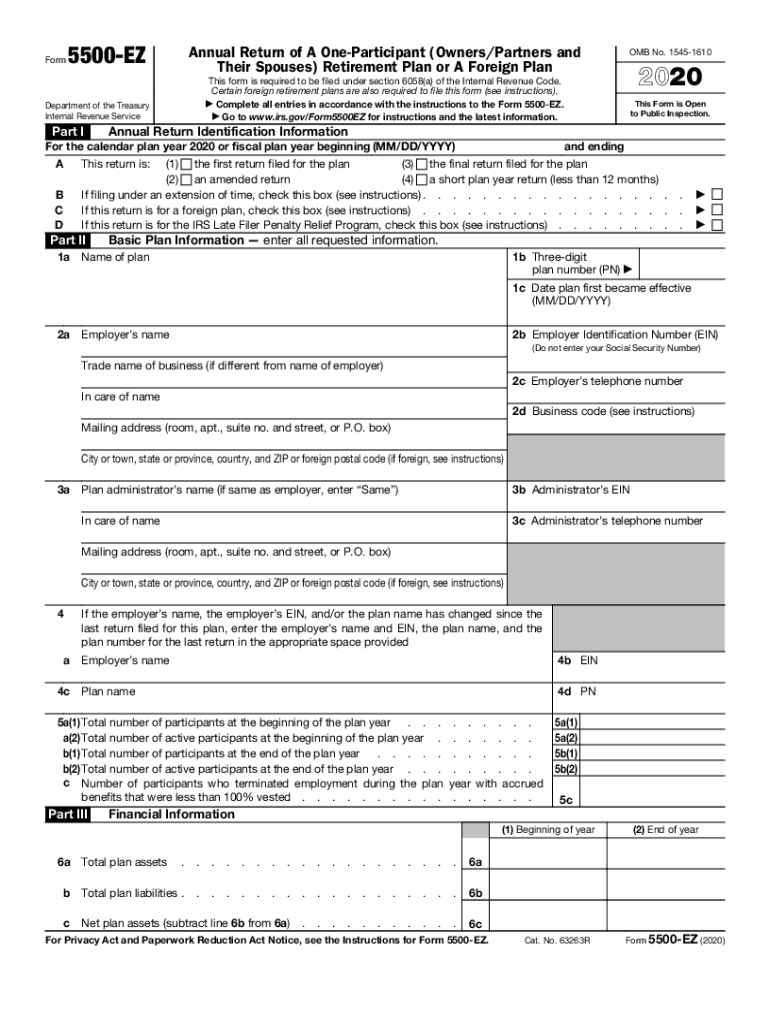







Definition and Purpose of Form 5500
Form 5500 is a comprehensive annual reporting requirement mandated by the Employee Retirement Income Security Act (ERISA) to provide the U.S. Department of Labor (DOL) with information about an employee benefit plan's financial condition, investments, and operations. It plays a critical role in ensuring transparency and compliance of retirement and welfare plans, offering a thorough record that helps protect the interests of plan participants and beneficiaries.
Key Elements of Form 5500
- Plan Characteristics: Includes the type and size of the plan, detailing whether it is a pension or a welfare plan.
- Financial Data: Comprehensive financial information, such as assets and liabilities, income, and expenses, to reflect the plan's fiscal health.
- Participant Information: Data on active participants, beneficiaries, and vested individuals to show the demographic scope of the plan.
- Compliance and Fiduciary Responsibilities: Information on plan governance, compliance with ERISA, and any plan amendments.
- Service Provider Fees: Details on payments to service providers, ensuring that fees are reasonable and properly managed.
How to Use Form 5500
Step-by-Step Completion Process
- Collect Necessary Information: Gather all financial records, participant data, and plan-related documents.
- Select the Appropriate Form: Choose between the Form 5500 and its variants (e.g., 5500-SF for smaller plans) based on the size and type of plan.
- Fill Out Identifying Information: Complete sections on plan name, plan sponsor details, and plan number.
- Detail Financial Information: Accurately report financial transactions, statements, and balance sheets.
- Provide Compliance Data: Answer compliance questions related to ERISA and other legal requirements.
- Review and Submit: Double-check entries for accuracy and submit through the DOL's EFAST2 electronic filing system.
Important Terms
- EFAST2: The electronic filing system for Form 5500 submissions, ensuring streamlined and secure filing.
- ERISA: The governing law that enforces the filing of Form 5500 to protect employees' benefits.
Form 5500 Filing Deadlines and Important Dates
Form 5500 must be filed by the last day of the seventh month after the end of the plan year, typically July 31st for calendar-year plans. Extensions are available through Form 5558, which grants an additional 2.5 months.
Penalties for Non-Compliance
Failure to file Form 5500 on time can result in substantial penalties, including DOL fines of up to $2,586 per day for each day the form is late. The IRS may also impose additional penalties.
Required Documents for Form 5500
Collect the following to complete Form 5500:
- Plan Financial Statements: Audited financial statements are crucial for plans with over 100 participants.
- Schedule Attachments: Additional schedules may be required, such as Schedule C for service provider information and Schedule H for larger plan financials.
- Participant Data: Detailed records of all active participants, retirees, and beneficiaries.
IRS Guidelines for Form 5500
Compliance with IRS guidelines ensures the correct filing of Form 5500, reflecting adherence to related tax implications and plan operations. The IRS examines the form to validate tax-exempt status and assess potential tax liabilities.
How to Obtain Form 5500
Forms are accessible through the DOL's dedicated website for the EFAST2 system. Plan administrators can download the necessary documents, including instructions and filing software.
Who Typically Uses Form 5500
Form 5500 is used by plan administrators of employer-sponsored retirement and health plans, especially those covered under ERISA, including:
- Large Corporations: To report on complex pension and 401(k) plans.
- Small Businesses: Using simplified versions like Form 5500-SF.
- Non-Profit Organizations: Managing employee benefits and retirement plans.
Digital vs. Paper Version of Form 5500
All Form 5500s must be filed electronically through the EFAST2 system, enhancing accessibility and reducing processing times compared to outdated paper submission methods.
Software Compatibility
Form 5500 is compatible with software systems such as QuickBooks and TurboTax when managing necessary data, facilitating easier compilation and submission for those using integrated accounting tools.
State-Specific Rules for Form 5500
While Form 5500 is federally mandated, stay informed of any additional state-level requirements or nuances that may impact filing procedures or compliance standards for specific jurisdictions.
By understanding the extensive coverage and precise requirements of Form 5500, plan administrators can ensure full compliance, accurate reporting, and streamlined operations within their benefit programs.




