
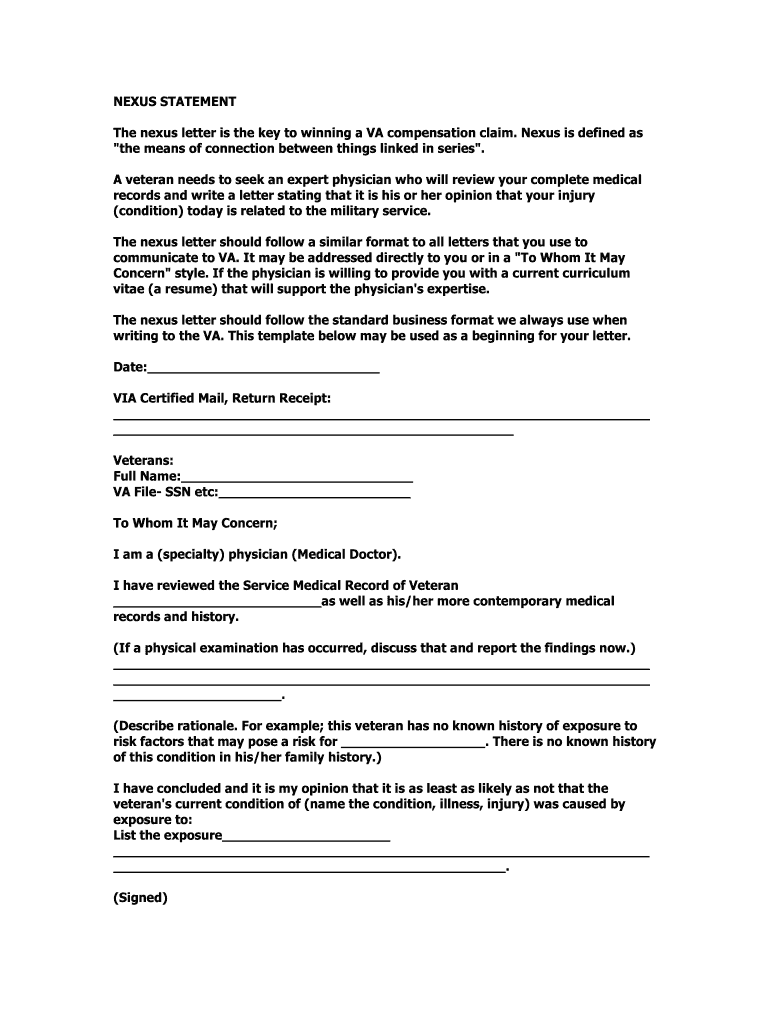







Definition and Significance of a Nexus Letter
A nexus letter is a critical document often required in the context of VA compensation claims. It establishes a connection between a veteran's current medical condition and their military service, often impacting the outcome of claims for benefits. Written by a qualified medical professional, it articulates the causal relationship between the condition and service-related incidents. This connection is essential for validating claims and securing benefits from the Department of Veterans Affairs (VA).
Key Components of a Nexus Letter
- Professional Credentials: The physician must be qualified in the relevant medical field, adding credibility to their opinion.
- Detailed Medical History: The letter should include a full review of the veteran's medical history and relevant service records.
- Clear Stance on Causation: It must explicitly state the physician's opinion on how the veteran's service has directly contributed to their medical condition.
Understanding these components can significantly improve the efficacy of the nexus letter, aiding veterans in their bids for compensation.
Steps to Utilize the Nexus Letter Sample PDF
Using a nexus letter sample PDF can streamline the process of creating your nexus letter. Follow these steps to ensure efficient utilization:
- Download the Sample: Access a reputable source for a nexus letter sample PDF. Ensure it aligns with the VA's guidelines.
- Personalize the Document: Enter specific details regarding the veteran’s service and medical history. Customization is vital for accuracy.
- Consult with Healthcare Professionals: Share the draft with a qualified physician for review and adjustments based on their professional judgment.
- Finalize and Format: Ensure the document is professionally formatted, adhering to standard business letter conventions. This includes proper salutations, dates, and signatures.
These steps can ensure that the nexus letter accurately reflects the necessary information required for a successful VA claim.
Important Elements of a Nexus Letter
In crafting an effective nexus letter, several key elements must be included. These ensure the letter meets the VA's criteria and supports the claim.
- Introduction of the Physician: Include a detailed introduction of the physician, highlighting their qualifications and experience in relation to the veteran's condition.
- Description of the Condition: Comprehensive details on the veteran's medical condition, including symptoms and diagnoses.
- Link Between Service and Condition: A clear explanation of how specific events during military service are related to the current medical issues.
- Professional Opinion: The letter should contain explicit statements from the physician regarding the likelihood that the condition is related to military service.
Including these elements guarantees the letter is robust and meets VA expectations.
Examples of Effective Nexus Letters
Examples of effective nexus letters can provide valuable insights on structure and content. Here are some scenarios:
- Agent Orange Exposure: A veteran with health complications related to Agent Orange needs a nexus letter that articulates the causal link between military service in Vietnam and their health issues.
- PTSD: For veterans experiencing PTSD, the letter should detail incidents from service that triggered symptoms, supported by medical evidence.
- Chronic Pain: A nexus letter for a veteran claiming chronic pain might outline how specific activities during service led to injuries that caused long-term pain.
These examples illustrate how different situations require tailored nexus letters to establish a clear connection between military service and medical conditions.
Legal Standing and Compliance of the Nexus Letter
A nexus letter carries legal weight in VA claims processes. Meeting certain criteria ensures it adheres to legal standards:
- Compliance with the ESIGN Act: The electronic signatures and document formats used must comply with established legal standards.
- Authenticity: The letter must be on official letterhead and include the physician's signature to validate authenticity.
- Documentation Standards: The information contained should align with the VA’s requirements for supporting documents and must be based on factual evidence from medical records.
These considerations are crucial for ensuring the nexus letter is acceptable and stands up in potential disputes with the VA.
Who Commonly Uses Nexus Letters
Nexus letters are predominantly used by veterans seeking VA benefits. However, other groups may also find them valuable:
- Medical Practitioners: Doctors who provide assessments for veterans may use nexus letters to document medical opinions.
- Advocates: Individuals or organizations assisting veterans with claims can utilize these letters to strengthen their cases.
- Legal Representatives: Attorneys working on veteran claims may require nexus letters as part of their legal strategy to secure benefits.
This broader applicability emphasizes the practical value of nexus letters in various contexts related to veteran affairs.




