




01. Edit your property disclosure statement residential bc pdf online
Type text, add images, blackout confidential details, add comments, highlights and more.

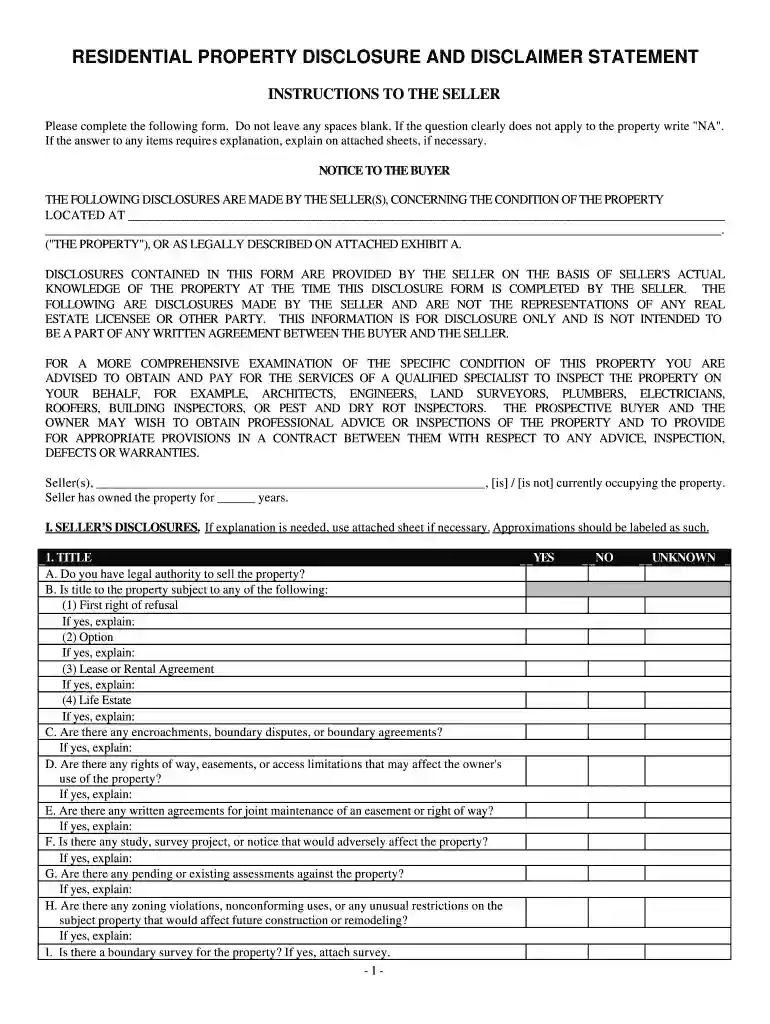
Type text, add images, blackout confidential details, add comments, highlights and more.

Draw your signature, type it, upload its image, or use your mobile device as a signature pad.

Send property disclosure statement bc pdf via email, link, or fax. You can also download it, export it or print it out.
The property disclosure form is a crucial legal document utilized in real estate transactions. It serves as a statement provided by the seller outlining the condition of their property to potential buyers. The form typically includes details regarding the property’s structure, systems, and any known defects or issues that may affect the property's value or desirability. This disclosure fosters transparency in the transaction, empowering buyers with information to make informed decisions.
Property Condition: Sellers must report any known conditions of the property, including structural issues, water damage, or problems with major systems such as HVAC, plumbing, and electrical.
Title and Ownership: The form may include details regarding the property's title, including any liens or easements, ensuring that buyers understand ownership complexities.
Disclosure of Repairs: Sellers are required to disclose any repairs or renovations made and their impact on the property's condition.
The property disclosure form is instrumental in protecting both buyers and sellers. For buyers, this information is crucial for evaluating the property's condition and determining its fair market value. Sellers benefit by disclosing potential issues upfront, which can mitigate legal disputes arising from later claims of undisclosed defects.
Successfully completing the property disclosure form involves several critical steps that both buyers and sellers should follow to ensure that all relevant information is accurately conveyed.
Gather Necessary Information:
Fill Out the Form:
Provide Additional Details:
Review and Verify:
Deliver the Form:
Failing to provide accurate information can lead to legal complications, including lawsuits for misrepresentation or fraud. It's essential to approach the process with thoroughness and honesty to protect all parties involved.
The legal implications surrounding the property disclosure form are significant, as they vary by state regulations and the nature of the real estate transaction. This form serves as a formal declaration of the condition of a property and is typically required by law in most states.
State Laws: Each state has specific laws governing disclosures in real estate transactions. Some states require extensive disclosures, while others have more lenient standards. Familiarizing oneself with local laws is crucial.
Material Defects: Sellers are legally obligated to disclose known material defects or issues that could influence the buyer's decision. This includes issues like mold, pest infestations, and structural instability.
Legal Recourse: Buyers may pursue legal action against sellers who fail to disclose known issues, leading to financial loss. Courts often uphold the requirement for full disclosure to ensure fair transactions.
Understanding key terminology associated with the property disclosure form can enhance clarity during real estate transactions.
Material Defect: Any significant flaw that affects the value or safety of the property, which must be disclosed by the seller.
As-Is Sale: A property sold in its current state without the seller undertaking repairs. Buyers are often warned to conduct thorough inspections in these scenarios.
Contingency: A clause in a contract that allows the buyer to back out based on specific conditions, including the unsatisfactory condition of the property as revealed in the disclosure.
Being knowledgeable about legal terminology and concepts related to property disclosure can empower both buyers and sellers throughout the transaction process, minimizing confusion and miscommunication.
The property disclosure form is predominantly used by various stakeholders in real estate transactions. Understanding who typically engages with the form can clarify its relevance.


Sellers: Individuals looking to sell their residential properties use the form to inform potential buyers about the property’s condition.
Buyers: Prospective homeowners rely on the form to assess the property’s condition, which aids in negotiating offers and making informed purchasing decisions.
Real Estate Agents: Agents often facilitate the completion and submission of the property disclosure form, ensuring compliance with local laws and regulations.
Inspectors: Home inspectors utilize the disclosure when examining properties to verify the seller’s claims and identify any unreported issues.
Legal Professionals: Attorneys may advise clients on how to appropriately complete the disclosure and navigate any legal ramifications.
Each party engaging with the property disclosure form plays a vital role in ensuring a smooth transaction. Clear communication and thorough documentation help foster trust and accountability.
Utilizing the property disclosure form involves various scenarios that highlight its practical applications in real estate transactions.
Home Sales: A seller completes the property disclosure form before listing their home, informing potential buyers about a previous roof leak and subsequent repairs. This transparency helps avoid misunderstandings down the line.
Investment Properties: An investor purchasing multiple rental units best prepares for renovations by analyzing the property disclosure forms completed by current owners, offering insight into ongoing maintenance issues.
New Constructions: A builder provides a property disclosure form for a newly constructed home, detailing compliance with building codes and inspections performed, reassuring buyers of quality and safety.
Utilizing property disclosure forms in these scenarios enables parties to align expectations, mitigate risks, and promote transparency, paving the way for successful transactions.
At DocHub, your data security is our priority. We follow HIPAA, SOC2, GDPR, and other standards, so you can work on your documents with confidence.


The attached residential property disclosure form is prescribed by the director of commerce to permit transferors of residential real estate to discloseRead more
This is a statement of certain conditions and information concerning the property known to the seller. This Disclosure Statement is not a warranty of any kindRead more
Property Declaration (form FL-160) is a multipurpose form, which may be filed with the court as an attachment to a. Petition or Response or served on theRead more


