




01. Edit your nyc doe student removal form online
Type text, add images, blackout confidential details, add comments, highlights and more.

Type text, add images, blackout confidential details, add comments, highlights and more.

Draw your signature, type it, upload its image, or use your mobile device as a signature pad.

Send student removal from classroom form via email, link, or fax. You can also download it, export it or print it out.
Student removal refers to the process by which educators formally remove a student from a classroom setting due to behavioral issues or disruptions. This process is typically outlined in school district regulations, such as New York City's Chancellor's Regulation A-443, which provides clear guidelines for teachers. The aim of student removal is to maintain a conducive learning environment while ensuring the safety and well-being of all students and staff.
Understanding student removal is essential for teachers, administrators, and parents. It is important to know the conditions that may warrant removal, which can include violence, bullying, or repeated non-compliance with classroom rules. The procedure ensures that the removed student is held accountable while also allowing opportunities for reflection and behavioral correction.
Teachers initiate the removal process, often using a designated student removal form to document the incident. This form serves several purposes: it provides a written record of the behavior in question, outlines the steps taken to address it, and facilitates communication with school administration and parents. Proper documentation is key in these cases, as it protects the rights of both students and educators.
Completing the student removal process involves several critical steps to ensure compliance with district regulations and maintain ethical standards.
Incident Assessment: Teachers must first assess the incident that leads to the student’s removal. This involves gathering details about the situation and considering whether the student's actions jeopardized the safety or educational environment of peers.
Notification: The teacher should verbally notify the student of their removal, explaining the rationale behind the decision. This step is crucial for clarity and transparency.
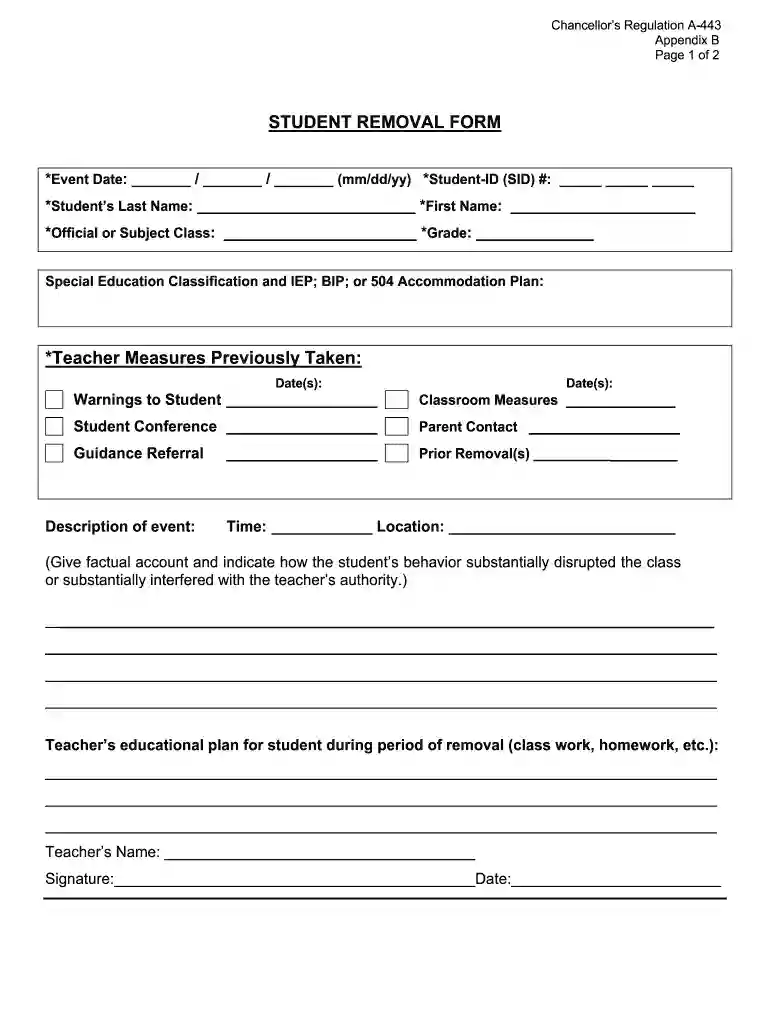
Documentation: A student removal form, such as the NYC DOE Student Removal Form, must be filled out. This form requires specific details about the incident, including the date, time, and nature of the behavior that warranted removal, along with any previous interventions attempted.
Administrative Involvement: Following documentation, the principal must be informed of the incident. If necessary, the principal may engage in further discussions with the teacher to determine the next steps, ensuring that due process is upheld.
Parental Notification: Parents or guardians must be notified of the removal. This communication should include the reasons for the action, the context of the incident, and any steps for reintegration.
Safety and Follow-Up Plans: Upon the student's return, it is important to establish a concrete plan to support their reintegration. This could include counseling resources or behavioral agreements to prevent future incidents.
This process emphasizes the importance of thoroughness and communication in maintaining a balanced approach to student discipline.
The student removal form includes several key elements that are vital for accurately capturing the details of a removal incident.
Student Information: Basic details such as the student's name, grade, and identification number are essential for records.
Incident Description: A detailed account of the behavior leading to the removal needs to be recorded, describing how the student's actions impacted the learning environment.
Actions Taken: The form should outline any prior actions taken by the teacher to address the behavior before resorting to removal. This demonstrates that interventions were attempted.
Signatures and Dates: The signatures of the teacher and principal, along with the dates of the incident and form submission, provide authenticity and accountability.
Follow-Up Actions: Indicating necessary follow-up steps helps ensure there are plans in place to address behavioral issues with the student post-removal.
Incorporating all key elements helps maintain the integrity of the removal process, strengthening the accountability of all parties involved.
Understanding the terminology associated with student removal is essential for educators and administrators.
Due Process: This legal concept ensures that students are treated fairly under the law, including being informed of the reasons for their removal and allowed an opportunity to appeal.
Behavior Intervention Plan: A structured plan developed to provide support for students with behavioral challenges, aiming to prevent the need for removal.
Disciplinary Action: Refers to measures taken by school authorities in response to student misconduct, which can vary from warnings to removal from the classroom.
Reintegration Plan: A structured approach to help the removed student transition back into the classroom environment, focusing on behavioral support and engagement with educational resources.
Having a solid grasp of these terms can enhance communication among educational staff when dealing with student behavior issues and support comprehensive understanding of the processes involved.
The student removal form is a critical document in the legal landscape of student conduct in U.S. schools. Its proper use is governed by regulations that ensure due process for students.
Adherence to Regulations: Schools must comply with local, state, and federal regulations regarding student removal. Missteps in the removal process can lead to legal repercussions for educators and districts.
Documentation as Evidence: The form serves as a legal record demonstrating that appropriate guidelines were followed. If a removal decision is challenged, this documentation becomes essential in defending the school's actions.
Compliance with Special Education Laws: For students receiving special education services, accountability under laws such as IDEA (Individuals with Disabilities Education Act) is mandatory. The removal process must consider these protections and ensure that students are not unjustly penalized without consideration of their needs.
By understanding the legal implications of the student removal form, educators can ensure they are acting within the bounds of the law while promoting a safe and productive learning environment for all students.
At DocHub, your data security is our priority. We follow HIPAA, SOC2, GDPR, and other standards, so you can work on your documents with confidence.
The student is subjected to a series of short-term removals that constitute a pattern because they cumulate to more than 10 school days in a school year andRead more
May 31, 2024 Pages in category Characters with debuff removal skills. The following 5 pages are in this category, out of 5 total.Read more
Students with disabilities removed from their current placements through suspension or expulsion must continue to receive educational services.Read more


