




01. Edit your non victim child affidavit online
Type text, add images, blackout confidential details, add comments, highlights and more.

Type text, add images, blackout confidential details, add comments, highlights and more.

Draw your signature, type it, upload its image, or use your mobile device as a signature pad.

Send tdcj non victim child affidavit via email, link, or fax. You can also download it, export it or print it out.
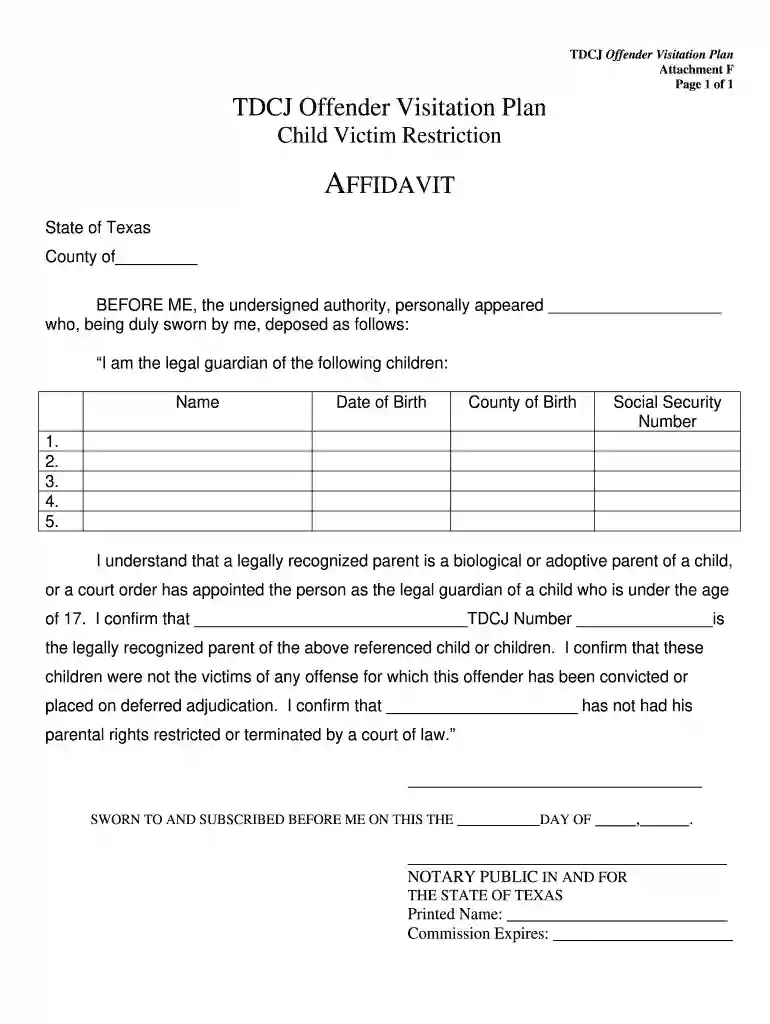
The non victim child affidavit is a legal document used to affirm that a particular child is not a victim of crimes, such as those related to abuse or neglect that may involve a specific offender. This affidavit is particularly important in contexts where a child’s safety and welfare need verification, especially during legal proceedings or visitation rights assessment involving incarcerated individuals.
This affidavit ensures judicial processes consider the best interests of the child, giving prominence to their safety in situations involving potential risk.
Completing the non victim child affidavit involves specific steps to ensure accuracy and legality. Here is a structured guide to facilitate the process:
Obtain the Form: Generally, the non victim child affidavit can be found on official legal or judicial websites, or it may be provided directly by the relevant legal authority involved in a case.
Fill in Required Information:
Affirmation Statement: Include a statement declaring the child's non-victimized status, affirming that they have not been subject to any offenses committed by the offender in question.
Signature and Notarization: The affidavit must be signed by the guardian and may require notarization to validate the claims made, ensuring the legal standing of the document.
Submission: Once completed, the affidavit should be submitted according to the specifics of the case, often involving the TDCJ or family court.
Following these steps ensures that the affidavit adheres to legal requirements, enhancing its validity in court proceedings.
Understanding key terms associated with the non victim child affidavit is essential for accurate interpretation and completion:
These terms define the components and processes necessary for effectively navigating the legal landscape concerning non victim child affidavits.
The legal framework governing the non victim child affidavit outlines its application within judicial processes. It plays a significant role in various family and criminal law contexts, particularly concerning:
Its usage solidifies judicial decisions with legally recognized evidence, ensuring the emotional and physical safety of children.
The non victim child affidavit is predominantly utilized by several key individuals or entities involved in family law and criminal justice processes:
Guardians and Parents: Often, the child’s legal guardians or parents fill out the affidavit to affirm their child's non-victimized status, especially in cases where the child may be in contact with an offender.
Judicial Authorities: Judges and family court officials may request this affidavit as part of case proceedings concerning visitation or custody decisions.
Lawyers: Attorneys representing clients in family law cases often prepare and submit this affidavit as part of their legal strategy to ensure the child's safety is prioritized.
Child Protective Services: In cases where the child's welfare is being assessed, agencies may utilize this affidavit to validate the child's protection from potential offenders.
This broad usage highlights the document's relevance across various legal situations involving the well-being and rights of children.


Each state may have distinct regulations governing the use and requirements of the non victim child affidavit. Recognizing these variations is crucial for effective compliance:
Notarization Requirements: Some states may require specific forms of notarization or the involvement of authorized witnesses, affecting how affidavits are executed.
Documentation: States may differ in the additional documentation needed alongside the affidavit, such as identification or proof of relationship to the child.
Legal Language: Specific wording may be mandated in certain jurisdictions to ensure clarity and to meet state legal requirements.
Understanding these state-specific rules can prevent delays or legal issues, allowing for smoother navigation of judicial processes concerning child welfare.
At DocHub, your data security is our priority. We follow HIPAA, SOC2, GDPR, and other standards, so you can work on your documents with confidence.
by JJ Taylor 2008 The sooner a statement can be taken and turned into an affidavit the more reliable it is thought to be. As time progresses a persons memory of an event can.Read more
I confirm that these children were not the victims of any offense for which this offender has been convicted or placed on deferred adjudication. I confirm thatRead more


