
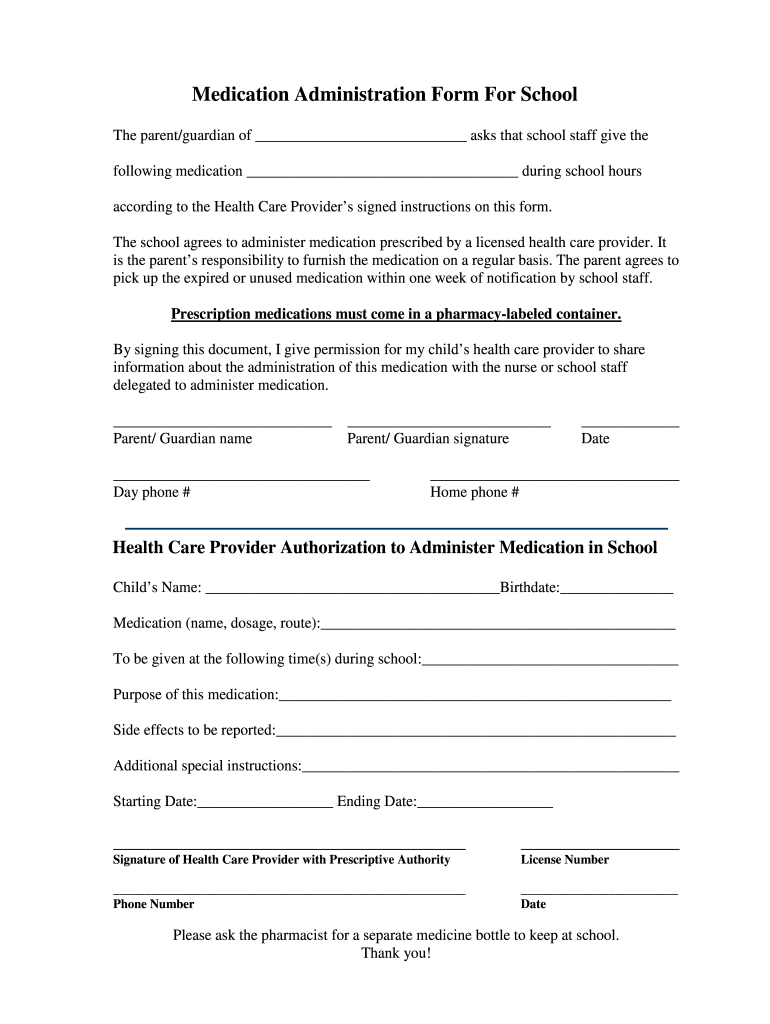







Definition & Meaning of the School Medication Administration Form
The school medication administration form is a vital document allowing parents or guardians to authorize the administration of prescribed medications to students during school hours. This form is necessary for compliance with school district policies and state regulations on medication management within educational environments.
The primary purpose of the form is to safeguard students' health by ensuring they receive their medications as directed by a healthcare provider. It outlines the responsibilities of both the parents or guardians and the school staff involved in the medication process. The form typically requires signatures from both the parent or guardian and a licensed healthcare provider, affirming that the medication is necessary and confirming the prescribed dosage and administration schedule.
In addition to detailing the medication specifics, the form highlights critical information such as:
- Student’s name
- Date of birth
- Emergency contact information
- Any allergies or additional health concerns
This structured approach minimizes risks and miscommunications, ensuring the health needs of students are properly addressed while they are in school.
Key Elements of the School Medication Administration Form
The school medication administration form comprises several essential elements, each designed to ensure clear communication and adherence to health regulations. Key components include:
- Student Information: Full name, date of birth, and grade level to clearly identify the child receiving medication.
- Medication Details: Name of the medication, dosage, frequency, and method of administration (oral, inhalation, etc.).
- Health Care Provider Information: Contact details of the prescribing provider, along with their signature and license number, confirming their role in the administration of medication.
- Parent/Guardian Authorization: A section for parents or guardians to provide consent for medication administration and acknowledge their understanding of their child's health requirements.
- Emergency Information: Details of individuals to contact in case of an emergency, including any pertinent health conditions or allergies the school should be aware of.
Understanding each element's role promotes the safe administration of medications at school, ensuring that key stakeholders have the necessary information to make informed health-related decisions.
Steps to Complete the School Medication Administration Form
Completing the school medication administration form involves a series of structured steps to ensure accuracy and compliance with school policies. Follow these steps:
- Gather Necessary Information: Collect all required details regarding the student, including medical history, medication specifics, and contact information for the parent/guardian and healthcare provider.
- Fill Out Student Information: Enter the student’s full name, date of birth, and grade level accurately to avoid confusion.
- Detail the Medication: Specify the name of the prescribed medication, dosage, administration route, and frequency clearly. This section must be thorough to prevent errors and ensure compliance with the provider's instructions.
- Healthcare Provider Section: Ensure the healthcare provider completes their portion of the form, including their signature and license number. This validation is crucial for the school's acceptance of the form.
- Parent/Guardian Authorization: Parents or guardians must review the details and sign the authorization section, confirming they understand and consent to the administration of the medication.
- Submit the Form: Return the completed form to the appropriate school official, typically the school nurse or an administrator, as per school protocol.
Following these steps carefully maximizes the accuracy and efficacy of the form. It ensures that the necessary permissions are in place for the medication to be administered safely and in a timely manner.
Legal Use of the School Medication Administration Form
The legal use of the school medication administration form is governed by both federal and state regulations. Schools must comply with guidelines established by the Individuals with Disabilities Education Act (IDEA) and Section 504 of the Rehabilitation Act, which mandate appropriate accommodations for students with medical needs.
Critical legal considerations include:
- Confidentiality: Information provided on the medication administration form must be treated with confidentiality, adhering to the Family Educational Rights and Privacy Act (FERPA), which protects student education records.
- Accuracy: Schools must ensure that medications are administered exactly per the information provided in the form to avoid liability for misadministration.
- Documentation: Schools are required to maintain accurate records of medication administration, documenting when doses are given and any communications with parents or guardians concerning exceptions or changes.
These legal frameworks underscore the importance of adhering to proper protocols when utilizing the school medication administration form, ensuring both student safety and compliance with the law.
Examples of Using the School Medication Administration Form
The school medication administration form can be utilized in various scenarios to illustrate its importance and functionality. Here are a few practical examples:
-
Chronic Conditions: A student diagnosed with asthma requires a rescue inhaler during school hours. The parent completes the medication administration form specifying the medication name, dosage, frequency of use, and includes the doctor's signature. The school nurse administers the inhaler as needed, ensuring compliance with the form.
-
Daily Medication: For a student with attention deficit hyperactivity disorder (ADHD) who takes medication daily, the parent provides a filled-out school medication administration form detailing the medication and confirming that it should be administered during lunch. This arrangement enables the student to maintain focus throughout the school day.
-
Emergency Situations: In cases of severe allergies, such as nut allergies, a medication administration form allows for epinephrine auto-injectors to be available at school. The parent fills out the form with doctor validation to ensure immediate access during an allergic reaction.
In these scenarios, the school medication administration form acts as a critical link between parents, healthcare providers, and school authorities, facilitating effective communication and ensuring the welfare of students with medical needs.
Important Terms Related to the School Medication Administration Form
Understanding key terminology related to the school medication administration form enhances clarity and comprehension for all stakeholders involved:
- Authorization: The consent provided by parents or guardians granting permission for the school to administer the specified medications to their child.
- Dosage: The specific amount of medication to be given to a student, which must be clearly stated on the form to prevent errors.
- Healthcare Provider: A licensed professional, such as a doctor or nurse practitioner, who prescribes medication and validates its necessity for the student.
- Administering Medication: The act of giving the prescribed medication to the student, as detailed on the medication administration form, often carried out by school nurses or trained staff.
- Emergency Contact: Individuals designated on the form who can be reached in the event of an emergency related to the student’s health.
Familiarity with these terms is essential, as they form the foundation of effective communication and understanding regarding the processes surrounding medication administration in schools.




