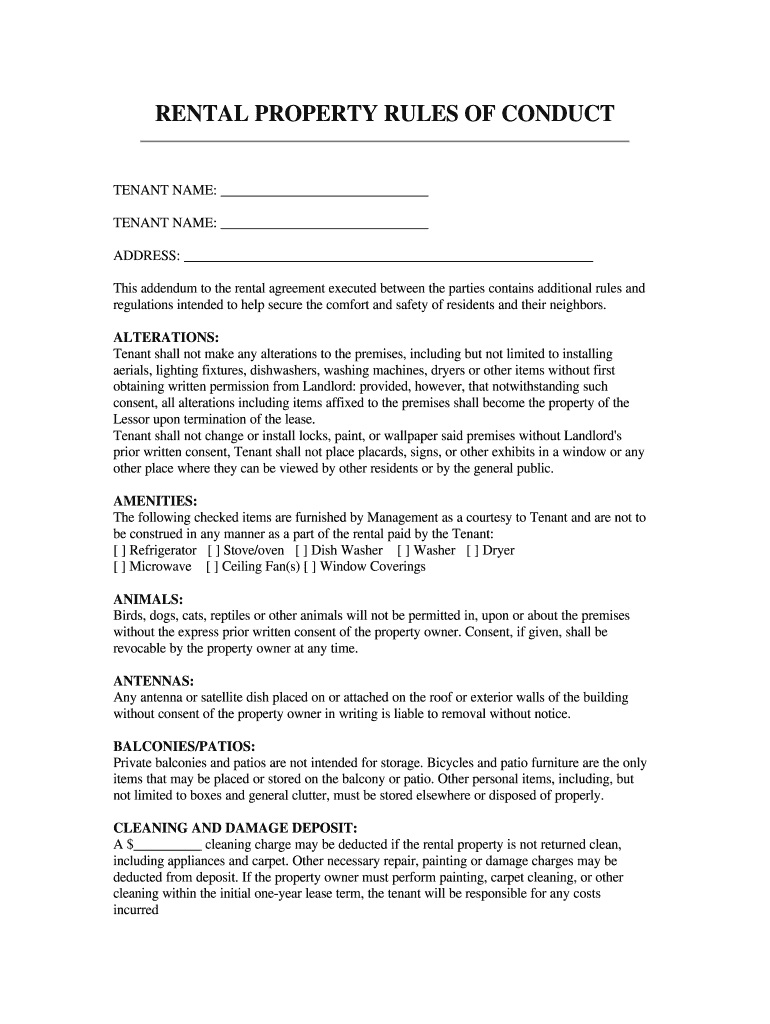







Definition and Meaning of House Rules for Tenants Renting a Room
House rules for tenants renting a room serve as essential guidelines that outline the expectations and responsibilities of residents within a shared living environment. These rules aim to create a harmonious living situation, ensuring comfort, safety, and consideration among all occupants. The rules address various aspects such as noise control, cleanliness, use of common areas, and maintenance responsibilities, helping to prevent misunderstandings and conflicts.
Importance of Well-Defined House Rules
Establishing clear house rules is crucial for several reasons:
- Prevention of Conflicts: By clearly outlining acceptable behaviors, house rules can significantly reduce disputes among tenants.
- Safety and Compliance: Many rules are in place to ensure tenant safety and compliance with local laws and regulations.
- Shared Responsibility: House rules encourage a collaborative atmosphere where all tenants understand their part in maintaining a positive living environment.
Key Elements of House Rules for Tenants Renting a Room
Well-drafted house rules should cover a range of essential topics that address the specific needs of a shared living situation. Key elements often include:
- Noise Policies: Setting acceptable noise levels and quiet hours helps ensure a comfortable atmosphere for all.
- Cleanliness Expectations: Outlining cleaning responsibilities for common areas and personal spaces promotes hygiene and respect.
- Use of Common Areas: Clear guidelines on how shared spaces can be used, including any restrictions on guests or personal belongings, contribute to a cohesive community.
- Guest Policies: Defining rules regarding overnight guests can help maintain security and privacy for all tenants.
- Maintenance and Repairs: Specify how tenants should report maintenance issues, as well as who is responsible for what repairs.
How to Use the House Rules for Tenants Renting a Room PDF
To effectively use the house rules document, it is essential to ensure that all tenants read and understand the contents. Here are the steps to implement these rules:
- Distribute the Document: Share the house rules PDF with all current and new tenants to ensure everyone is aware of the expectations.
- Review Together: Consider scheduling a meeting where tenants can discuss the rules together, providing an opportunity for questions and clarifications.
- Acknowledge Understanding: Have tenants sign an acknowledgment form indicating they have read and understood the rules, which can serve as a reference for future disputes.
- Regular Updates: Periodically review and update the house rules, ensuring they remain relevant to the current living conditions and legal requirements.
Legal Use of House Rules for Tenants Renting a Room PDF
Understanding the legal context of house rules is crucial for landlords and tenants alike. The rules serve as part of the rental agreement, and their enforcement should comply with local housing laws. Important considerations include:
- Non-Discrimination: Ensure that rules are applied fairly and do not discriminate against any tenant based on race, gender, religion, or other protected classifications.
- Enforceability: Clearly defined rules can be enforceable in a court of law, provided they do not violate any existing rental agreements or local regulations.
- Notification Requirements: Depending on state laws, tenants may need to be notified in writing of any changes to the house rules.
Examples of Using House Rules for Tenants Renting a Room PDF
Here are practical examples demonstrating how house rules can be applied effectively:
- Noise Level Enforcement: If tenants are disturbers of the peace after established quiet hours, the landlord can refer to the specific rule in the house rules PDF to address the issue.
- Cleaning Responsibilities: If a tenant fails to maintain cleanliness in shared spaces, a reminder of their obligations as outlined in the rules can be provided, reinforcing personal accountability.
- Guest Management: A situation arises where one tenant frequently hosts guests without proper notice. In response, the landlord can invoke the guest policy detailed in the house rules to manage the situation appropriately.
Who Typically Uses the House Rules for Tenants Renting a Room PDF
The primary users of house rules are landlords, property managers, and tenants in shared accommodations, including:
- Landlords: Those renting out rooms in a property, ensuring all tenants adhere to established guidelines.
- Property Managers: Professionals managing multiple rental units, making it easier to enforce consistent policies across various properties.
- Tenants: Individuals living in shared spaces who rely on the house rules to understand their rights and responsibilities, fostering a cooperative living environment.