




01. Edit your 2020 form 990 ez online
Type text, add images, blackout confidential details, add comments, highlights and more.

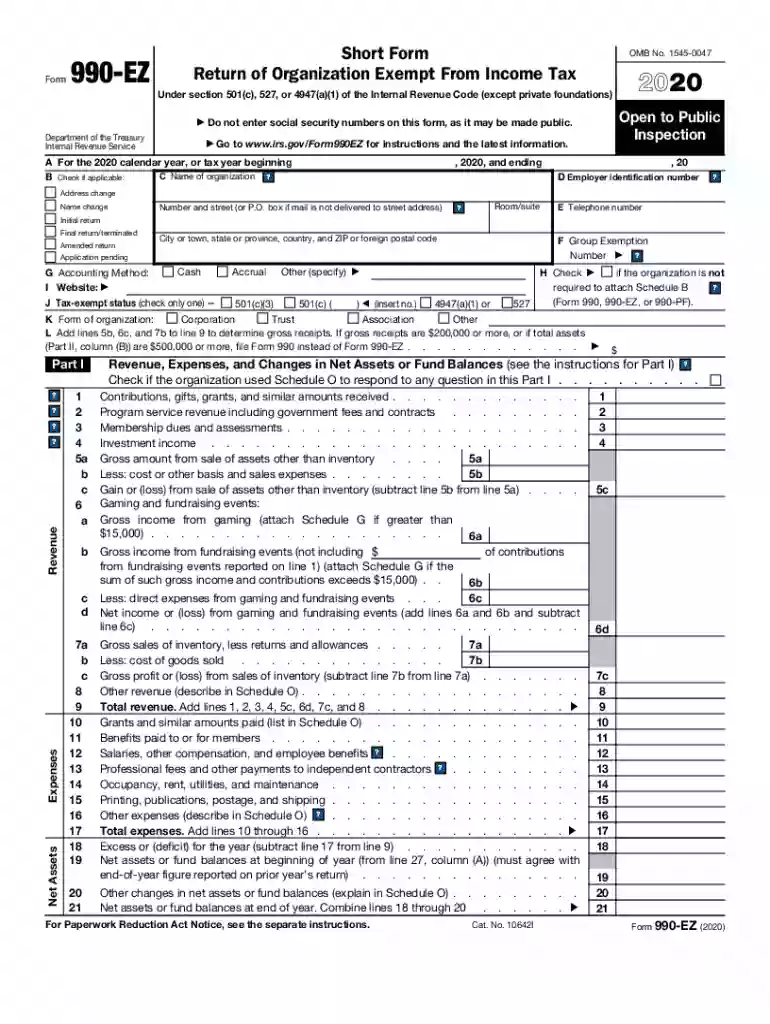
Type text, add images, blackout confidential details, add comments, highlights and more.

Draw your signature, type it, upload its image, or use your mobile device as a signature pad.

Send form 990 ez 2020 via email, link, or fax. You can also download it, export it or print it out.
Form 990-EZ is an essential IRS document used by organizations exempt from income tax, such as nonprofits, to provide a short form return. This form is applicable under certain sections of the Internal Revenue Code, serving as a simplified version of the full Form 990, intended for smaller organizations. It covers financial information such as revenue, expenses, and net assets, and requires detailed reporting on program service accomplishments and organizational changes. Understanding the Form 990-EZ ensures that organizations file accurate returns, minimizing the risk of IRS inquiries.
The core components of Form 990-EZ include:
Acquiring Form 990-EZ is straightforward:
Filling out Form 990-EZ involves several key steps:
Organizations eligible to file Form 990-EZ must meet specific criteria:


Form 990-EZ is primarily used by smaller tax-exempt organizations across various sectors:
The IRS provides comprehensive guidelines aimed at facilitating the filing process:
Organizations must adhere strictly to compliance requirements to avoid penalties:
We've got more versions of the 2020 form 990 ez form. Select the right 2020 form 990 ez version from the list and start editing it straight away!
| Versions | Form popularity | Fillable & printable |
|---|---|---|
| 2024 | 4.2 Satisfied (38 Votes) | |
| 2023 | 4.6 Satisfied (31 Votes) | |
| 2022 | 4.9 Satisfied (42 Votes) | |
| 2021 | 4.9 Satisfied (29 Votes) | |
| 2020 | 4.4 Satisfied (91 Votes) | |
| 2019 | 4.3 Satisfied (118 Votes) | |
| 2018 | 4.3 Satisfied (55 Votes) | |
| 2017 | 4.3 Satisfied (161 Votes) | |
| 2016 | 4.4 Satisfied (139 Votes) | |
| 2015 | 4.2 Satisfied (63 Votes) | |
| 2014 | 4 Satisfied (27 Votes) | |
| 2013 | 4.2 Satisfied (58 Votes) | |
| 2012 | 4 Satisfied (42 Votes) | |
| 2011 | 4 Satisfied (39 Votes) | |
| 2010 | 4 Satisfied (42 Votes) |
At DocHub, your data security is our priority. We follow HIPAA, SOC2, GDPR, and other standards, so you can work on your documents with confidence.



Tax-exempt organizations, nonexempt charitable trusts, and section 527 political organizations file Form 990-EZ to provide the IRS with the informationRead more
Dec 8, 2022 Form 990-EZ is an annual information return required to be filed with the IRS by many organizations exempt from income tax under section 501(a),Read more
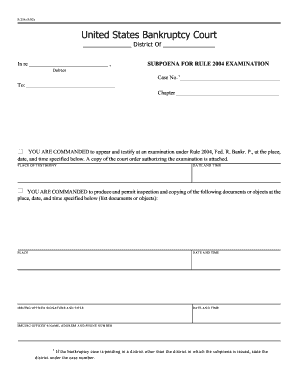
Complete if the organization is a section 501(c)(3) organization or a section 4947(a)(1) nonexempt charitable trust. Attach to Form 990 or Form 990-EZ. Go toRead more


