




01. Edit your sgi bill of sale online
Type text, add images, blackout confidential details, add comments, highlights and more.

Type text, add images, blackout confidential details, add comments, highlights and more.

Draw your signature, type it, upload its image, or use your mobile device as a signature pad.

Send bill of sale sgi via email, link, or fax. You can also download it, export it or print it out.
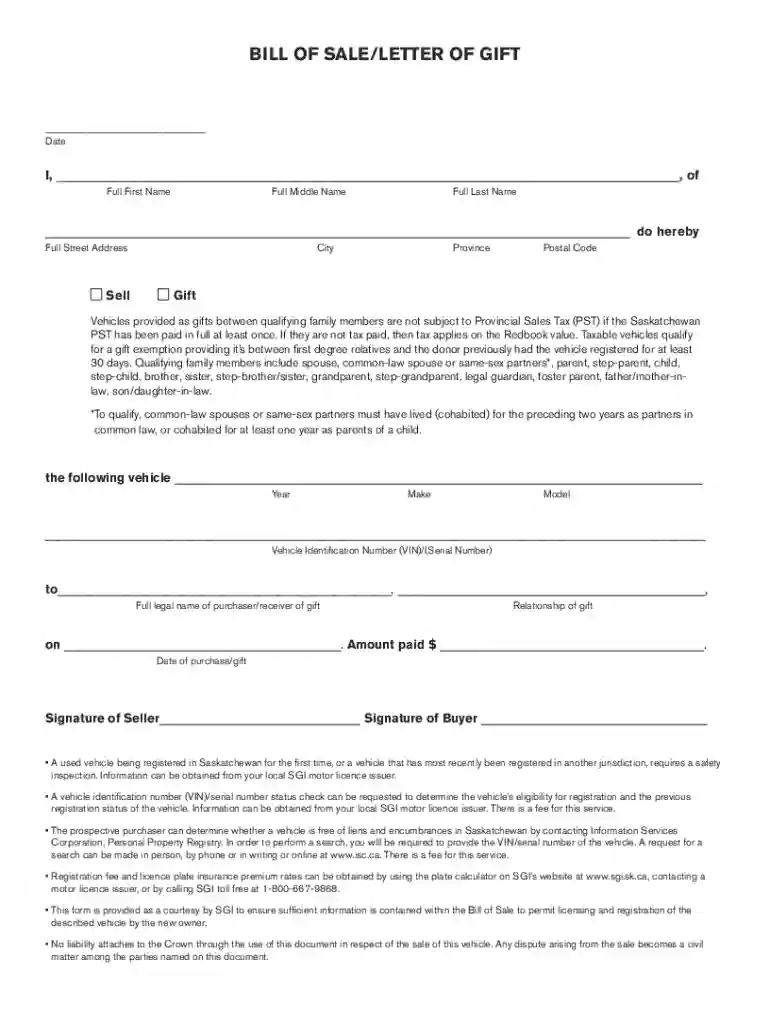
The SGI bill of sale is a legal document used in Saskatchewan to transfer ownership of a vehicle from one party to another. This formal record is essential not only for the buyer and seller, but also fulfills the requirements set by Saskatchewan Government Insurance (SGI) for vehicle transactions. It captures critical information about the vehicle, the parties involved, and the terms of the sale, thus protecting the interests of all parties.
Key Information Included: The SGI bill of sale typically includes the vehicle identification number (VIN), make and model, and the sale price among other details. This information is vital for accurate record-keeping and ensuring that the transaction is legally recognized.
Legal Standing: The document serves as proof of purchase, which can be essential if disputes arise later on. When properly executed, it can help mitigate issues related to liability and ownership, providing a clear trail of the transaction history.
Acquiring a bill of sale from SGI is a straightforward process. It is crucial to use the correct document to ensure compliance with Saskatchewan's vehicle transfer regulations.
Download the Template: The SGI bill of sale can typically be downloaded as a PDF from the SGI website or other authorized platforms. Having a digital copy allows for ease of access and completion.
Visit Local SGI Office: Alternatively, individuals can visit their local SGI office to obtain a physical copy of the bill of sale. Staff at the office can provide guidance on filling it out correctly.
Online Platforms: There are also several online document generation services that provide customizable SGI bill of sale templates. Ensure that the template complies with local laws.
The completion process of the SGI bill of sale requires careful attention to detail to ensure all necessary information is recorded accurately. Follow these steps:
Fill in Seller Details: Include the full name, address, and contact information of the seller.
Enter Buyer Information: Provide the buyer's name, address, and contact details as well.
Document Vehicle Specifications:
Indicate Sale Price: Clearly state the amount for which the vehicle is being sold.
Signing the Document: Both the seller and buyer must sign and date the SGI bill of sale to validate the transaction.
Distribution of Copies: Each party should retain a copy of the completed bill of sale for their records.
Understanding the terminology associated with the SGI bill of sale is important. Here are some essential terms:
Ownership Transfer: The process by which legal title to the vehicle is conveyed from the seller to the buyer through the bill of sale.
Liability: The legal responsibility of the seller for any issues related to the vehicle until the ownership transfer is completed and registered with SGI.
Vehicle Identification Number (VIN): A unique code assigned to every vehicle used for identification purposes, essential for the bill of sale.
Consideration: The value exchanged in the transaction, typically the sale price of the vehicle.
The SGI bill of sale is legally binding and fulfills specific requirements set forth by Saskatchewan law. Proper execution and acknowledgment of this document provide several benefits:
Proof of Transaction: It serves as tangible proof that a sale occurred, which can be critical in legal disputes, especially concerning liability.
Registration Requirement: In Saskatchewan, the new owner must register the vehicle with SGI using the bill of sale, establishing their legal claim to the vehicle.
Compliance with Tax Laws: The bill of sale is integral for fulfilling any tax obligations related to the sale, ensuring both parties meet their legal responsibilities without future penalties.
The SGI bill of sale is commonly used among different groups, including:
Individual Sellers and Buyers: When private individuals sell or buy vehicles, they are required to complete the SGI bill of sale for legal record-keeping.
Dealerships: Automotive dealers rely on bills of sale for all vehicle transactions, creating a consistent process for sales.
Families: In some cases, vehicles are gifted among family members, necessitating a bill of sale to document the transfer for potential future legal and tax implications.
Understanding these aspects of the SGI bill of sale contributes to a smoother transaction process and helps ensure compliance with legal obligations for vehicle ownership transfers in Saskatchewan.


We've got more versions of the sgi bill of sale form. Select the right sgi bill of sale version from the list and start editing it straight away!
| Versions | Form popularity | Fillable & printable |
|---|---|---|
| 2025 | 4 Satisfied (34 Votes) | |
| 2025 | 4.8 Satisfied (31 Votes) | |
| 2025 | 4.3 Satisfied (34 Votes) | |
| 2025 | 4.2 Satisfied (34 Votes) | |
| 2025 | 4.6 Satisfied (55 Votes) | |
| 2025 | 4.5 Satisfied (44 Votes) | |
| 2025 | 4.2 Satisfied (37 Votes) | |
| 2025 | 4.7 Satisfied (34 Votes) | |
| 2024 | 4.3 Satisfied (21 Votes) | |
| 2024 | 4.6 Satisfied (51 Votes) | |
| 2024 | 4.5 Satisfied (23 Votes) | |
| 2024 | 4.8 Satisfied (29 Votes) | |
| 2024 | 4.1 Satisfied (28 Votes) | |
| 2024 | 4.9 Satisfied (51 Votes) | |
| 2024 | 4.4 Satisfied (31 Votes) |
At DocHub, your data security is our priority. We follow HIPAA, SOC2, GDPR, and other standards, so you can work on your documents with confidence.
Here you will find answers to all of your questions about confirming your acceptance, housing, registration, student support services, what to pack, and beyond.Read more
King World Productions, Inc. was a television company established in 1964 by Charles King when they gained the distribution rights to the Our GangRead more


