





Overview of the Dole 1020 Form
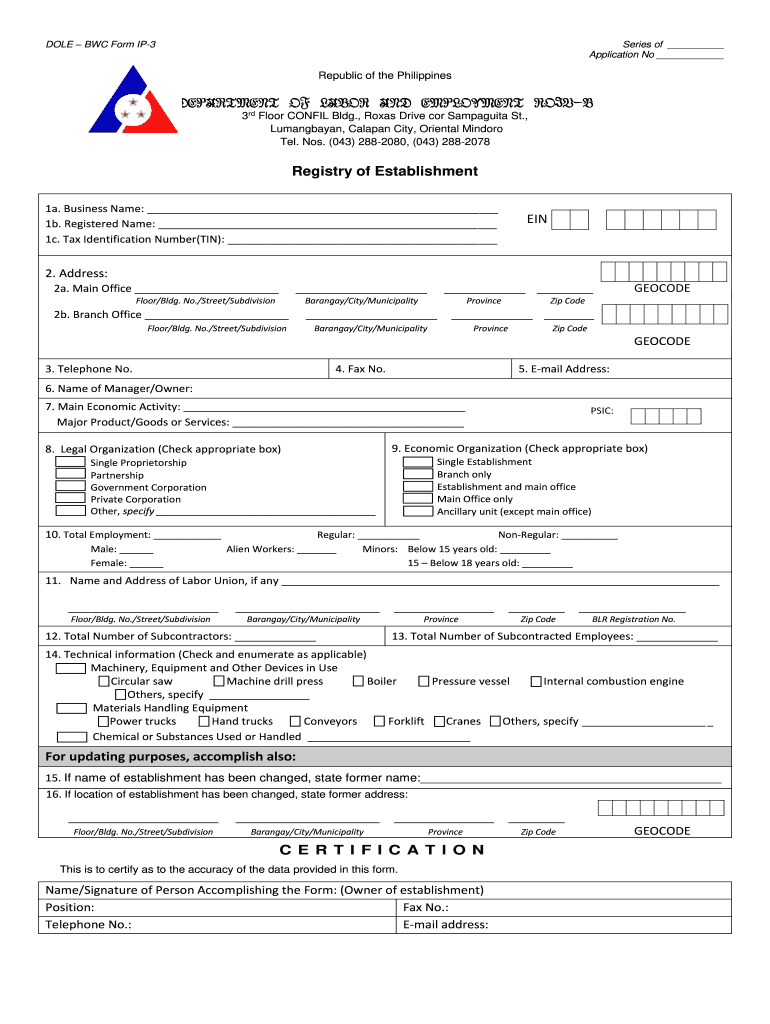
The Dole 1020 form, also known as the Dole Rule 1020 registration form, is a critical document used in the United States for registering establishments and ensuring compliance with specific labor regulations. This form captures essential details about businesses, including their name, address, economic activity, and employment details. Through this registration, the Dole 1020 form helps authorities maintain a registry of establishments and monitor compliance with labor and employment laws.
Purpose of the Dole 1020 Form
- Compliance with Labor Laws: The primary aim of the Dole 1020 form is to ensure that businesses register within the framework of compliance. This is vital for upholding labor standards and protecting employees' rights.
- Establishment Registry: The form assists in building a comprehensive registry of establishments across various sectors, aiding in inspections and monitoring.
- Data Collection: By gathering data about business operations, the form plays a role in assessing the economic landscape and workforce distribution within the region.
Key Information Required on the Dole 1020 Form
Completing the Dole 1020 form requires careful input of specific information that reflects the operations and structure of the business. Essential details include:
- Business Name and Address: Clear identification of the establishment.
- Economic Activity Description: A succinct summary of the primary business activities.
- Employment Information: Total number of employees and their roles.
- Legal Organization Details: Form of business ownership, such as LLC or corporation.
Dole 1020 Registration Process
Filing the Dole 1020 form involves several steps:
- Obtain the Form: You can access the Dole 1020 form online or request a hard copy through relevant regulatory agencies.
- Fill Out Required Fields: Provide all necessary information accurately to avoid delays in the registration process.
- Submit the Form: Depending on local regulations, submissions can be completed online, by mail, or in person.
- Await Confirmation: After submission, businesses should receive confirmation of registration from the appropriate authorities.
Legal Implications of Non-Compliance
Failing to submit the Dole 1020 form can lead to significant penalties for businesses, including:
- Fines and Penalties: Local jurisdictions may impose fines for non-compliance with labor registration requirements.
- Legal Action: Continued failure to register or comply with labor laws can lead to legal repercussions, including potential lawsuits from employees.
Seeking Assistance with the Dole 1020 Form
Given the importance of accurately completing the form, businesses may seek assistance from professionals such as:
- Legal Advisors: To understand the implications of the information submitted and ensure compliance with regulations.
- Business Consultants: To streamline the registration process and provide guidance on best practices for maintaining compliance.
Dole 1020 Form Variants and Related Documents
In addition to the primary Dole 1020 form, various related documents may also be necessary, depending on the specific nature of the business and its operations. Establishments might need to fill forms related to worker safety, tax compliance, or environmental impact assessments. Each of these documents plays a role in contributing to a comprehensive compliance framework.
Importance of Accurate Data Submission
Submitting accurate and complete information is essential for several reasons:
- Smooth Registration Process: Incomplete or incorrect information can result in delays, requiring resubmission and additional follow-up with authorities.
- Regulatory Compliance: Accurate data helps businesses avoid legal issues and penalties while ensuring compliance with labor laws.
Conclusion
The Dole 1020 form serves a vital role in the registration of establishments within the legal framework governing labor in the United States. Understanding its purpose, registration process, and the implications of compliance or non-compliance is crucial for businesses to operate legally and ethically.


