




01. Edit your owens corning insulation certificate online
Type text, add images, blackout confidential details, add comments, highlights and more.

Type text, add images, blackout confidential details, add comments, highlights and more.

Draw your signature, type it, upload its image, or use your mobile device as a signature pad.

Send insulation card via email, link, or fax. You can also download it, export it or print it out.
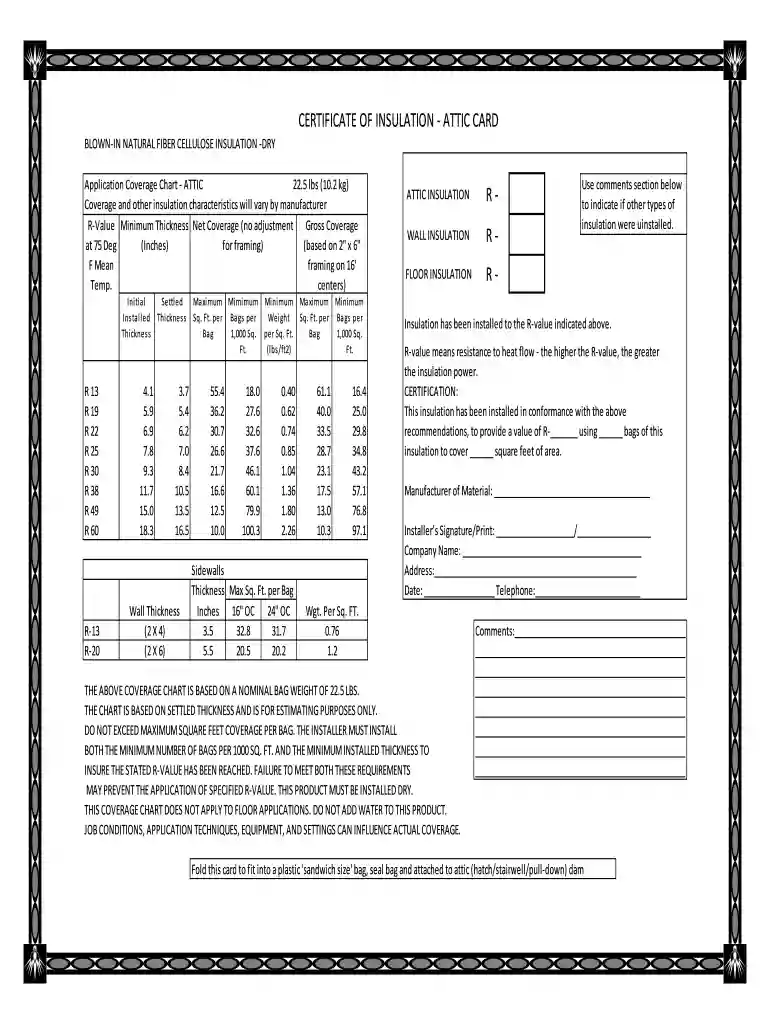
The insulation card serves as an important document in the construction and renovation industry, specifically relating to insulation materials installed in properties. It typically provides certification for the type of insulation used, confirming that it meets certain performance standards and specifications, such as R-values. The R-value indicates the thermal resistance of the insulation, crucial for energy efficiency. By providing detailed information about the installed insulation, the insulation card aids in compliance with building codes and standards.
This document can be essential for homeowners, contractors, and builders, as it confirms the adherence to guidelines necessary for energy efficiency and safety. It also prevents issues related to warranty claims and can be beneficial for potential audits or inspections. The insulation card may vary regionally and can come from manufacturers like Owens Corning or Knauf, which often include specific performance metrics and installation guidelines.
Completing the insulation card involves several critical steps to ensure accuracy and compliance. These steps typically include:
Identify Insulation Type: Determine the specific type of insulation being used, whether it is blown-in cellulose, fiberglass batts, spray foam, or another material.
Gather Installation Information: Collect data on the installation process, including the thickness, depth, and square footage covered. This data is vital for determining the R-value and ensuring it meets local building codes.
Fill Out Required Sections: The card usually has designated areas to fill out regarding the insulation's specifications. This can include the manufacturer's name, insulation product, and specifics on the installation.
Sign Off from Qualified Personnel: A licensed contractor or a representative from the insulation company often needs to sign the insulation card, attesting to the accuracy of the information provided.
Attach Supporting Documents: Include any manufacturer’s literature, warranty information, or other documents that corroborate the details provided on the insulation card.
Keep Copies for Records: Maintain both a physical and digital copy of the completed insulation card, as it may be necessary for future reference or potential inspection.
Following these steps ensures that the insulation card is complete, which plays a pivotal role in demonstrating compliance with energy efficiency standards and may be required for any future renovations or sales of the property.
Obtaining an insulation card typically involves a straightforward process that includes interaction with insulation contractors, manufacturers, or local building departments. Here's a general outline of how to secure one:
Contact the Manufacturer: Most insulation products come with documentation that specifies how to obtain an insulation card. This may involve completing a request form or downloading a template from the manufacturer's website.
Engage with Certified Installers: If the insulation was installed by a licensed professional, they should provide you with the insulation card upon completion of the project. Ensure that the installer follows up after installation to provide the necessary documentation.
Local Building Authority: In some regions, local building authorities may issue insulation cards or certificates after inspection and verification of the installed insulation. Contacting your local building department can clarify whether this is an option.
Request an Inspection: If the card is required for compliance purposes, you can request an official inspection of the insulation installation, which, upon approval, would generate your insulation card.
This process emphasizes the importance of keeping all paperwork organized and easily accessible, as well as ensuring compliance with local and federal guidelines related to insulation materials.
An insulation card contains several critical elements that provide valuable information regarding insulation materials installed in a building. These elements typically include:
Insulation Type and Product Name: Clearly states the brand and type of insulation, which is essential for verifying the material used.
R-value: This specifies the thermal resistance of the insulation, which indicates how well the material can insulate a space.
Application Coverage Chart: Provides details about the thickness and coverage per bag of insulation material, helping to assess the material's efficiency.
Installation Methodology: Outline of how the insulation was applied, including techniques used and any specific guidelines that were followed during installation.
Installer Information: Details about the certified professional or company that conducted the installation, including contact information and license numbers.
Date of Installation: The date when the insulation was installed is recorded to assist with future reference and compliance alerts.
Contact for Warranties and Claims: Should include information on whom to contact regarding product warranties or claims associated with the insulation material.
Understanding these key elements not only ensures compliance with regulations but also facilitates the effectiveness of the insulation system installed, ultimately contributing to energy savings and comfort within the structure.
The insulation card is utilized in various practical scenarios in both residential and commercial settings:
Home Sale Transactions: Homeowners may need to present the insulation card during real estate transactions to demonstrate compliance with building codes and energy efficiency standards. Buyers often look for such documentation to assess potential renovation needs.
Energy Audits: Energy auditors might request the insulation card to verify the insulation levels within a home or building. This card provides concrete evidence of the insulation type and effectiveness, which can affect energy ratings.
Building Inspections: During building code inspections, inspectors will often review the insulation card to confirm that the building has been constructed in compliance with local codes, ensuring safety and energy efficiency.
Warranty Claims: If there are issues with the insulation, having the insulation card on hand allows homeowners or contractors to initiate warranty claims with confidence, providing proof that the insulation was installed according to the manufacturer's specifications.
Each of these instances demonstrates the practical utility of the insulation card, which acts as a safeguard for both homeowners and contractors, validating the quality and standards of insulation work performed.
At DocHub, your data security is our priority. We follow HIPAA, SOC2, GDPR, and other standards, so you can work on your documents with confidence.


