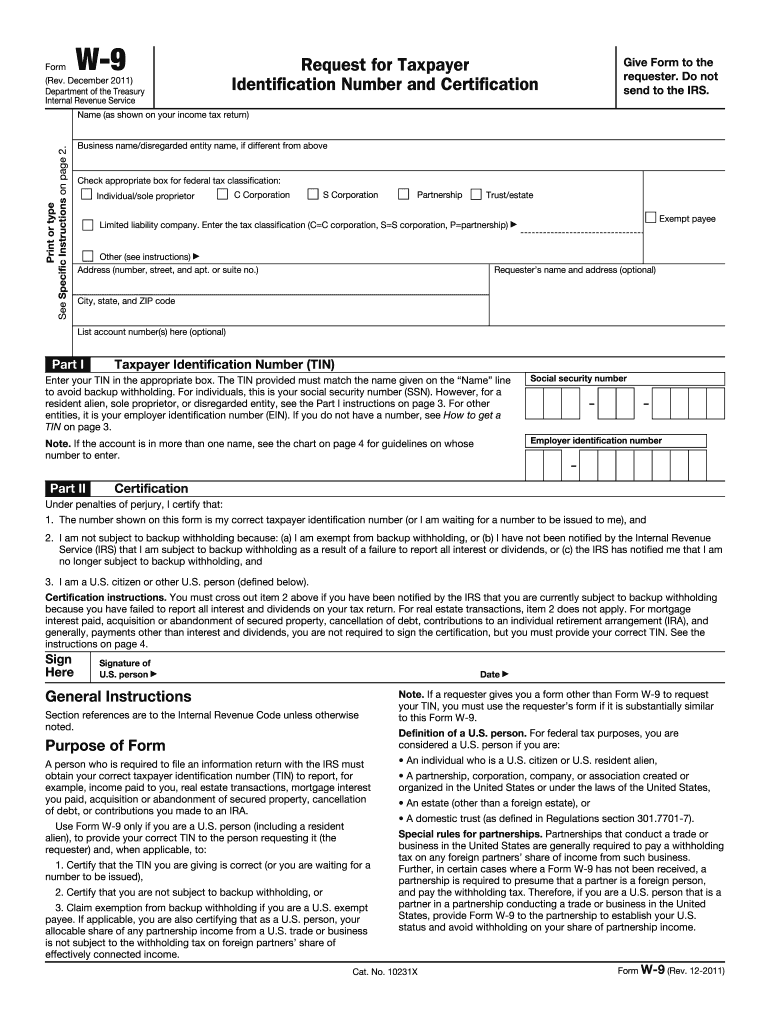







Definition and Significance of W-9 Form 2011
The W-9 Form is an essential document provided by the IRS, which stands for "Request for Taxpayer Identification Number and Certification.” The 2011 version of this form was designed to comply with IRS regulations for that tax year. It serves as a mechanism for individuals and businesses in the U.S. to furnish their Taxpayer Identification Number (TIN) to entities that issue them income, ensuring correct tax reporting and compliance. The form is primarily used by freelancers, contractors, and other non-employees who receive payment from companies but not as regular employees, avoiding issues with backup withholding.
Key Elements of the W-9 Form 2011
This form comprises several critical sections that must be completed accurately:
- Personal Information: This section requires the individual or business to fill in basic personal information, such as name, business name (if applicable), and address.
- Tax Classification: Here, the filer must indicate their federal tax classification, such as individual, C corporation, S corporation, partnership, or trust/estate.
- Exemptions: A declaration of any exemptions from withholding.
- Requestor Information: Typically includes the name of the company requesting the information and their address.
- Certification: The signer must certify the correctness of their TIN and confirm that they are not subject to backup withholding.
How to Complete the W-9 Form 2011
Completing the W-9 form is straightforward, but precision is crucial to avoid complications:
- Enter Your Name: Use your full legal name as it appears on your tax return.
- Provide Your Business Name: If you operate a sole proprietorship or have a DBA, list it here.
- Select Your Federal Tax Classification: Choose from options such as individual, corporation, partnership, etc.
- Enter Exemptions: Only applicable if you meet specific IRS conditions.
- Provide Address: Ensure this is the address where you receive mail pertinent to tax issues.
- List the Requestor's Name and Address: Fill out as indicated by the requesting entity.
- Certify the Form: Sign and date the document to certify the details provided are accurate and complete.
How to Obtain the W-9 Form 2011
Obtaining the W-9 form for the 2011 tax year is simple. You can download the form directly from the IRS website. While newer versions are available on the IRS site, ensure you select the specific 2011 form if required for historical purposes. Verify that the document is legitimate, ensuring it includes IRS official headers and markings.
Important Terms Related to the W-9 Form 2011
Understanding specific terms is essential for correctly handling this form:
- TIN: Taxpayer Identification Number—critical for IRS tax processing.
- Backup Withholding: A situation where the payer is required to withhold a percentage from your payment because you are not exempt or have not furnished a correct TIN.
- Certification: Legal confirmation of the accuracy of the information provided on the form.
- Exempt Payee: Some payees are exempt from backup withholding.
Who Typically Uses the W-9 Form 2011
The W-9 form is used by:
- Freelancers and contractors: Individuals working on a per-project basis often receive this form from businesses requiring their services.
- Vendors and suppliers: Similar to freelancers, these entities are not regular employees and provide goods or services independently.
- Landlords: May need to provide this form when receiving rent payments to ensure correct income reporting.
- Financial institutions: Clients requesting critical certification or exemption confirmation.


IRS Guidelines for the W-9 Form 2011
The IRS provides clear instructions on handling the W-9 form:
- Proper Filing: Ensure the information is accurate to avoid penalties.
- Submitting the Form: Only submit to the entity requesting it—not directly to the IRS. The form serves the requesting entity's record-keeping needs for tax reporting.
- Handling Errors: Amend the form if any information changes, such as a new business name or address.
Penalties for Non-Compliance
Failure to comply with W-9 form requirements could result in significant penalties:
- Incorrect TIN: Providing an incorrect TIN may result in penalties and incorrect tax reporting.
- Ignoring Backup Withholding: If applicable, failing to account for backup withholding can lead to fines.
- Submission Failures: Not providing a requested W-9 can result in withholding at a higher rate or other financial consequences.
Taxpayer Scenarios for Using the W-9 Form 2011
The W-9 is crucial for various taxpayer situations:
- Self-Employed Individuals: Essential for those who manage their own businesses or work independently.
- Businesses Engaging Freelancers: Necessary for gathering accurate tax information for IRS compliance.
- Part-time Workers: Individuals who split time between multiple employers or are on temporary assignments.
Thoroughly handling the W-9 form for 2011 is critical for both the taxpayer's accounting precision and the entity required to report their disbursements, ensuring all actions remain within IRS regulations and avoid potential pitfalls of non-compliance.