




01. Edit your waiver of rights to claim death benefits online
Type text, add images, blackout confidential details, add comments, highlights and more.

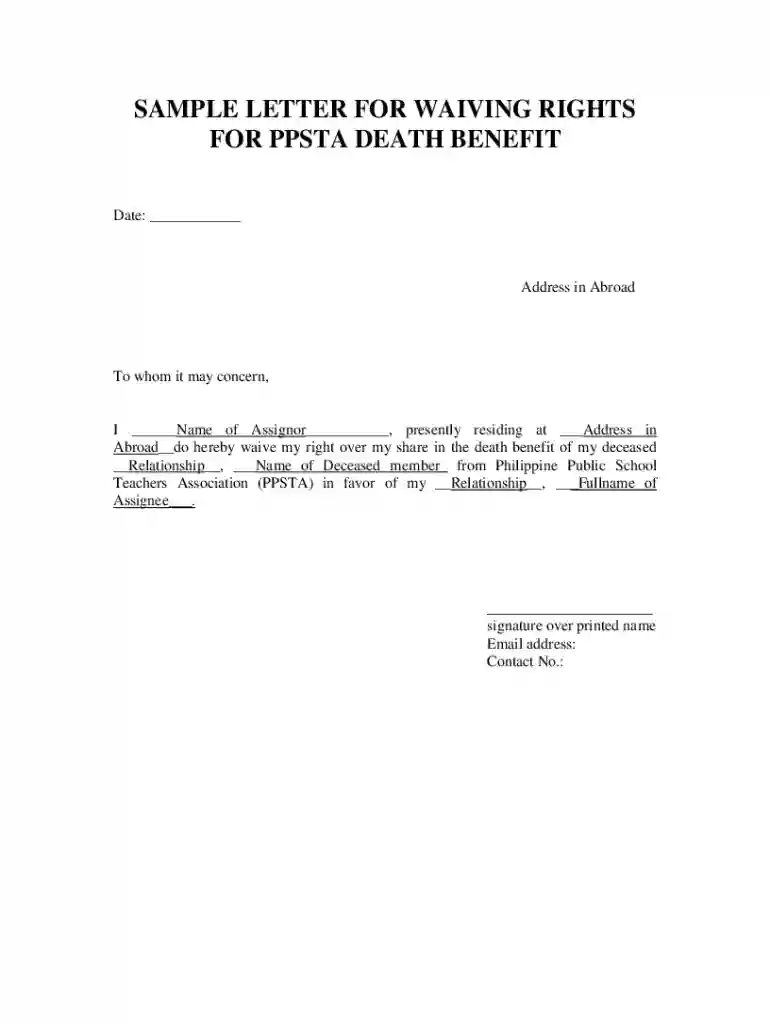
Type text, add images, blackout confidential details, add comments, highlights and more.

Draw your signature, type it, upload its image, or use your mobile device as a signature pad.

Send sss waiver death claim via email, link, or fax. You can also download it, export it or print it out.
A waiver of rights to claim death benefits is a legal document that allows one party (the assignor) to relinquish their entitlement to death benefits in favor of another individual or party (the assignee). This type of waiver is commonly used in situations involving life insurance policies, retirement accounts, or similar financial instruments where death benefits are disbursed upon the policyholder's death. The waiver outlines necessary personal information, including the names and contact information of both parties, and the specific benefits being waived. Signing this document is a significant decision, as it permanently transfers rights to those benefits to the assignee.
In familial contexts, individuals may use this waiver to designate a spouse, child, or another relative to receive the intended benefits. It is crucial that the assignor understands the implications of waiving their rights, as this action may limit future claims or entitlements regarding those benefits. The document should be prepared in compliance with local laws to ensure its enforceability.
Completing a waiver of rights to claim death benefits involves several important steps to ensure accuracy and legality:
Engaging a legal professional to draft or review the waiver can safeguard against potential disputes and ensure compliance with specific state laws.
Understanding key terms associated with the waiver of rights to claim death benefits is critical for effective navigation of the process. Some of these terms include:
Clearing up these terms is essential as misinterpretation can lead to significant legal or financial consequences.
The waiver of rights to claim death benefits holds substantial legal weight when constructed and executed correctly.
By ensuring that the waiver is legally sound and thoroughly understood, both parties can mitigate potential future conflicts regarding entitlement to death benefits.
Individuals and entities that commonly utilize the waiver of rights to claim death benefits include:
These unique scenarios highlight the flexibility and importance of the waiver as a tool in various contexts, ensuring that intentions regarding benefits are legally recognized and followed through.


We've got more versions of the waiver of rights to claim death benefits form. Select the right waiver of rights to claim death benefits version from the list and start editing it straight away!
| Versions | Form popularity | Fillable & printable |
|---|---|---|
| 2020 | 4 Satisfied (52 Votes) |
At DocHub, your data security is our priority. We follow HIPAA, SOC2, GDPR, and other standards, so you can work on your documents with confidence.
A written request that explains the rationale for requesting a waiver. The request should explain why the debtor should not be held responsible for payment ofRead more
A claimant for accrued benefits, survivors pension, or dependency and indemnity compensation may waive the right to substitute in writing over the claimantsRead more
Jan 23, 2018 Pay- ments received under this Act for personal injury or sick- ness, including payments to beneficiaries in case of death, arent taxable.Read more


