
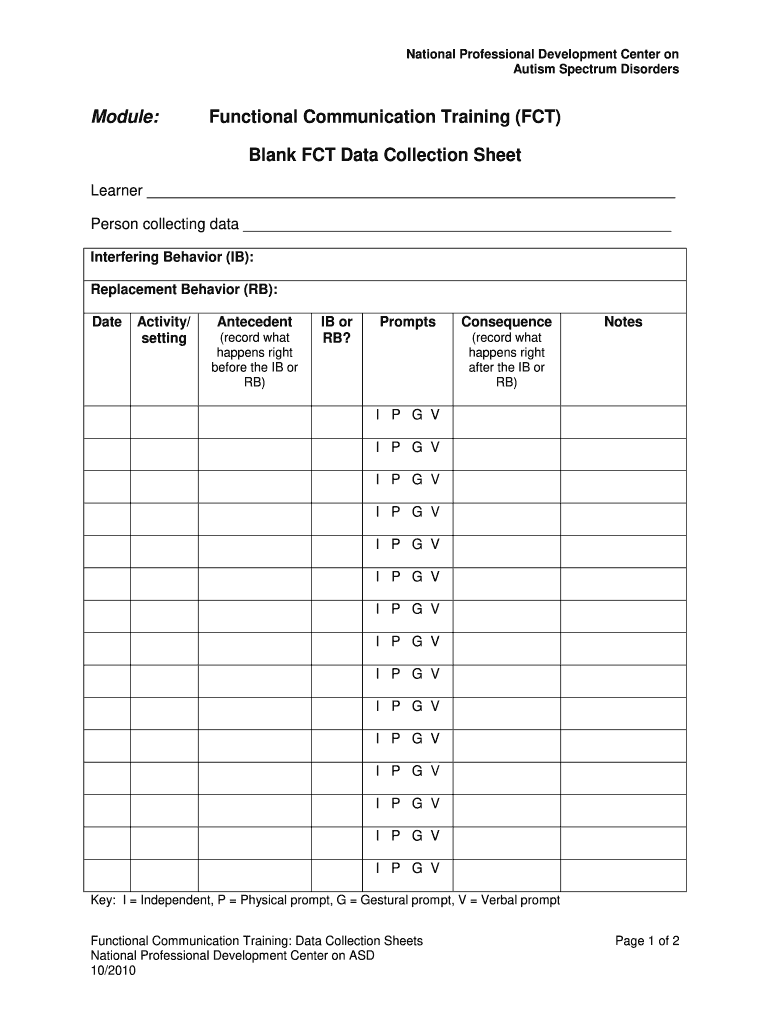







Understanding Blank Data Collection
A blank data collection sheet serves as a structured template used to gather information systematically. It includes various predefined fields designed to capture specific data points, ensuring consistency and efficiency in the data-gathering process. Such sheets can be utilized across multiple disciplines, including education, research, business, and healthcare settings, allowing users to record important metrics and observations without ambiguity.
Structure of a Blank Data Collection Sheet
A well-constructed blank data collection sheet typically includes several key components:
-
Header: This section usually contains the title of the data collection sheet, along with space for the date, researcher or collector's name, and relevant identifiers (e.g., project title, subject's ID).
-
Data Fields: The main part of the sheet where actual data is recorded. Fields often include:
- Text boxes for names or descriptions.
- Numeric fields for counting or scoring.
- Checkboxes or dropdown lists for categorical data.
-
Instructions: Clear guidance on how to complete the sheet effectively. Include examples where possible to clarify expectations.
-
Footer: This may include additional notes about the document's confidentiality, instructions for submission, or contact information for questions.
Benefits of Using Blank Data Collection Sheets
Utilizing blank data collection sheets provides several notable advantages:
-
Standardization: By using a uniform format, all data collected can be compared and analyzed more easily, ensuring that it meets defined standards.
-
Efficiency: With predefined fields, data collectors save time during both the collection and input stages.
-
Accuracy: Reducing the variability in how data is collected minimizes errors, leading to more reliable outcomes.
-
Versatility: These sheets can be tailored for various contexts, from clinical trials to classroom assessments, making them valuable tools for diverse applications.
Practical Examples for Effective Usage
When crafting a blank data collection sheet, it's important to consider its intended use. Here are practical examples:
-
Educational Assessments: A teacher may use a blank data collection sheet to record student performance data across different assessments, capturing metrics like scores, attendance, and behavioral observations.
-
Medical Research: In clinical trials, a researcher might develop a sheet to track patient responses to medication over time, documenting symptoms, side effects, and dosage adjustments.
-
Market Research: A business conducting surveys can use data collection sheets to capture customer feedback related to satisfaction and preferences during focus group sessions.
Creating an Effective Data Collection Sheet Template
When designing a blank data collection sheet, there are several factors to keep in mind:
-
Clarity: Use simple and unambiguous language in all fields and instructions to avoid confusion.
-
Customization: Allow for flexibility so users can modify the template if needed, such as adding more fields or revising existing ones to suit specific needs.
-
Validation: Consider incorporating mechanisms such as drop-down lists or data types that ensure collected information adheres to predetermined formats (e.g., dates, email addresses).
Making Data Collection Accessible
To maximize the utility of a blank data collection sheet, it's essential that they remain accessible to all potential users:
-
Printable Formats: Offering a blank data collection sheet as a PDF allows for easy distribution and printing, catering to individuals who prefer paper formats.
-
Digital Tools: Provide editable digital forms that can be filled out online, which can streamline the collection process and facilitate quicker data analysis.
-
Training Resources: Develop instructional materials or workshops that explain how to correctly utilize the sheets, enhancing overall effectiveness and reliability in data collection practices.
Using blank data collection sheets can significantly enhance the efficiency and accuracy of data collection across diverse fields, ensuring clearer insights and better decision-making based on the gathered information.


