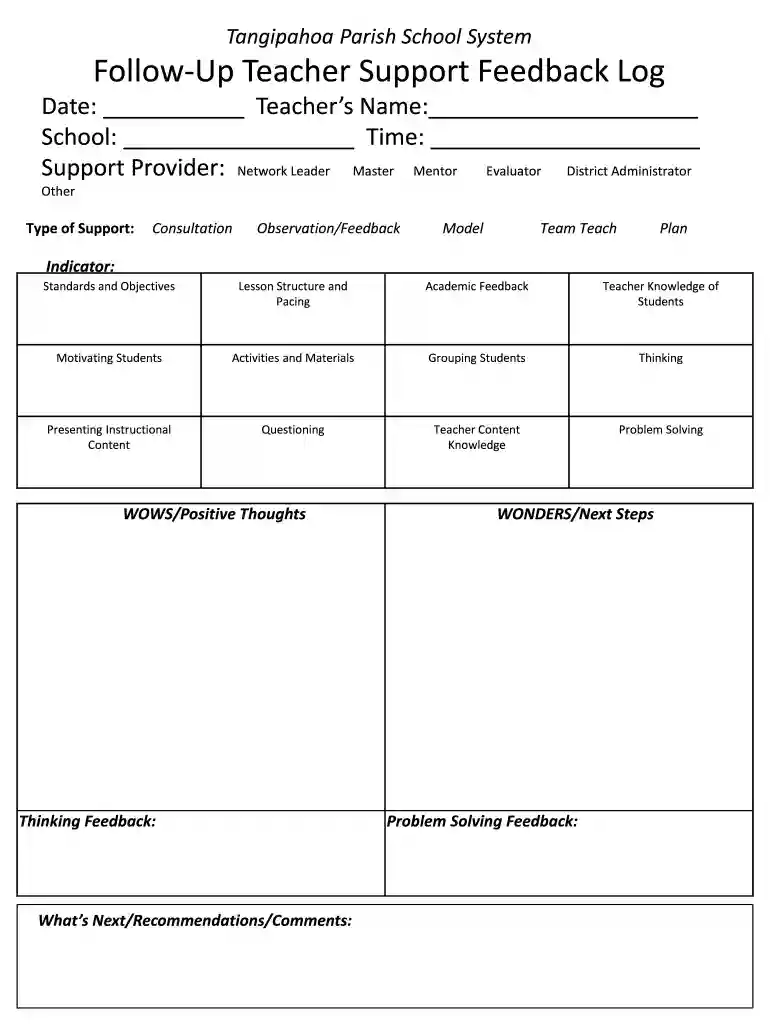
Teacher walk through form 2026

Get Form
classroom walkthrough template Preview on Page 1

Here's how it works

01. Edit your classroom walkthrough template online
Type text, add images, blackout confidential details, add comments, highlights and more.

02. Sign it in a few clicks
Draw your signature, type it, upload its image, or use your mobile device as a signature pad.

03. Share your form with others
Send 3 minute walkthrough observation form via email, link, or fax. You can also download it, export it or print it out.

Definition and Purpose of the Teacher Walk Through Form

The teacher walk through form is an essential tool used in educational settings to evaluate and enhance teaching effectiveness. This document is designed for administrators, instructional coaches, or peers to conduct brief classroom observations, typically lasting around three to five minutes. The primary purpose of the form is to provide structured feedback on teaching practices, classroom environment, and student engagement.

  • Classroom Observations: The form guides users in assessing various aspects of teaching, including lesson delivery, student interactions, and instructional strategies. This feedback can highlight strengths and areas for improvement, encouraging professional growth among educators.
  • Using the Data: Data collected through walk throughs can inform professional development plans and contribute to teacher evaluations. Schools can analyze trends and patterns to enhance overall instructional quality.

Key Components of the Teacher Walk Through Form

A comprehensive teacher walk through form typically includes several core components that facilitate effective observations and feedback.

  • Date and Time: Recording the date and time of each observation helps in tracking progress and maintaining a history of interactions.
  • Teacher Information: Involves documenting the teacher’s name, subject area, and grade level. This information is essential for contextualizing feedback.
  • Observation Focus Area: Specific focus areas (e.g., student engagement, instructional strategies) provide clarity on what aspects of teaching will be observed, ensuring targeted feedback.
  • Performance Indicators: These indicators represent specific criteria related to effective teaching practices, such as clarity of instructions, use of technology, or facilitation of discussions.

This structured approach not only streamlines the observation process but also aids in aligning feedback with established teaching standards.

Steps for Completing a Teacher Walk Through Observation

Completing a teacher walk through observation involves several steps that maximize the effectiveness of the evaluation process:

  1. Preparation: Before the observation, establish clear objectives for what you want to learn about the teaching practice. This may involve discussing expectations with the teacher beforehand.
  2. Observation: Conduct the classroom visit, focusing on the predetermined areas of interest. Keep notes on specific actions, interactions, and observations without disrupting the classroom environment.
  3. Documenting Observations: Use the teacher walk through form to document key observations immediately after the visit. Include quantitative data, such as the number of students engaged, or qualitative notes about classroom dynamics.
  4. Feedback Session: Schedule a follow-up meeting with the teacher to discuss your observations. This session should focus on providing constructive feedback based on the documented notes.
  5. Reflection and Action Plan: Work together to create an action plan that addresses any identified growth areas. This collaborative approach fosters a supportive environment for teacher development.

Best Practices for Using the Teacher Walk Through Form

Adopting best practices when using the teacher walk through form can enhance its effectiveness and usability.

  • Use Regularly: Frequent observations help normalize the process and provide ongoing feedback to teachers. Establishing a routine observation schedule contributes to continuous professional growth.
  • Focus on Goals: Align observations with specific teaching goals or school improvement initiatives to ensure relevance and applicability of feedback.
  • Encouraging Engagement: Foster an open dialogue between observers and educators to create a culture of trust and continuous learning.
  • Tailor to the Environment: Adapt the form to suit the unique needs of various teaching contexts, ensuring it reflects the specific challenges and strengths of teachers in different grades or subjects.

Using these best practices can lead to more constructive feedback and higher teacher satisfaction with the observation process.

Importance of Feedback in the Observation Process

Feedback is a critical element of the teacher walk through process, serving not only to inform teachers of their current practices but also to help them grow professionally.

  • Constructive Critique: Providing balanced feedback—highlighting both strengths and areas for improvement—encourages teachers to reflect on their practices and consider adjustments.
  • Collaborative Growth: Feedback should be framed as a partnership between the observer and the teacher, promoting a collaborative approach to professional development.
  • Evidence-Based Practice: Utilizing evidence gathered during the observations makes the feedback more credible and actionable, allowing educators to make targeted adjustments in their teaching methods.

Effective feedback can significantly improve teacher performance and student outcomes.

Examples of Classroom Walk Through Observation Criteria

Utilizing specific criteria can enhance the focus of a teacher walk through observation, making assessments more meaningful.

  • Engagement Strategies: Observers can note how well students are participating in lessons and whether the teacher employs strategies to engage different learning styles.
  • Instructional Techniques: Evaluating the variety of instructional methods, such as differentiated instruction or collaborative tasks, can inform best practices in classroom management.
  • Classroom Environment: Assessing the physical and emotional climate of the classroom helps in understanding how these factors impact student learning and behavior.
  • Technology Integration: Observing how effectively teachers incorporate technology into their lessons can guide professional development around digital literacy and innovative teaching tools.

By focusing on these key criteria, educators can gain valuable insights into teaching effectiveness and identify specific areas for professional growth.

be ready to get more

Complete this form in 5 minutes or less

Get form

Got questions?

We have answers to the most popular questions from our customers. If you can't find an answer to your question, please contact us.
Contact us

Most eSignature services require users to have a paid subscription. With DocHub, there are two options for you to add an electronic signature to your classroom walkthrough feedback form without being charged:

  • You can do it during a 7-day trial period;
  • You can sign up for a free plan.

The second option, however, has limitations on the number of signatures, sign requests, emails, and documents for adjusting available per month. You can check for full information here.

As a comprehensive document editing service, DocHub is accessible on smart phones. Open DocHub in your choice of mobile internet browser and employ our smart mobile-friendly toolset to complete your classroom walkthrough google form template.

Security and compliance

At DocHub, your data security is our priority. We follow HIPAA, SOC2, GDPR, and other standards, so you can work on your documents with confidence.

Learn more
ccpa2
pci-dss
gdpr-compliance
hipaa
soc-compliance
be ready to get more

Complete this form in 5 minutes or less

Get form