
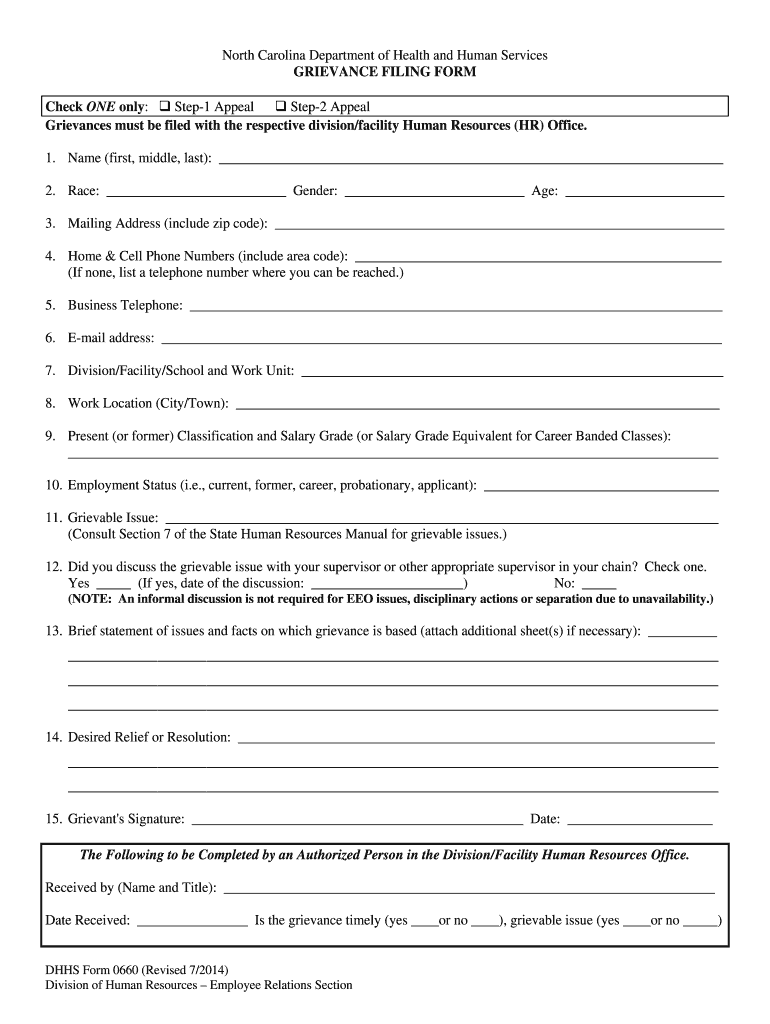







Definition & Meaning of the Grievance Form Template
A grievance form template serves as a standardized document designed for employees to formally express concerns regarding workplace issues. This template outlines the specific nature of their grievances, which can include complaints related to harassment, discrimination, workplace safety, or unfair treatment. The form typically requires the employee to provide personal details, a description of the grievance, prior conversations about the issue, and a statement of desired resolution. By using a grievance form template, employees can ensure that their concerns are documented in a clear manner which aids in the review and resolution of their issues.
Components of a Grievance Form Template
The key components usually found in a grievance form template include:
- Employee Information: Name, job title, department, and contact information.
- Grievance Details: Description of the issue, including dates, locations, and individuals involved.
- Previous Discussions: Notes on any prior discussions with supervisors or HR representatives concerning the issue.
- Resolution Sought: Clear statements outlining what the employee hopes to achieve through the grievance process.
Completing the grievance form accurately is crucial as it forms the basis for any follow-up action from the management or human resources team.
How to Use the Grievance Form Template
Using a grievance form template involves a structured process that helps ensure that all necessary information is captured. Following the template's layout can facilitate a smooth filing process.
Steps to Follow:
- Download the Template: Access a grievance form template suitable for your needs, either as a Word document or a PDF.
- Fill in Personal Information: Complete the sections that require your personal details, ensuring that all information is accurate.
- Detail Your Grievance: Provide a comprehensive description of the issue you are facing. Be specific and include relevant dates and details.
- Note Previous Discussions: If applicable, explain any conversations you have had regarding the grievance and the responses received.
- State Desired Outcomes: Clearly articulate what you seek as a resolution to your grievance.
- Review and Submit: Double-check your completed form for errors or missing information before submitting it to your HR department or supervisor.
Using the grievance form template in this manner not only standardizes the grievance process but also enhances the clarity of communication between employees and management.
Key Elements of the Grievance Form Template
Understanding the critical elements of a grievance form template is essential for effectively communicating your concerns. Each section plays a vital role in ensuring comprehensiveness and clarity.
Important Elements:
- Introduction Section: A brief overview explaining the purpose of the grievance form.
- Grievance Summary: A succinct summary outlining the main concern being raised.
- Incident Description: Detailed accounts of events that led to the grievance, including potential witnesses' names.
- Impact on Employee: Explanation of how the issue has personally affected the employee, including emotional and professional consequences.
- Supporting Evidence: A section where employees can attach relevant documents or evidence that substantiate their claims, such as emails, photographs, or witness statements.
These key elements are designed to guide the employee in providing a thorough and compelling case, significantly aiding the resolution process.
Who Typically Uses the Grievance Form Template
The grievance form template is primarily utilized by employees navigating workplace disputes. However, it can also serve various stakeholders within and outside the organization.


Common Users Include:
- Employees: The primary users, submitting grievances related to injustices experienced in the workplace.
- Human Resources Personnel: Those responsible for processing and responding to grievance submissions.
- Management: Supervisors or department heads may receive the forms to address concerns directly.
- Legal Representatives: In certain situations, legal counsel might assist in reviewing the grievance to ensure legal compliance and proper handling of the issue.
The diverse range of users emphasizes the importance of creating a comprehensive and clear grievance form template that facilitates effective communication.

Steps to Complete the Grievance Form Template
Completing a grievance form template requires attention to detail and clarity to ensure that the grievance is processed efficiently.
Detailed Process for Completion:
- Initiate the Form: Start with a clear title and date at the top of the form.
- Incorporate Employee Information: Fill in your full name, position, and department. This identifies the person raising the grievance.
- Describe the Grievance:
- Outline the issue in chronological order.
- Include specifics such as location, involved parties, and any witnesses.
- Discuss Previous Actions Taken:
- Record any conversations held with supervisors or HR.
- Mention dates and outcomes of these discussions.
- Propose a Resolution: Articulate how you believe the issue should be resolved.
- Review and Edit: Before submission, it’s essential to thoroughly review your completed form for clarity and completeness.
Each step is crucial in ensuring your grievance is documented effectively, leading to timely responses and resolutions.
Examples of Using the Grievance Form Template
Practical examples of completed grievance forms can provide clarity. A well-structured grievance demonstrates how to document concerns effectively.
Example Situations:
- Harassment Claim: An employee may file a grievance against a coworker for alleged harassment, detailing specific incidents, dates, and any prior discussions had with management.
- Workplace Safety Concern: An employee might report unsafe working conditions, outlining specific hazards and any complaints previously lodged that went unaddressed.
- Discrimination Issues: Employees facing discrimination based on race, gender, or other factors can utilize the template to file formal complaints, providing evidence of discriminatory practices.
These examples illustrate how the grievance form can be tailored to suit specific issues while following the required format for clarity and precision.
Important Terms Related to the Grievance Form Template
Familiarizing oneself with essential terminology surrounding grievance processes can aid in understanding documents like the grievance form template.
Key Terms to Know:
- Grievance: A formal complaint raised by an employee regarding workplace issues.
- Resolution: The outcome or solution sought by the employee after filing a grievance.
- Harassment: Unwelcome conduct of a sexual, racial, or other nature that creates a hostile work environment.
- Discrimination: Unfair treatment based on characteristics like race, gender, age, or disability.
- Human Resources (HR): The department responsible for handling employee relations and grievances.
Understanding these terms enables employees to navigate the grievance process more effectively and advocate for their rights.




