







Definition and Purpose of the Skyjack Inspection Checklist
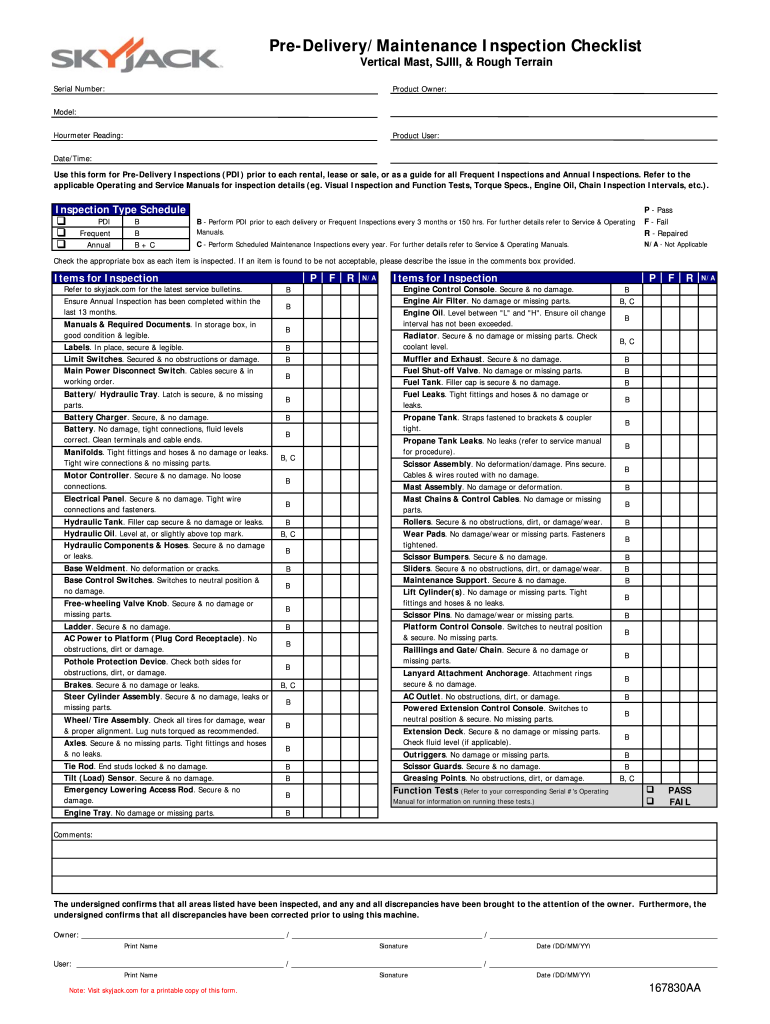
The Skyjack inspection checklist serves as a vital tool for ensuring that Skyjack equipment, including scissor lifts and rough terrain lifts, operates safely and efficiently. It outlines essential items that must be inspected prior to use, rental, or sale of the equipment, aligning with industry standards for safety and performance. This checklist includes detailed inspections of safety features, mechanical components, and operational functionality to help mitigate the risks associated with equipment malfunction.
The importance of having a structured inspection process lies in its ability to protect operators and others on the worksite. By adhering to the checklist, users can identify potential issues before they lead to accidents, injuries, or costly repairs. This is particularly crucial for equipment that undergoes rigorous usage and must meet stringent operational safety guidelines.
Steps to Complete the Skyjack Inspection Checklist
Completing the Skyjack inspection checklist involves a systematic approach to evaluating the equipment’s condition. Here are the essential steps:
-
Prepare the Equipment: Ensure the Skyjack lift is in a safe position, ideally on level ground with proper permissions to inspect.
-
Begin Inspection:
- Safety Features: Check that all safety devices, such as guards and emergency stop buttons, are functional.
- Mechanical Components: Look for any visible wear or damages, particularly on hydraulic lines, brakes, and batteries.
- Operational Tests: Conduct operational tests to confirm that all functions, including raising, lowering, and steering, are working correctly.
-
Document Findings: Record the status of each item on the checklist, marking whether it has passed inspection, failed, or requires repairs.
-
Address Issues: If any items are marked as failed or requiring attention, take appropriate action to repair or resolve these issues before the equipment is put into service.
-
Review and Sign: Once all sections of the checklist are complete, have the relevant parties review and sign the document, affirming that the inspection has been conducted thoroughly.
Key Elements of the Skyjack Inspection Checklist
A comprehensive Skyjack inspection checklist encompasses several critical elements to ensure thorough assessments. These elements include:
-
Safety Features Inspection:
- Emergency stop buttons
- Safety guard mechanisms
- Operator harnesses and safety rails
-
Mechanical Components Analysis:
- Hydraulic system checks
- Battery status and connections
- Wheel and tire integrity
-
Operational Functionality Tests:
- Lift operation (up/down)
- Steering and maneuverability tests
- Control panel functionality
-
Documentation of Findings:
- Clearly indicate if each component passed or failed inspection.
- Include space for notes on repairs or further action required.
Importance of the Skyjack Inspection Checklist
Utilizing the Skyjack inspection checklist holds significant importance for various reasons:
-
Safety Assurance: Ensuring all safety features are operational reduces the risk of accidents and enhances workplace safety for operators and nearby personnel.
-
Operational Efficiency: Regular inspections help maintain the equipment in optimal working condition and can improve operational efficiency by preventing breakdowns.
-
Legal Compliance: Adhering to inspection protocols may be necessary to comply with local, state, and federal regulations governing equipment safety and usage.
-
Record Keeping: The checklist provides a documented record of maintenance and inspections, which is valuable for audits or regulatory inspections, demonstrating due diligence in equipment care.
Who Uses the Skyjack Inspection Checklist?
The Skyjack inspection checklist is utilized by a wide range of professionals and organizations involved in heavy equipment operation, including:
-
Construction Companies: They use the checklist to ensure all lifting equipment is safe for daily operation on job sites.
-
Rental Agencies: Equipment rental firms check their inventory regularly to guarantee safety and functionality before renting out machinery to customers.
-
Maintenance Technicians: Professionals responsible for the upkeep and repair of Skyjack equipment use the checklist as a reference during routine maintenance.
-
Safety Officers: Compliance officers utilize checklists to conduct regular audits and ensure that safety standards are consistently met within the organization.
Examples of Using the Skyjack Inspection Checklist
Practical applications of the Skyjack inspection checklist can vary among different users. Here are a few scenarios:
-
Daily Pre-Operation Check: Operators conduct a quick inspection before using the equipment each day to confirm all safety systems are operational, preventing potential accidents.
-
Scheduled Maintenance: A maintenance technician refers to the checklist during regular downtime to systematically assess the equipment, ensuring any issues are addressed promptly and efficiently.
-
Before Rental Occasions: A rental agency completes the inspection checklist to assess a scissor lift before it is leased to customers, documenting its condition to ensure all safety features are functional and to maintain rental records.
By implementing the Skyjack inspection checklist efficiently, equipment users can enhance safety, improve operational uptime, and ensure compliance with safety standards.




