




01. Edit your visual inspection report online
Type text, add images, blackout confidential details, add comments, highlights and more.

Type text, add images, blackout confidential details, add comments, highlights and more.

Draw your signature, type it, upload its image, or use your mobile device as a signature pad.

Send visual inspection report sample via email, link, or fax. You can also download it, export it or print it out.
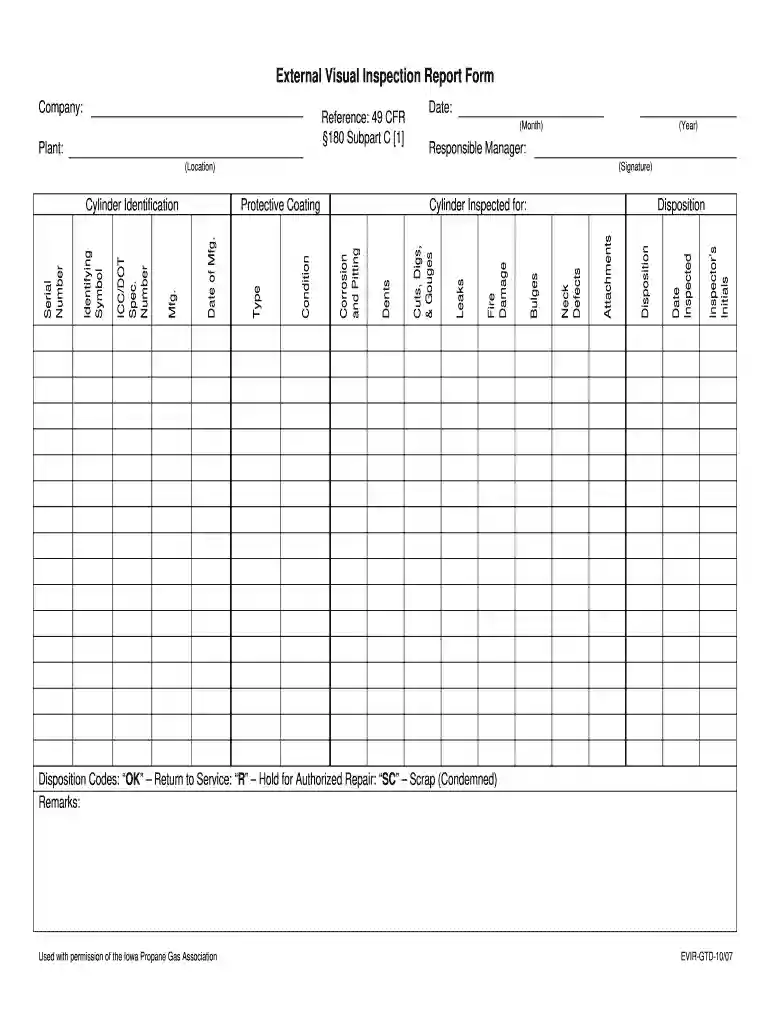
A visual inspection report form is a structured document used to record findings during visual assessments of objects or environments. This form captures important details about the item being inspected, including potential defects, compliance with standards, and the overall condition. It can be utilized across diverse industries, such as manufacturing, construction, safety inspections, and quality Assurance.
The essential elements typically found in a visual inspection report include:
Identification Information: Details such as the name of the inspector, date of inspection, and location of the object being assessed.
Inspection Criteria: Specific criteria that inspectors should evaluate, including aspects such as functionality, safety compliance, and physical condition. Common criteria include identifying neck defects, corrosion, bulges, and any signs of fire damage in materials like gas cylinders.
Inspection Results: This section documents the findings of the inspection, providing evidence of the observed conditions based on the established criteria.
Disposition Codes: Instructions on what action should be taken next based on the findings, like repair, replacement, or further review.
Recommended Actions: Suggestions for corrective measures or pressures for a follow-up inspection may also be included, ensuring thorough oversight.
Using a visual inspection report form involves a systematic approach to conducting the inspection effectively. Following a clear process can enhance accuracy in data collection and improve communication of findings.
Prepare the Inspection Environment: Ensure that the area and items requiring inspection are accessible and free of hazards.
Review Inspection Criteria: Familiarize yourself with the criteria outlined in the form before starting the inspection to understand what needs evaluating.
Perform the Visual Inspection: Carefully examine the object or area, taking note of any irregularities or issues that arise during the assessment.
Document Findings: Record observations on the form, using clear language to describe conditions accurately. Include photographs if applicable, to support your findings.
Complete Disposition Codes: Engage the appropriate codes or comments indicating what actions should be taken following the inspection based on results.
Submit the Report: Release the completed report to relevant stakeholders, ensuring that necessary follow-up actions are communicated.
Visual inspection reports can vary based on their intended use, but they typically share fundamental structures while tailoring specifics relevant to their context.
Manufacturing Insights: In manufacturing, a visual inspection report sample may involve detailed observations of products on the assembly line. Inspectors might check for defects such as improper finishes or physical abnormalities in critical components.
Safety Assessments: In construction, a visual inspection report example could document safety compliance concerning scaffolding, checking for stability, safety harnesses, and overall conditions that ensure worker safety.
Quality Control: In quality assurance contexts, a visual inspection checklist template may guide inspectors through standardized evaluations, ensuring all product facets are aligned with quality benchmarks.
Understanding the legal frameworks surrounding visual inspections is essential for ensuring compliance and maintaining high standards in reporting.
Safety Standards: Regulations dictated by organizations such as OSHA often require regular visual inspections in workplaces to maintain safety. Reports must meet these standards comprehensively, documenting all necessary observations.
Industry-Specific Regulations: Different sectors may have unique requirements, such as specific criteria for safety inspections of gas cylinders, which must include checks for leaks or structural integrity.
Maintaining accurate visual inspection reports is vital for accountability and compliance. These reports should be stored securely, with regular reviews to ensure they are up to date and reflective of current conditions.
Implementing structured visual inspection report forms can yield several advantages for organizations, especially in sectors that demand rigorous compliance and quality control.
Consistency: Standardized forms ensure uniformity in inspections, allowing different inspectors to evaluate conditions based on the same criteria.
Clarity and Accountability: Documenting findings transparently helps allocate responsibility for actions based on the inspection outcomes, promoting accountability across teams.
Efficiency: Streamlined processes for completing inspections and reporting findings can save time and reduce the chances of human error during documentation.
Enhanced Compliance: Using a visual inspection report form helps ensure that all requirements are met, which can be crucial during audits or inspections from regulatory bodies.
Utilizing well-designed templates for visual inspection reports can save time and enhance the effectiveness of reporting processes.
Basic Templates: Simple forms that include basic identification and observation sections, ideal for general inspections in various contexts.
Advanced Templates: More complex templates designed for specific industries, equipped with specific criteria relevant to the item being inspected and additional comment sections for detailed notes.
Digitized Templates: Electronic versions of inspection reports that facilitate easier sharing, editing, and storage, compatible with various file formats to streamline workflow.
Organizations can tailor their visual inspection report templates to reflect their specific industry requirements, significantly improving their utility and relevance in practice. Customizations may include predefined disposition codes or checklists for particular inspection criteria, which help guide the process systematically.
Incorporating visual inspection report forms is a best practice that contributes to systematic inspections across various industries. By ensuring clarity, consistency, and compliance, these forms serve as valuable tools for inspectors, managers, and regulators alike.
We've got more versions of the visual inspection report form. Select the right visual inspection report version from the list and start editing it straight away!
| Versions | Form popularity | Fillable & printable |
|---|---|---|
| 2007 | 4.7 Satisfied (162 Votes) |
At DocHub, your data security is our priority. We follow HIPAA, SOC2, GDPR, and other standards, so you can work on your documents with confidence.
This Site Inspection Report Template is provided to assist you in preparing site inspection reports for EPAs 2022 Construction General Permit (CGP). If you areRead more
Jul 18, 2014 Submit one legible copy, in approved transferrable media, of a report listing results of the requirements of 3.2.8 to the. SUPERVISOR, usingRead more


