Understanding the Food Intake Form
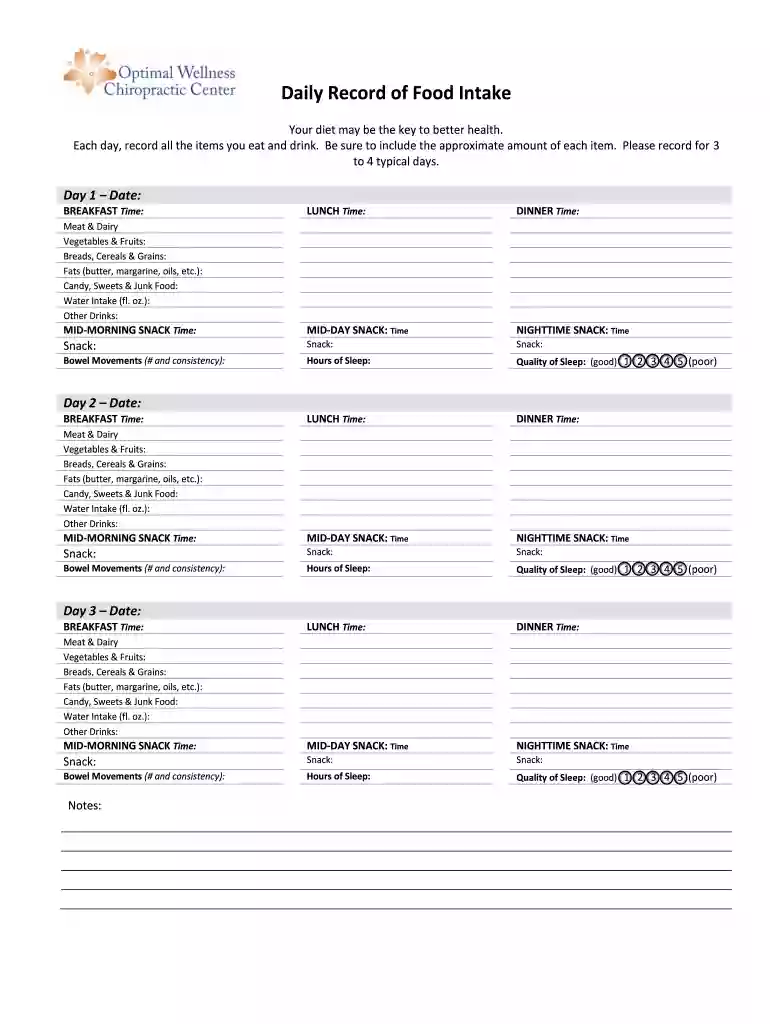
A food intake form serves as a comprehensive record for individuals who wish to monitor their dietary habits, health goals, or nutritional intake over time. This structured document enables users to track daily food intake, helping to promote better health by identifying patterns related to nutrition, hydration, and overall wellness.
Key Components of a Food Intake Form
The essential elements of a food intake form typically include:
- Date and Time: Each entry should clearly indicate when meals and snacks were consumed, allowing for tracking trends over the days or weeks.
- Type of Meal or Snack: Users should specify whether the entry is for breakfast, lunch, dinner, or a snack. This categorization can help users identify imbalances or irregularities in their eating habits.
- Portion Sizes: Recording portion sizes is crucial for accurate assessment of caloric intake. Utilizing standard measurements can improve reporting consistency.
- Food Items: The form should provide space to list the specific foods and beverages, facilitating a detailed account of daily intake.
- Nutritional Information: Whenever possible, include details such as caloric content, macronutrient breakdowns (carbohydrates, proteins, fats), and important micronutrients to support deeper analysis.
- Water Intake: Documenting hydration is vital; therefore, including a section for water consumption can help users stay mindful of their liquid intake.
- Bowel Movements: Monitoring bowel movements may be relevant for personal health needs, as dietary choices can significantly affect digestive health.
- Sleep Patterns: Understanding how food intake influences sleep quality can reveal correlations that help improve overall health.
- Physical Activity: Recording physical activity alongside food intake can provide insights into energy balance and support weight management goals.
Daily Food Intake Example Entries
Utilizing the food intake form is straightforward. Here’s an example of how individuals might fill out a typical day's entries:
- Date: October 12, 2023
- Meal: Breakfast
- Food Items: 2 scrambled eggs, 1 slice whole-grain toast, 1 cup coffee
- Portion Size: 2 eggs, 1 slice, 1 cup
- Water Intake: 1 cup
- Meal: Lunch
- Food Items: Grilled chicken salad with mixed greens, tomatoes, and vinaigrette
- Portion Size: 1 serving
- Snacks
- Food Items: Apple, 1 tablespoon peanut butter
- Portion Size: 1 apple, 1 tbsp
Benefits of Regularly Using a Food Intake Form
Tracking food intake offers several advantages, including:
- Awareness of Eating Patterns: Users can identify patterns in their food consumption that may need adjusting, whether it’s excess snacking or inadequate fruits and vegetables.
- Goal Setting: Individuals can set specific dietary goals based on their records, helping cultivate healthier habits over time.
- Medical Monitoring: For those with specific health conditions, such as diabetes or high cholesterol, a food intake form can facilitate tracking foods that may impact their health.
- Guidance for Professionals: Registered dietitians or nutritionists can leverage food intake forms to better understand a client’s habits and tailor recommendations accordingly.
Considerations and Best Practices for Completing Your Food Intake Form
To yield the best results, consider the following practices:
- Be Honest and Consistent: Ensure that entries are true to what you consume, as this will yield the most accurate assessments of your dietary patterns.
- Use Visual Aids: If helpful, include images or use food scale portions to improve accuracy on portion sizes.
- Review Regularly: Periodically assess your completed food intake forms to gather insights about your dietary habits, noting any trends or areas needing attention.
- Adjust as Needed: If you notice patterns that require change, adjust your diet accordingly, whether to increase nutrient intake, hydrate more, or reduce certain less healthy choices.
Engaging with a food intake form can enhance understanding of one's eating habits and contribute to better health outcomes. By carefully documenting and reviewing dietary choices, individuals can empower themselves to make informed decisions regarding their nutrition, ultimately fostering a healthier lifestyle.