
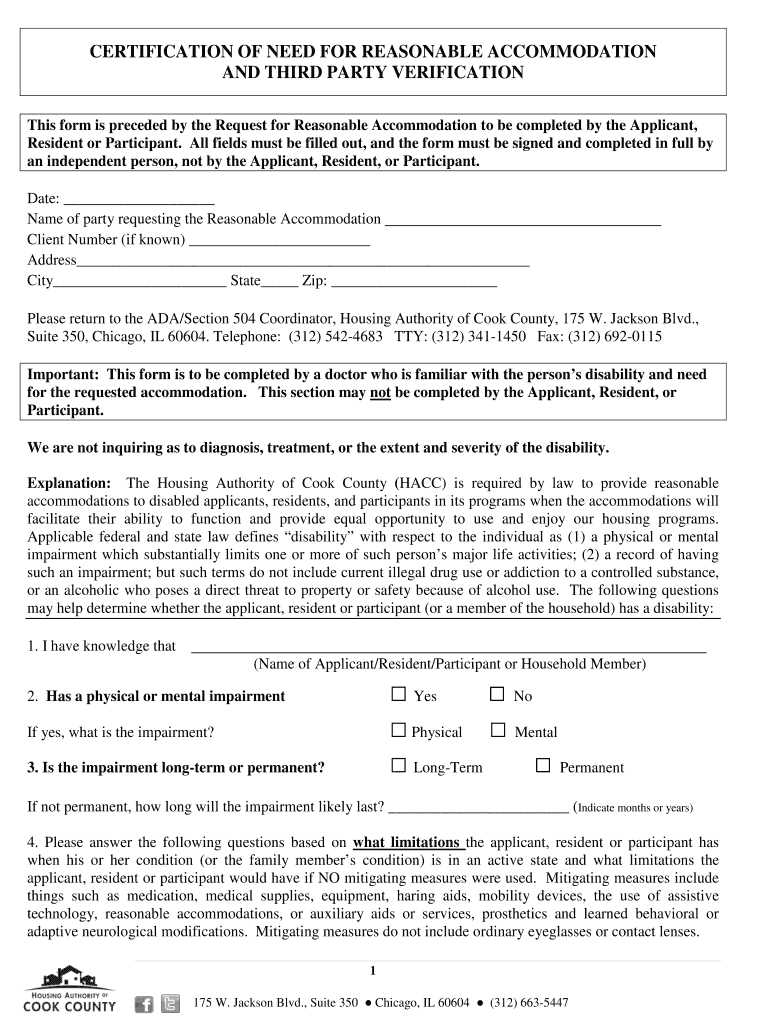







Definition and Meaning of Certification for Reasonable Accommodation
Certification of need for reasonable accommodation refers to a formal document that verifies an individual’s disability and the necessity for specific accommodations in housing or employment settings. Under the Americans with Disabilities Act (ADA), reasonable accommodations are adjustments made to ensure equal opportunity and access to facilities or services for individuals with disabilities.
Key aspects of this certification include:
- Verification of Disability: The document must be completed by a qualified professional, such as a healthcare provider or psychologist, who can substantiate the individual's disability and its limitations.
- Description of Needs: The form typically outlines the specific adjustments required, such as modifications to work environments or housing facilities, to enhance accessibility.
- Legal Framework: It operates within the parameters defined by federal and state laws, ensuring that individuals with disabilities are afforded protections and support in various settings.
This certification is crucial for enabling individuals to fully participate in housing programs and employment opportunities.
How to Use the Certification of Need for Reasonable Accommodation
Utilization of this certification involves a systematic process designed to ensure that individuals with disabilities can effectively communicate their requirements for accommodations. Below are the essential steps:
-
Consult with a Healthcare Provider: Begin by discussing the need for accommodations with a qualified professional who understands your situation. Provide them with relevant details about how your disability impacts daily activities or job functions.
-
Complete the Certification Form: Ensure that all necessary sections of the certification form are filled out. This includes providing detailed information about your disability, the accommodations requested, and the professional’s verification.
-
Submit the Form to Relevant Authorities: Once completed, the form should be submitted to the appropriate organization, such as a housing authority or employer's HR department. Each entity may have specific procedures for submission, either online or via traditional mail.
-
Follow Up: After submission, maintain open communication with the relevant authority to ensure that the accommodations are being processed. This may involve additional discussions or providing further documentation if requested.
-
Monitor the Implementation of Accommodations: Once accommodations are granted, monitor their effectiveness and communicate any ongoing needs or adjustments that may be required.
Steps to Complete the Certification for Reasonable Accommodation
Completing the certification involves careful adherence to specific instructions to ensure its validity and acceptance. The following steps should be carried out:
-
Obtain the Certification Form: Access the relevant certification form, often available through your employer, housing provider, or online resources such as ADA-related websites.
-
Gather Supporting Information: Collect documents that may support your request, such as prior medical records or disability assessments, which can substantiate your need for accommodations.
-
Consult with a Qualified Professional: Meet with your doctor or a licensed mental health provider who can accurately complete the certification form. It’s critical that this professional understands both your medical history and the context for which accommodations are being requested.
-
Fill Out the Form: Carefully complete each section of the form. Ensure that the professional entering the information details the nature of your disability, corroborates the necessity for requested accommodations, and provides their signature.
-
Review Before Submission: Double-check the form for any errors or omissions. An incomplete or inaccurate form can lead to delays or denial of accommodations.
-
Submit to the Appropriate Entity: Send the completed form to your employer’s HR department or the housing authority by the specified deadline, keeping copies for your records.
-
Confirm Receipt and Follow Up: After submission, confirm that the entity has received your form, and ask for details regarding the timeline for processing your request.
Important Terms Related to Certification for Reasonable Accommodation
Understanding specific terminology associated with reasonable accommodation certification is important for effective communication and compliance. Key terms include:
-
ADA (Americans with Disabilities Act): A civil rights law that prohibits discrimination against individuals with disabilities and requires reasonable accommodations to be provided.
-
Disability: According to the ADA, a disability is defined as a physical or mental impairment that substantially limits one or more major life activities.
-
Accommodation: Any modification or adjustment to a job, work environment, or housing that enables a qualified individual with a disability to perform essential job functions or enjoy equal access.
-
Verification: The process of providing credible evidence or certification from a qualified professional to substantiate a request for accommodation.
Being familiar with these terms helps navigate the process of obtaining accommodations effectively.
Legal Use of Certification for Reasonable Accommodation
The legal framework governing the certification of need for reasonable accommodation is primarily dictated by the ADA along with various state laws. Here's how it operates within a legal context:
-
Federal Protection: Under the ADA, individuals with disabilities are entitled to reasonable accommodations, and failure to provide such accommodations can result in legal repercussions for employers and housing authorities.
-
Documentation Requirements: To lawfully request accommodations, applicants must provide proper documentation, often in the form of a certification filled out by a qualified professional. This includes detailing how their disability necessitates specific adjustments.
-
Confidentiality: All information provided in the certification is subject to confidentiality laws and should only be shared with individuals directly involved in processing the accommodation request.
-
Non-Retaliation Clause: The law prohibits retaliation against individuals who request reasonable accommodations, ensuring that applicants can voice their needs without fear of negative consequences such as termination or eviction.
-
State-Specific Regulations: Various states may have additional laws or protections related to reasonable accommodations, which can enhance federal requirements. Familiarizing oneself with these nuances is essential for safeguarding one's rights.
By understanding the legal implications of certification for reasonable accommodation, individuals can navigate the process more effectively and assert their rights.


