




01. Edit your insurance incident report template online
Type text, add images, blackout confidential details, add comments, highlights and more.

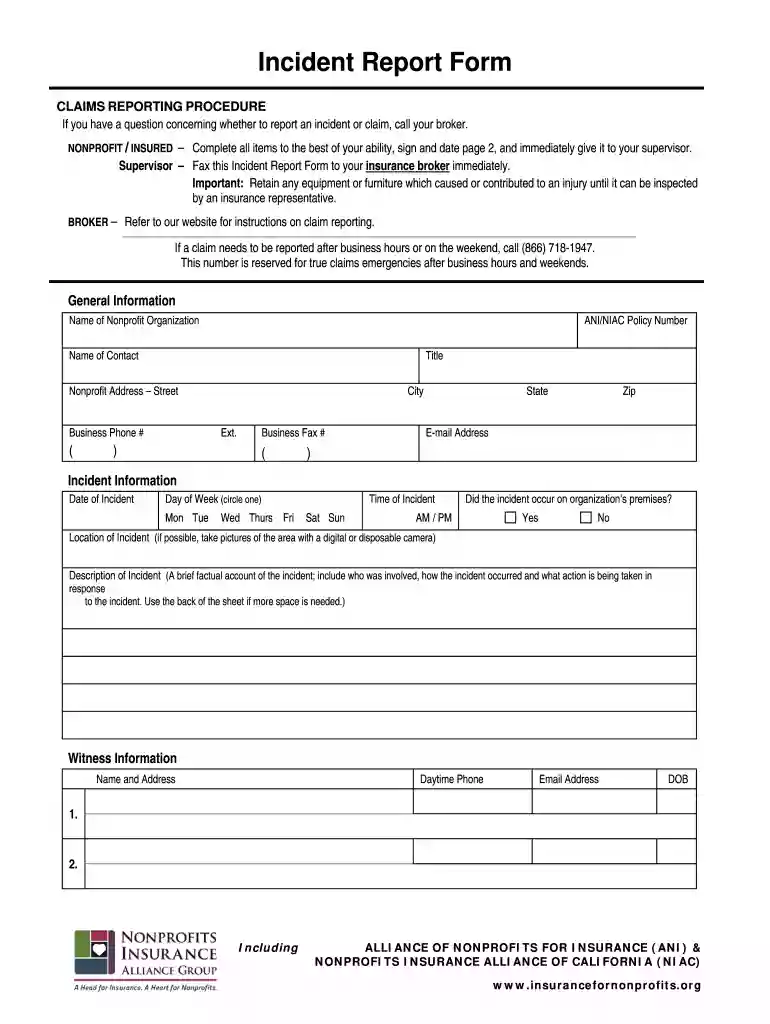
Type text, add images, blackout confidential details, add comments, highlights and more.

Draw your signature, type it, upload its image, or use your mobile device as a signature pad.

Send insurance report template via email, link, or fax. You can also download it, export it or print it out.
An insurance incident report is a formal document that provides detailed information regarding an accident or incident that may result in a claim to an insurance company. This report serves to notify the insurer of the details surrounding the event, including the parties involved, descriptions of any damages or injuries, and circumstances leading to the event. Accurate documentation in these reports is crucial as it can significantly impact the processing of claims.
Accurate and thorough completion of an insurance incident report can aid in processing the claim efficiently, ensuring that the insured's rights are protected.
An effective insurance incident report should contain several essential components that ensure clarity and comprehensiveness. Here are the key elements to include:
The documentation must be factual, clear, and concise, as these details are critical for the claims process and any subsequent investigations.
Following a structured process can ensure that all necessary information is captured appropriately when completing the report. Here are the steps to consider:
By following these steps, a thorough and factual insurance incident report can be created, minimizing disputes and facilitating the claims process.
Various scenarios may necessitate the completion of an insurance incident report. Understanding these instances helps in preparing for potential claims more effectively. Common situations include:
These circumstances highlight the importance of being diligent in documenting events as they unfold, setting the foundation for a smooth claims process.
Effective insurance incident reports can be invaluable across various real-world scenarios. Here are several examples illustrating their utility:
These examples underscore the relevance of the insurance incident report in various sectors, reinforcing the need for clarity, accuracy, and thoroughness in its preparation.
Timely submission of the insurance incident report is crucial in ensuring that claims are processed efficiently. Here are reasons to keep in mind regarding timely reporting:
In light of these factors, it is essential to prioritize the completion and submission of the insurance incident report after an incident occurs.
Various resources are available to assist individuals in completing insurance incident reports accurately. Accessing templates and examples can provide guidance. Some typical resources include:
Utilizing these resources can significantly ease the burden of preparing an incident report, ensuring accuracy and adherence to necessary requirements.
We've got more versions of the insurance incident report template form. Select the right insurance incident report template version from the list and start editing it straight away!
At DocHub, your data security is our priority. We follow HIPAA, SOC2, GDPR, and other standards, so you can work on your documents with confidence.
Aug 12, 2025 The Accident Management Center or AMC, helps with accident reporting, vehicle repairs, and third-party claims.Read more
Accidents and injuries that occur at work, during your work hours, must be reported immediately to your direct supervisor, your school building administrator (Read more


