







Understanding the Special Education Referral Form
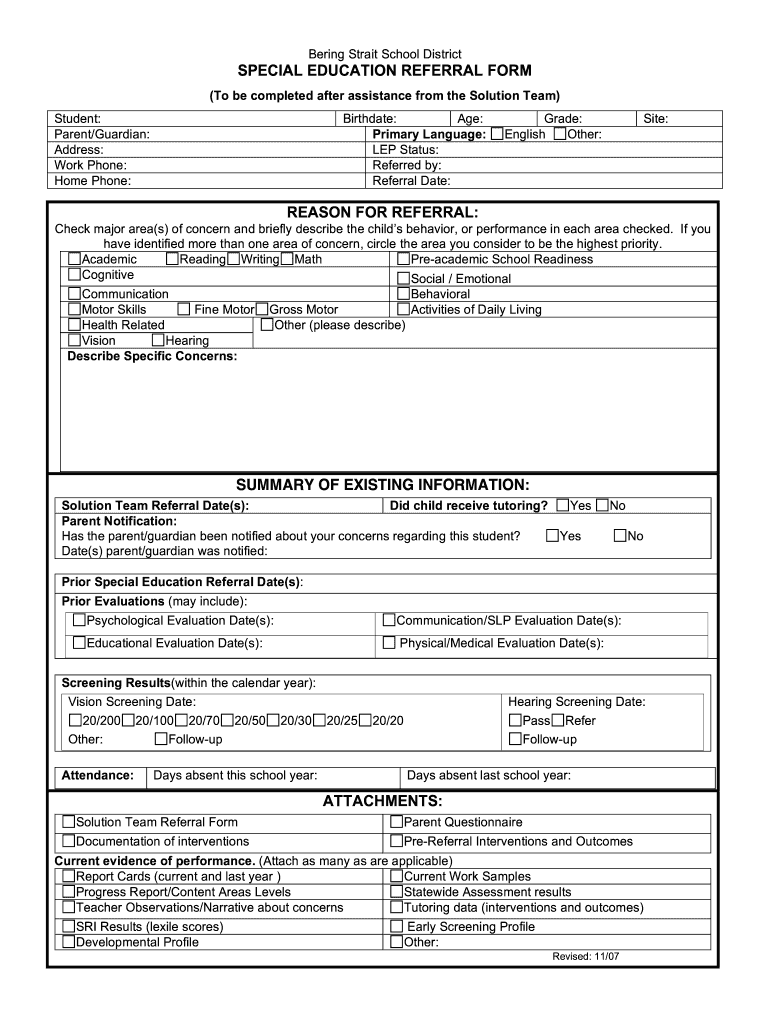
The Special Education Referral Form is a critical document used in educational settings to identify students who may need special education services. It serves as an official request to evaluate a student’s eligibility for special education support and is designed to gather comprehensive information regarding the student’s academic performance, social-emotional factors, and individual needs.
Key Components of the Form
The Special Education Referral Form generally includes several essential sections that facilitate a thorough assessment:
-
Student Information: This section collects basic details about the student, such as their name, age, grade level, and enrollment status. Accurate information is crucial for establishing the context of the referral.
-
Parent/Guardian Information: This section gathers contact information from the student’s parents or guardians, which is vital for communication throughout the referral process.
-
Reason for Referral: Here, the referring party indicates why the student is being referred for special education evaluation. Common reasons may include struggles with learning, behavioral issues, or developmental delays. It is important to provide a coherent and specific reason for referral based on observed behaviors and difficulties.
-
Previous Interventions: This section outlines any interventions or supports that have already been tried prior to the referral. Documenting prior attempts is critical to identifying what strategies have or have not worked for the student.
-
Additional Documentation: The form typically requests any pertinent documentation, such as report cards, assessments, or observations that support the referral. Providing comprehensive insights allows for a more effective evaluation.
Completing the Reason for Referral Section
The actual justification for referring a student must be articulated clearly. This section should detail specific behaviors or challenges the student faces and can include:
- Academic struggles, such as difficulty in reading, writing, or math
- Behavioral concerns, including frequent disruptions, aggression, or withdrawal
- Social-emotional issues, such as anxiety, depression, or difficulty in peer relationships
Each reason mentioned must be supported by observations and evidence, which may include:
- Examples of classroom performance issues
- Notes from consultations with school staff
- Feedback from parents about the student’s behavior outside of school
Engaging Stakeholders in the Referral Process
Collaboration among educators, parents, and specialists is essential for developing a comprehensive view of the student's needs. Engaging stakeholders can enhance the quality of the referral. Steps include:
-
Involving Teachers: Teachers can provide insights based on daily interactions with students. Their observations and assessments are vital in establishing a factual basis for the referral.
-
Soliciting Parental Input: Parents can offer perspectives on their child’s behaviors at home and in social situations, contributing essential context for the referral process.
-
Communicating with Specialists: School psychologists or counselors may be included to provide their expertise if behavioral or emotional difficulties are involved.
Legal and Ethical Considerations
The process of referring a student for special education services must adhere to specific legal regulations and ethical standards. Key considerations include:
-
Confidentiality: All information gathered must be kept confidential, with necessary permissions obtained from parents or guardians for sharing data.
-
Informed Consent: Parents or guardians should be fully aware of the referral process and provide consent before their child undergoes any evaluations.
-
Equitability: The referral process must ensure that no student is unfairly disadvantaged due to biases related to race, disability, or socioeconomic status.
Common Pitfalls in Referral
While submitting a referral form, there are common errors to avoid:
-
Insufficient Detail: Failing to provide specific examples or failing to explain the rationale thoroughly could impede the evaluation process.
-
Lack of Documentation: Not including relevant student performance data or previous intervention results can limit the review by evaluators.
-
Delayed Submissions: Timeliness in referring a student is crucial; delays may hinder the student’s access to necessary support.
Effective Tracking of the Referral Process
Once a referral is completed, it is important to track its progress. Tracking can include:
-
Follow-Up Meetings: Regular check-ins with team members to discuss the referral status and any additional observations.
-
Documentation Management: Log all relevant communications and decisions made throughout the evaluation process for accountability and clarity.
Being thorough and precise when filling out the Special Education Referral Form fosters a better understanding of a student’s needs and can ease their pathway to receiving the support they require.




