
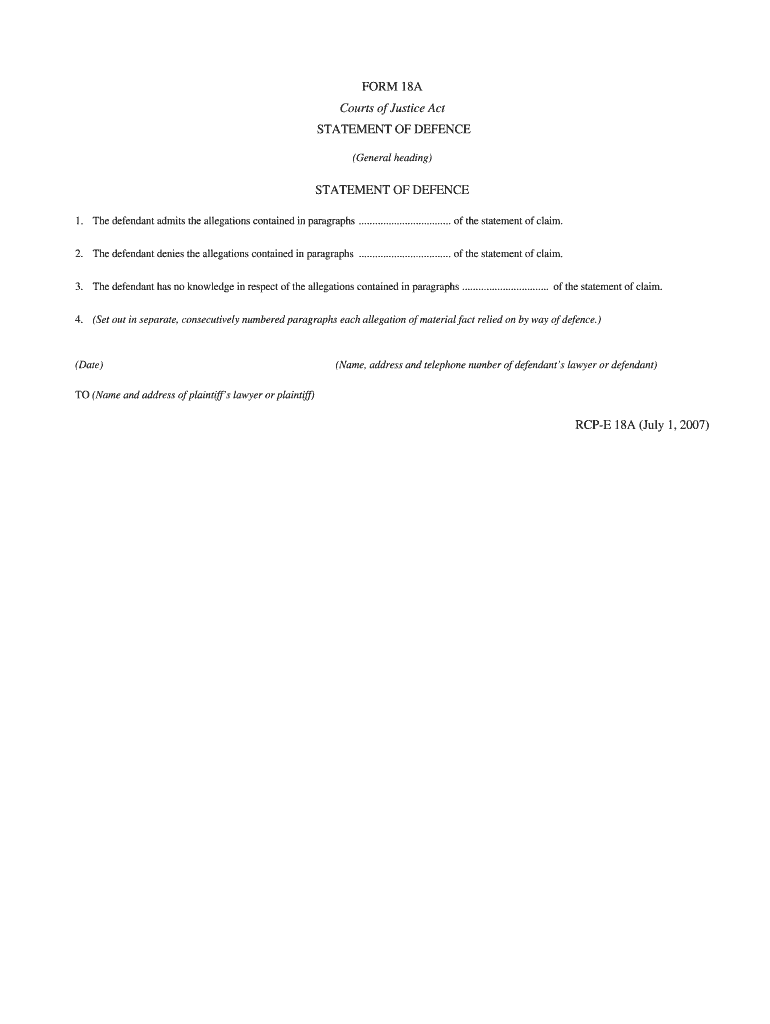







Definition and Importance of Form 18B Notice of Intent to Defend
The Form 18B Notice of Intent to Defend is a crucial legal document used in the Ontario court system, primarily under the Rules of Civil Procedure. Its primary purpose is to allow a defendant to formally communicate their intention to defend against a claim initiated by a plaintiff. This document serves as an essential piece of evidence in legal proceedings, indicating that the defendant disputes the claims made against them and intends to present a defence.
The Notice of Intent to Defend helps to set the stage for the subsequent stages of litigation. By filing this form, defendants preserve their right to respond to the allegations, preventing default judgments that could arise from failing to act. It also ensures that the court is informed of the defendant's intentions, promoting transparency and a fair legal process. This legal safeguard is fundamental for defendants who wish to contest claims against them and prepares both parties for the upcoming defence arguments and evidentiary presentations.
How to Use the Form 18B Notice of Intent to Defend
Using the Form 18B Notice of Intent to Defend involves several critical steps that ensure the document is completed accurately and filed correctly. Below is an organized procedure to help users navigate this process:
-
Download the Form: The first step is to obtain the Form 18B from reliable legal sources or the appropriate court website. Ensure you have the most current version to comply with all updated regulations.
-
Filling Out the Form: The form requires specific information, including:
- Court File Number: This number is crucial for identifying your case.
- Parties Information: Clearly state the names and addresses of both the plaintiff and the defendant.
- Nature of the Defence: A brief explanation of your reasons for opposing the claim.
-
Review Before Submission: Check the form for any errors or missing information. Accurate and complete forms reduce the chance of processing delays.
-
Filing the Form: The completed Form 18B must be served on the plaintiff and filed with the court. This can typically be done through:
- In-Person Submission: Deliver the form directly to the courthouse.
- Electronic Filing: Many courts offer online submission systems, improving efficiency.
Each of these steps is essential to effectively submit the Notice of Intent to Defend and ensure your position is communicated clearly within the legal framework.
Key Elements of the Form 18B Notice of Intent to Defend
Understanding the key elements of the Form 18B Notice of Intent to Defend is essential for proper completion. The form typically includes several critical components:
-
Case Identification: This includes details such as the court file number and the names of the plaintiff and defendant, which are essential for the form to be processed correctly.
-
Declaration of Intent: A clear statement indicating the defendant's intention to contest the claims against them. This affirmatively states the position of the defendant and marks the beginning of the defense process.
-
Reason for Defence: While not always mandatory, providing a brief synopsis of the reasons for the defense can be helpful. This gives the court and the plaintiff an initial understanding of the defendant's stance.
-
Signature and Date: The form must be signed by the defendant or their legal representative, along with the date, to validate the submission. This step confirms authenticity and compliance with necessary legal standards.
These elements ensure that the form meets the procedural requirements set forth by the Ontario court system and supports the defendant’s intention to seek a fair hearing.
Steps to Complete the Form 18B Notice of Intent to Defend
Completing the Form 18B is straightforward but requires careful attention. Here are the detailed steps to ensure its accuracy:
-
Obtain the Latest Form: Ensure you’re using the current Form 18B to comply with legal standards.
-
Fill in the Court File Number: This number is usually provided in the statement of claim and links your submission to the correct case.
-
Enter Parties’ Information: Clearly list the names and addresses of the plaintiff and defendant to ensure proper identification.
-
Provide Necessary Details: Fill in the section outlining your intent to defend. This should be concise but informative to give context to the plaintiff and the court.
-
Review for Accuracy: After completing the form, read through it carefully for errors or omissions.
-
Sign and Date: Ensure the form is signed by yourself or your attorney, indicating who is filing the notice.
By following these steps, you ensure that your Notice of Intent to Defend is completed accurately and submitted in accordance with court procedures.
Examples of Using the Form 18B Notice of Intent to Defend
The practical application of the Form 18B can vary depending on legal situations faced by different defendants. Here are some illustrative examples:
-
Contract Disputes: In a case where a contractor is alleged to have failed to complete a job as agreed, the contractor would file a Form 18B to dispute the claims, indicating their intention to defend against the allegations and present evidence that supports their compliance with the contract terms.
-
Personal Injury Claims: A defendant accused of causing a personal injury may use the Form 18B to assert that the injury was not due to their actions. This prepares the ground for arguing against liability in court.
-
Landlord-Tenant Issues: If a tenant receives a statement of claim from a landlord concerning unpaid rent, they may file a Form 18B to contest the claims, potentially arguing issues such as wrongful eviction or improper lease agreements.
In each case, the defendant has the opportunity to present their side by filing the Form 18B, setting the stage for their defense strategies and legal arguments.
Legal Use of the Form 18B Notice of Intent to Defend
The Form 18B Notice of Intent to Defend is used in specific legal contexts under the Ontario Rules of Civil Procedure. It serves to protect defendants’ rights in civil litigation by initiating a formal response to the claims made against them. The legal underpinnings ensure that:
-
Timeliness: The form must be filed within a specified timeframe to avoid a default judgment against the defendant. Compliance with deadlines is critical in litigation.
-
Proper Notification: The defendant must serve the Notice to the plaintiff, ensuring that both parties are aware of the intention to contest the claims, thereby reinforcing fair legal processes.
-
Procedural Compliance: Utilization of the form falls under established legal protocols, necessitating adherence to procedural rules to uphold the integrity of the legal process.
By fulfilling these legal requirements, defendants ensure that their rights to a fair trial and opportunity to present evidence are preserved.




